



Tilburg, Netherlands – Controversial faith healer Tom de Wal was briefly detained by police in Tilburg on Saturday following a religious service held in defiance of a municipal ban. De Wal, leader of Frontrunners Ministries, was released later the same day but faces a fine and potential further legal action for violating local regulations. The incident has ignited a debate surrounding religious freedom and public order in the Netherlands.
Table of Contents
- Municipal Ban and Service Held
- Hotel Cancellation and Shift to Church
- Police Intervention and Arrest
- Release and Reaction
- Historical Context: Faith Healing and Dutch Regulations
- Future Implications: Religious Freedom vs. Public Order
- Expert Analysis: The Role of Protest and Municipal Authority
Municipal Ban and Service Held
The events unfolded over the weekend when Frontrunners Ministries, led by Tom de Wal, conducted a religious service in a church building in Tilburg without obtaining the necessary permits from the municipality. The city council had explicitly prohibited the event, citing a lack of formal application. De Wal identifies as a pastor and faith healer, and his ministry had initially planned to host healing meetings at a Van der Valk Hotel in Eindhoven.
Hotel Cancellation and Shift to Church
However, the planned event at the Eindhoven hotel faced significant backlash and calls for protest on social media. Responding to the pressure, the hotel management cancelled the booking. Following the cancellation, Frontrunners Ministries relocated the service to a church building in Tilburg, proceeding despite the municipal ban.
Police Intervention and Arrest
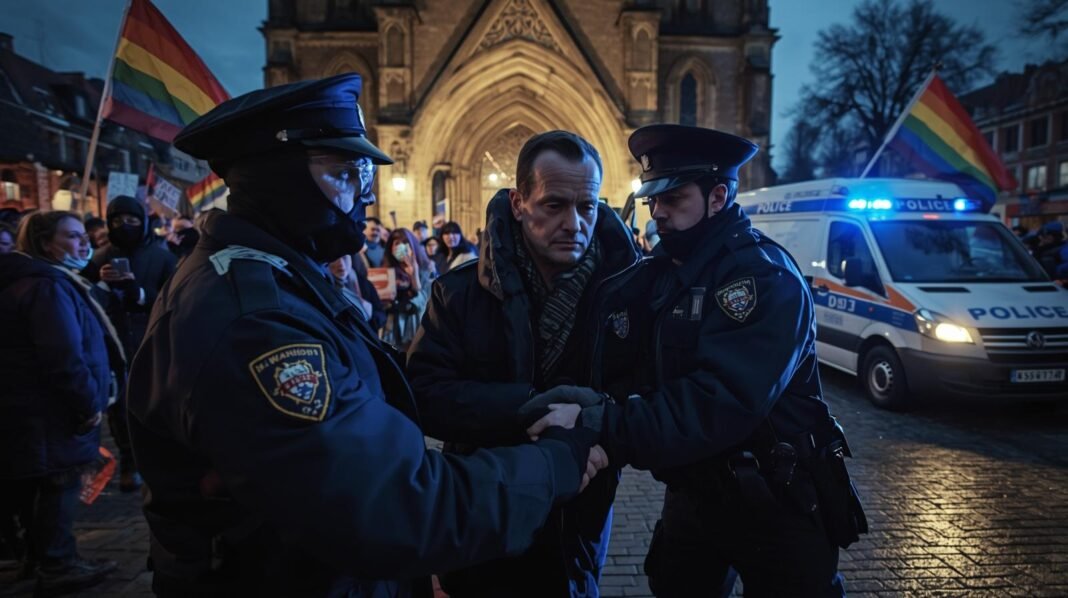
Police intervened at the church, escorting attendees from the building. According to police reports, De Wal continued to pray outside the church. He was arrested while making statements to the press. Approximately 25 protestors gathered outside the church during the event, but the police reported that the protest remained peaceful and security measures were increased.
Release and Reaction
De Wal was released several hours after his arrest. He immediately took to social media, describing his detention as “incomprehensible” and alleging a violation of religious freedom. He dismissed criticism, particularly from LGBTQ+ organizations. In a joint statement, Tilburg municipal and police officials confirmed De Wal’s release but stated that he would receive a fine for holding the unauthorized event. The municipality reiterated that the ban was solely due to the lack of required permits.
Historical Context: Faith Healing and Dutch Regulations
The Netherlands has a long tradition of religious tolerance, but this tolerance is not absolute. Public gatherings, including religious services, are subject to regulations designed to ensure public safety and order. The requirement for permits is standard practice, allowing municipalities to assess potential risks and coordinate emergency services. Faith healing, while not inherently illegal, has faced scrutiny in the Netherlands, particularly when claims are made regarding cures for serious illnesses. There have been past cases involving similar ministries and concerns about vulnerable individuals being exploited. The Dutch constitution guarantees freedom of religion, but this right is balanced against the interests of public safety and the rights of others.
Future Implications: Religious Freedom vs. Public Order
This incident raises important questions about the balance between religious freedom and the authority of local governments to regulate public gatherings. De Wal has stated his intention to continue his activities, suggesting further confrontations are likely. The case could set a precedent for how similar situations are handled in the future. Municipalities may be compelled to clarify their permitting processes and ensure they are applied consistently. Furthermore, the incident could fuel broader debates about the limits of religious expression in public spaces and the role of protest in challenging government decisions.
Expert Analysis: The Role of Protest and Municipal Authority
“This case highlights the tension that often exists between individual rights and collective security,” says Dr. Annelies de Vries, a professor of religious studies at the University of Amsterdam. “While the Dutch constitution protects religious freedom, it doesn’t grant an unlimited right to assemble without adhering to reasonable regulations. The municipality’s decision to deny a permit, and the subsequent police intervention, were likely based on concerns about potential disruption and public safety. The protest itself demonstrates the diverse opinions surrounding these types of events, and the importance of open dialogue.” The incident also underscores the increasing role of social media in mobilizing both support and opposition to controversial events.
Release and Reaction De Wal was released several hours after his arrest. He immediately took to social media, describing his detention as “incomprehensible” and alleging a violation of religious freedom. He dismissed criticism, particularly from LGBTQ+ organizations. In a joint statement, Tilburg municipal and police officials confirmed De Wal’s release but stated that he would receive a fine for holding the unauthorized event. The municipality reiterated that the ban was solely due to the lack of required permits. Acting Mayor of Tilburg, Onno Hoes, enforced the ban, stating that the gathering was an ‘event’ requiring a permit, not a regular church service. This distinction has sparked a fierce legal debate led by parties like SGP in the parliament.
Key Takeaways
- Permitting is Paramount: The core issue isn’t the religious practice itself, but the failure to obtain necessary permits, highlighting the importance of adhering to local regulations.
- Freedom Isn’t Absolute: Religious freedom in the Netherlands, like elsewhere, is not without limits and must be balanced against public safety and order.
- Social Media’s Influence: The rapid mobilization of protest via social media demonstrates its growing power in shaping public discourse and influencing decisions.
| Word | Pronun. | Meaning | Context (NL + EN) |
|---|---|---|---|
| Huis 🏠 | /hœys/ | House | Ik ga naar mijn huis. (I am going to my house.) |
| Kerk ⛪ | /kɛrk/ | Church | De kerk is oud en mooi. (The church is old and beautiful.) |
| Vrijheid 🕊️ | /vriːɦɛit/ | Freedom | Iedereen heeft recht op vrijheid van meningsuiting. (Everyone has the right to freedom of speech.) |
(Swipe left to see more)
Is the Dutch model of balancing religious freedom with public order sustainable in the face of increasing polarization?
The Tilburg case underscores the challenges of navigating religious freedom in a diverse and increasingly polarized society. As communities become more fragmented, and social media amplifies dissenting voices, maintaining a balance between individual rights and collective security will require ongoing dialogue, careful consideration of legal precedents, and a commitment to upholding the principles of tolerance and mutual respect. Will municipalities be able to effectively manage these tensions, or will we see a rise in similar confrontations?
Free: Netherlands 2027 Money Checklist
Every deadline and number you need before and after 1 January 2027, on two printable pages. Confirm your email and the PDF is yours; we will also email you when the 2027 figures are confirmed.
 Read nextBusiness & FinanceStarting a Business in the Netherlands as an Expat: KvK, VAT and Your First Website