




Last updated:
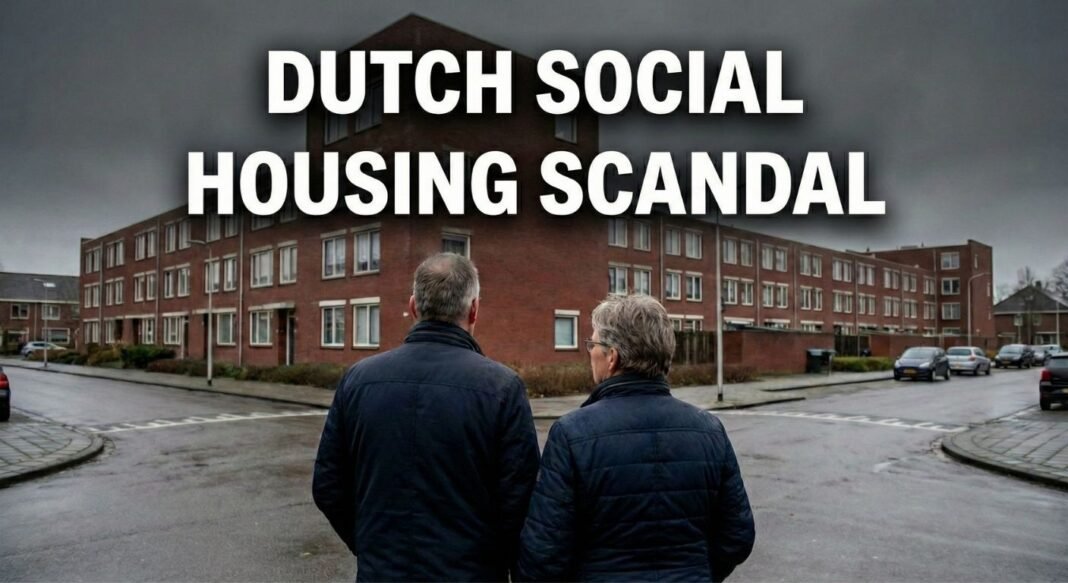
A shocking report has revealed that approximately 12,000 tenants in the Netherlands’ social housing sector are also homeowners, raising serious questions about the effectiveness of income and property checks within the system. The findings, released by the Netherlands Economic Policy Analysis Bureau (CPB), highlight a potential misallocation of scarce affordable housing resources and are fueling a national debate about fairness and accountability. The revelation comes at a time of acute housing shortages across the country, particularly in major cities.
Table of Contents
Detailed Report
The CPB study found that around 0.5% of all tenants in social housing – properties intended for low and moderate-income individuals – also own property elsewhere. This translates to roughly 12,000 people. Alarmingly, approximately 2,000 of these individuals own multiple properties, with over 30 social housing tenants possessing at least 10 properties. While the data is anonymized, the CPB indicates that a disproportionate number of these dual-status tenants reside in Amsterdam, Haarlem, and The Hague, often in relatively desirable neighborhoods.
The report acknowledges that approximately one-sixth of these homeowners acquired their properties through inheritance or shared ownership following a divorce, situations where the ownership doesn’t necessarily contradict the core principles of social housing. However, the study emphasizes that five out of six instances represent a conscious decision to purchase property while simultaneously benefiting from subsidized rental housing.
A significant portion of these privately owned properties are being rented out or used as second homes, further exacerbating concerns about the equitable distribution of housing resources. Currently, the income threshold for social housing eligibility in the Netherlands is roughly €57,000 per year for families (indexed annually). However, this limit only applies at the time of application; tenants are not automatically evicted if their income or assets rise above this level later.
Deep Analysis & Context
Historical Context
The Dutch social housing system, historically a cornerstone of the nation’s welfare state, was designed to provide affordable housing to those unable to compete in the private market. However, decades of underinvestment and increasing demand have created a severe housing shortage, particularly in urban areas. This shortage has led to long waiting lists and rising rents in the private sector, making social housing even more crucial. The current situation highlights a long-standing tension between the original intent of social housing – providing a safety net – and the lack of robust mechanisms to prevent abuse of the system.
The 2024 Ymere Precedent
This issue was first thrust into the spotlight in 2024 following a landmark lawsuit filed by Ymere, one of the Netherlands’ largest housing associations. Ymere took legal action against a social housing tenant who was found to be renting out two separate private properties. The court ruled in favor of the housing association, citing the immense societal weight of the housing crisis. The judge determined that the obligation to provide housing for those in need outweighed the tenant’s economic interests, setting a crucial legal precedent for future evictions.
Future Implications
The CPB report is likely to intensify calls for stricter regulations and more frequent checks on social housing tenants. Potential solutions include mandatory annual income verification, requirements to disclose property ownership, and the introduction of a system for reclaiming social housing from tenants who no longer meet the eligibility criteria. Without such measures, the system risks becoming increasingly unfair, with those genuinely in need being denied access to affordable housing while others exploit loopholes.
Expert Analysis
Housing market analysts describe this report as a “wake-up call” for the Dutch government. Experts argue that the findings demonstrate a clear failure in oversight and a lack of political will to address the misuse of social assets. “The current system relies too heavily on self-reporting and lacks the resources to conduct thorough investigations,” notes a spokesperson for tenant advocacy groups. There is a growing consensus that a more proactive approach is needed, including better data sharing between housing corporations and the Land Registry (Kadaster), to ensure fair distribution of limited housing stock.
Key Takeaways
- The Dutch social housing system is facing a crisis of fairness due to a lack of effective oversight.
- Approximately 12,000 tenants are simultaneously benefiting from subsidized housing while owning property elsewhere.
- The 2024 Ymere court case established a legal precedent for evicting tenants who abuse the system.
-
Stricter regulations and increased enforcement are urgently needed to ensure that social housing resources are allocated to those who genuinely need them.
Dutch Learning Corner
| Word | Pronun. (Eng) | Meaning | Context (NL + EN) |
|---|---|---|---|
| 🏚️ Scheefwonen | Skhayf-wo-nen | Skewed Living | Scheefwonen blokkeert huizen voor starters. (Skewed living blocks houses for starters.) |
| 🏘️ Woningnood | Wo-ning-nood | Housing shortage | De woningnood in Amsterdam is enorm. (The housing shortage in Amsterdam is enormous.) |
| 🔑 Het Eigendom | Het Ay-ghen-dom | The Property/Ownership | Hij heeft een tweede eigendom. (He has a second property.) |
| ⚖️ Toezicht | Too-zich-t | Supervision | Er is meer toezicht nodig op de financiële markten. (More supervision is needed on the financial markets.) |
(Swipe left to see more)
Community CTA
Should social housing be reserved exclusively for those with the greatest need?
This situation raises fundamental questions about the purpose of social housing. Do you believe stricter regulations are the answer, or are there other solutions? Share your thoughts in the comments below.
More in our guide: Housing in the Netherlands – all our renting, buying and energy guides
Renting or buying in 2027?
Our free checklist covers the transfer tax cut, box 3, energy and every deadline before 1 January. Confirm your email and the PDF is yours; we will also email you when the 2027 figures are confirmed.
 Read nextBusiness & FinanceStarting a Business in the Netherlands as an Expat: KvK, VAT and Your First Website