




Last updated:
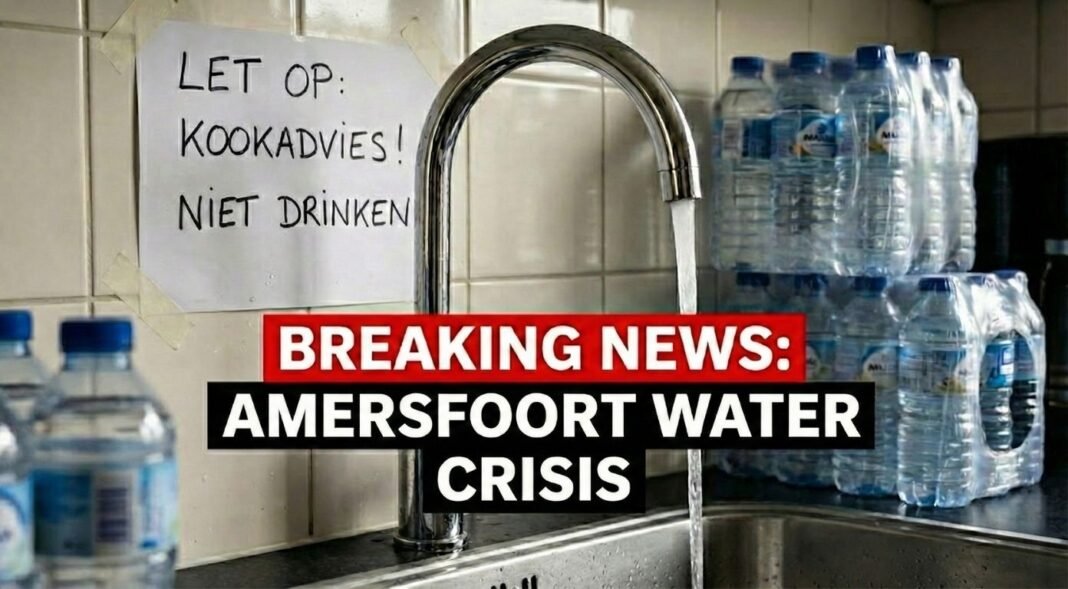
Residents of Amersfoort and surrounding areas are facing continued disruption as the boil water advisory (kookadvies) enters its second week. Water company Vitens confirmed on Monday, January 12th, 2026, that the advisory remains in full effect after testing revealed persistent bacterial contamination. The situation affects approximately 85,000 connections, forcing households and businesses to boil tap water for at least three minutes before consumption.
Table of Contents
- Breaking News: The Initial Outbreak
- Identifying the Source of Contamination
- Affected Areas and Exemptions
- Health Risks and Vulnerable Populations
- Historical Context: Recurring Water Issues in Utrecht
- Future Implications and Infrastructure Concerns
- Expert Analysis: The Challenges of Water Safety
- Key Takeaways
- Dutch Learning Corner
- Community CTA
Breaking News: The Initial Outbreak
The boil water advisory was first issued on January 5th, 2026, for Amersfoort and neighboring municipalities. Water company Vitens detected the presence of enterococci bacteria during routine testing. Enterococci are indicators of fecal contamination, raising concerns about the potential presence of other harmful pathogens. The advisory mandates that all tap water be brought to a rolling boil for at least three minutes before being used for drinking, cooking, brushing teeth, or making ice.
Identifying the Source of Contamination
Vitens has been conducting daily water tests at various locations to pinpoint the source of the contamination. Investigations led them to an unused storage basement belonging to a production facility in Amersfoort, where the bacteria were found. The company states the area has been deactivated and cleaned, and water is now being sourced from alternative storage facilities. However, the exact pathway of the bacteria into the water system remains a “puzzle” under investigation.
Affected Areas and Exemptions
The boil water advisory currently affects Amersfoort, Achterveld, Bunschoten-Spakenburg, Hoogland, Hooglanderveen, Leusden, Soest, Soesterberg, Stoutenburg, and Stoutenburg-Noord. Notably, the advisory has been lifted for the Meander Medical Center, as its water supply is sourced from a separate, secure Vitens production facility. Residents are urged to check the Vitens website for the most up-to-date information on affected postcodes.
Health Risks and Vulnerable Populations
While enterococci are generally not considered life-threatening to healthy individuals, they can cause gastrointestinal issues resembling the flu in those with weakened immune systems, the elderly, and individuals with chronic illnesses. Symptoms may include nausea, vomiting, diarrhea, and abdominal cramps. Authorities emphasize the importance of adhering to the boil water advisory to protect these vulnerable populations.
Historical Context: Recurring Water Issues in Utrecht
This incident marks the third boil water advisory issued in the province of Utrecht in a short period. Similar warnings were in place over the Christmas 2025 period in the Randenbroek neighborhood. While Vitens maintains there is no direct link between these events, a comprehensive investigation is underway to assess potential systemic issues within the water infrastructure.
Future Implications and Infrastructure Concerns
The recurring contamination incidents raise serious questions about the resilience and maintenance of the Netherlands’ water infrastructure. Aging pipelines, increased urbanization, and climate change-related factors like heavier rainfall are all contributing to the vulnerability of water systems. Significant investment in infrastructure upgrades and preventative maintenance will be crucial to prevent future crises. The Dutch government is facing increasing pressure to prioritize water safety and security.
Expert Analysis: The Challenges of Water Safety
“The Netherlands has a reputation for excellent water management, but these recent events demonstrate that complacency is not an option,” warn water quality analysts from TU Delft. “Maintaining water safety in a densely populated and highly developed country like the Netherlands is a complex challenge. It requires continuous monitoring and proactive maintenance to detect risks before they reach the tap.” Experts highlight that the delay in lifting the advisory is due to the strict requirement of two consecutive clean tests, which takes time.
Key Takeaways
-
Status: The boil water advisory remains active as of Jan 12, 2026.
-
Cause: Enterococci bacteria found in a Vitens storage facility.
-
Impact: Over 85,000 households must boil water for 3 minutes.
-
Next Update: Expected from Vitens on Wednesday, Jan 14.
Dutch Learning Corner
| Word | Pronun. (Eng) | Meaning | Context (NL + EN) |
|---|---|---|---|
| 🔥 Het Kookadvies | Het Koke-at-fees | Boil Water Advisory | Het kookadvies is verlengd. (The boil water advisory has been extended.) |
| 💧 Waterkwaliteit | Wah-ter-kwah-lee-teyt | Water Quality | De overheid controleert regelmatig de waterkwaliteit. (The government regularly checks the water quality.) |
| 🦠 Bacterie | Bahk-teh-ree-uh | Bacteria | De bacterie werd gevonden in het waterreservoir. (The bacteria was found in the water reservoir.) |
| ⚠️ Waarschuwing | Wahrs-khu-wing | Warning | Er is een waarschuwing uitgegeven voor vervuild water. (A warning has been issued for contaminated water.) |
(Swipe left to see more)
Community CTA
Is the Dutch Government Doing Enough to Protect Our Water Supply?
The repeated water contamination issues in Utrecht are raising serious concerns among residents. Share your thoughts and experiences in the comments below. What steps do you think the government should take to ensure a safe and reliable water supply for all?
Free: Netherlands 2027 Money Checklist
Every deadline and number you need before and after 1 January 2027, on two printable pages. Confirm your email and the PDF is yours; we will also email you when the 2027 figures are confirmed.
 Read nextBusiness & FinanceStarting a Business in the Netherlands as an Expat: KvK, VAT and Your First Website