



Last updated:
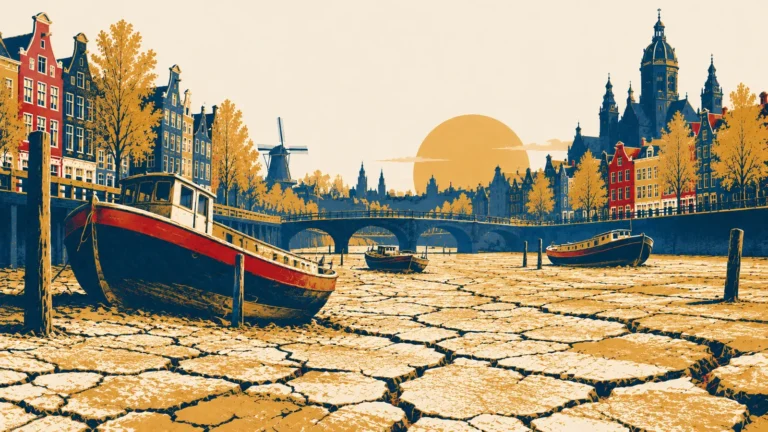
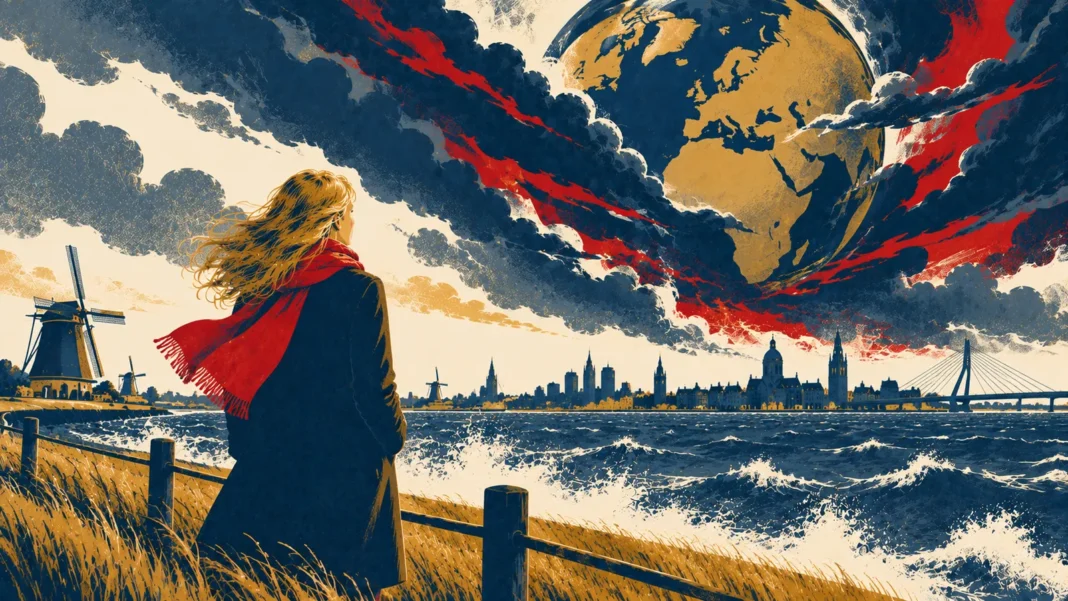
Geneva / Amsterdam – The 2026 Global Risks Report by the World Economic Forum (WEF) has sent shockwaves through international markets. Based on the expertise of over 1,300 global leaders, the report warns that we have entered a “Polycrisis Era”—a time where multiple, interconnected risks occur simultaneously. From the high-tech threat of “Q-Day” to the weaponization of grain and energy, the Netherlands is being urged to brace for a decade of extreme volatility.
Table of Contents
- The Weaponization of Trade: End of Globalization?
- The Netherlands: A Vulnerable Hub in a Protectionist World
- Supply Chain Shockwaves: Why Food Prices Will Rise
- Autonomous Warfare: The Moral and Tactical Crisis
- Q-Day: The Silent Countdown to Digital Collapse
- Climate and Corporate Fragility: The New Regulatory Wall
- Expert Perspectives: Henk Volberda’s Warning
- How to Build Resilience in 2026
- Key Takeaways for Businesses and Individuals
- Dutch Learning Corner: Global Risk Vocabulary
- Community Discussion
The Weaponization of Trade: End of Globalization?
For decades, global trade was focused on efficiency and cost-reduction. In 2026, the priority has shifted to “security and alignment.” The WEF report indicates that roughly 20% of experts see economic conflict as a primary risk. We are seeing a shift from ‘Global-trading’ to ‘Friend-shoring’—where countries only trade with political allies. This weaponization of resources means that energy, microchips, and even rare minerals are no longer just commodities; they are diplomatic leverage. This trend threatens to permanently fragment the global market, leading to a “de-globalized” world where trade blocks act like fortresses.
The Netherlands: A Vulnerable Hub in a Protectionist World
As the “Gateway to Europe,” the Netherlands has built its wealth on open borders and free trade. However, this same openness is now a vulnerability. With the rise of trade barriers in the US, China, and even within regional blocs, the Port of Rotterdam and Schiphol Airport face unprecedented challenges. A fragmented global economy means higher tariffs and more “red tape” for Dutch exporters. The report highlights that the Netherlands must pivot from being a mere transit hub to becoming a high-tech “fortress” of innovation to maintain its standard of living.
Supply Chain Shockwaves: Why Food Prices Will Rise
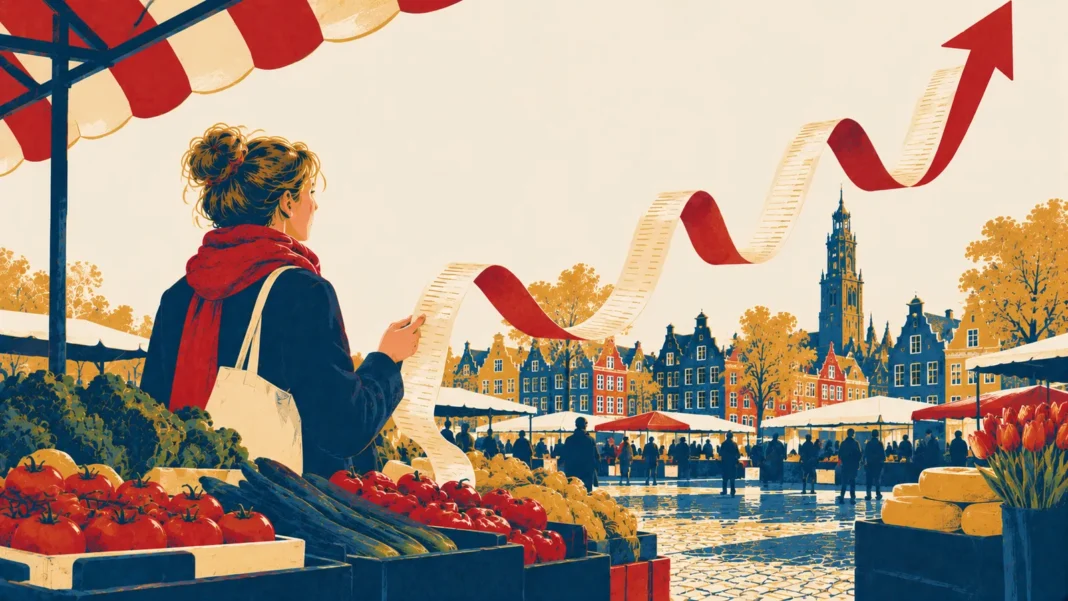
One of the most immediate risks discussed by the experts is food security. Geopolitical tensions in major agricultural regions, combined with climate-driven crop failures, are creating a “perfect storm.” Professor Volberda notes that the Netherlands, despite being a major food exporter, is still dependent on imported raw materials and complex logistics. If trade corridors are interrupted by armed conflict or diplomatic sanctions, the cost of basic groceries—from bread to dairy—could see double-digit inflation by the end of 2026.
Autonomous Warfare: The Moral and Tactical Crisis
Warfare is no longer just about soldiers on the ground. The 2026 report flags the rapid rise of AI-driven military tech. We are moving toward a world of “Algorithmic Warfare” where autonomous drones and tanks make split-second decisions without human intervention. The risk here is not just the conflict itself, but the speed of escalation. When machines fight machines, a small border skirmish can turn into a full-scale war in minutes, leaving diplomats no time to intervene. For countries like the Netherlands, which hosts major international courts, this raises profound legal and ethical questions about accountability in war.
Q-Day: The Silent Countdown to Digital Collapse
Perhaps the most “invisible” yet terrifying risk is Q-Day. This is the hypothetical day when quantum computers become powerful enough to break the encryption that currently protects every bank account, hospital record, and government secret. The 2026 report confirms that we are closer than ever to this threshold. Malicious actors are already “harvesting” encrypted data today, waiting for the technology to decrypt it tomorrow. The Dutch cybersecurity sector is currently in a race against time to implement “Post-Quantum Cryptography” (PQC) to shield the nation’s digital infrastructure.
Climate and Corporate Fragility: The New Regulatory Wall
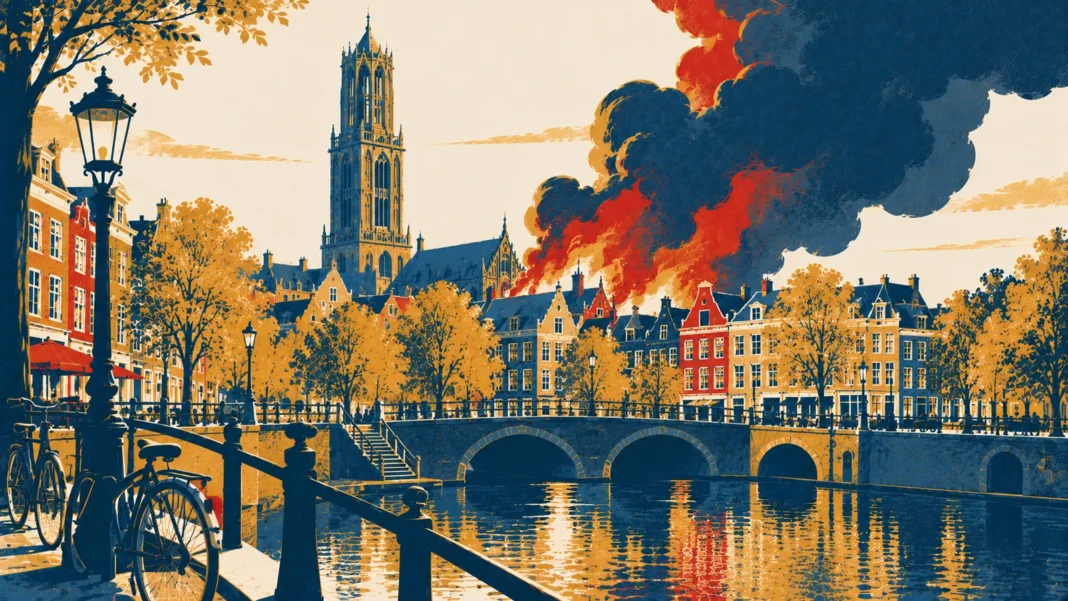
Climate change is no longer a future threat; it is a current financial risk. In 2026, companies are being hit by a “double whammy” of extreme weather disruptions and aggressive green regulations. Small and medium-sized enterprises (SMEs) in the Netherlands are particularly struggling to keep up with new reporting standards. The WEF warns that companies that fail to adapt their supply chains to be “climate-resilient” will likely face bankruptcy or lose access to insurance markets within the next five years.
Expert Perspectives: Henk Volberda’s Warning
Professor Henk Volberda of Amsterdam University emphasizes that the “Old World Order” is not coming back. He argues that Dutch businesses must move away from “Just-in-Time” logistics to “Just-in-Case” strategies. This means holding more inventory, diversifying suppliers, and investing heavily in local talent. “We cannot rely on the stability of distant markets anymore,” Volberda warns. “Resilience is now more valuable than pure profit.”
How to Build Resilience in 2026
What can individuals and businesses do to survive this “turbulent era”? The report suggests three main pillars:
- Digital Sovereignty: Protecting personal and corporate data with advanced encryption and local backups.
- Economic Diversification: Not relying on a single market (like China or the US) for critical supplies.
- Skill Upgrading: Embracing AI and Quantum literacy to stay relevant in a rapidly changing labor market.
Key Takeaways for Businesses and Individuals
- Volatility is Permanent: Do not wait for a “return to normal.” The current instability is the new baseline.
- Tech is a Double-Edged Sword: AI improves efficiency but creates massive new security risks.
- Netherlands at a Crossroads: The nation must innovate to overcome the barriers of a protectionist world.
- Focus on PQC: Post-Quantum Cryptography is the only way to survive “Q-Day.”
Dutch Learning Corner: Global Risk Vocabulary
| Word | Meaning | Context (NL + EN) |
|---|---|---|
| ⚠️ De Dreiging | The Threat | Er is bir cyber-dreiging. (There is a cyber threat.) |
| 📈 De Onzekerheid | The Uncertainty | De onzekerheid op de markt groeit. (The uncertainty in the market is growing.) |
| 🛡️ De Weerbaarheid | Resilience | We moeten onze weerbaarheid vergroten. (We must increase our resilience.) |
| 🌍 Wereldwijd | Worldwide | Dit is bir wereldwijd probleem. (This is a worldwide problem.) |
| ⛓️ De Toeleveringsketen | Supply Chain | De toeleveringsketen is verstoord. (The supply chain is disrupted.) |
Are You Ready for the Decades Ahead?
From AI tanks to quantum hackers, the risks of 2026 feel like science fiction becoming reality. Do you think the Dutch government is doing enough to protect our digital and economic security? Are you personally worried about food prices or Q-Day? Share your thoughts below.
Full Report / Official Source: World Economic Forum (WEF)
Free: Netherlands 2027 Money Checklist
Every deadline and number you need before and after 1 January 2027, on two printable pages. Confirm your email and the PDF is yours; we will also email you when the 2027 figures are confirmed.
 Read nextCulture & LifestyleJeff Hawkins Brain Theory: What It Means for AI