




Last updated:
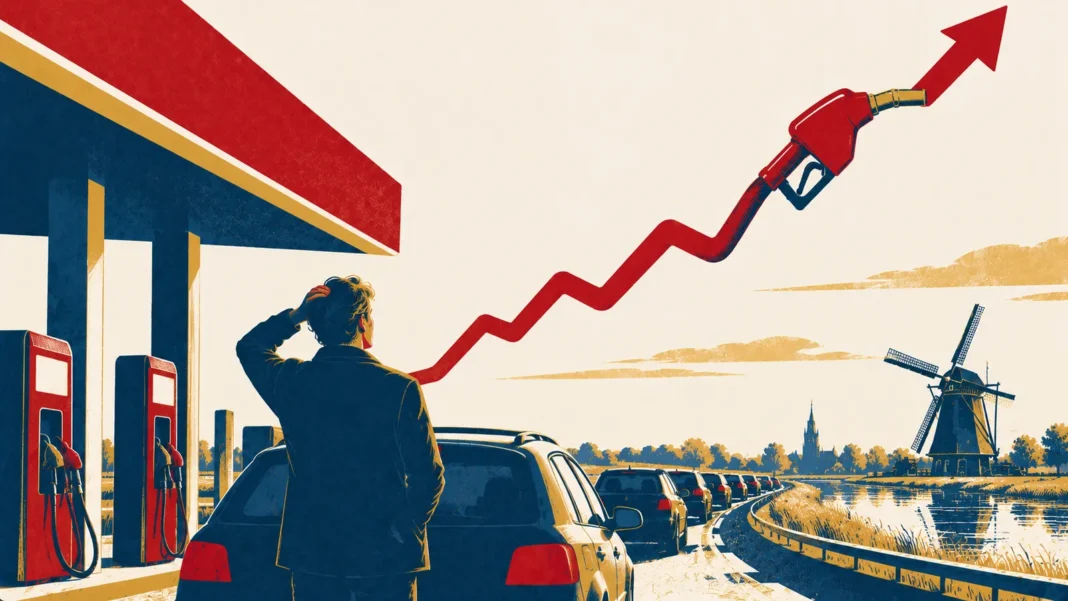
Amsterdam – Dutch drivers are officially paying a premium for the privilege of hitting the road. As of January 2026, the Netherlands has cemented its reputation as one of the most expensive countries on Earth to fuel a car. With the average price of Euro95 (E10) gasoline flirting with the psychological barrier of €2.00 to €2.10 per liter, the country now ranks second globally, surpassed only by Hong Kong.
This surge isn’t just about global oil markets; it is a direct result of deliberate government policy, creating a boom in cross-border “fuel tourism” and forcing many households to rethink their mobility.
Table of Contents
- The Global Ranking: Only Hong Kong is Worse
- Why So Expensive? The Tax Sandwich
- “Tanktoerisme”: The Math of Crossing Borders
- The Ripple Effect: Logistics and Inflation
- Is Electric Driving Still Cheaper?
- Key Takeaways
- Dutch Learning Corner
- Community CTA
The Global Ranking: Only Hong Kong is Worse
According to the latest data from GlobalPetrolPrices.com, the Netherlands has surpassed perennial expensive nations like Norway, Iceland, and Israel to claim the silver medal in high costs.
- #1 Hong Kong: ~€3.18 per liter (The outlier).
- #2 Netherlands: ~€1.99 – €2.10 per liter.
- #3 Israel/Denmark: Closely trailing.
For the average Dutch expat used to prices in the US (€0.90/liter) or even neighboring Germany, the receipt at a Dutch Shell or Esso station is a legitimate culture shock.
Why So Expensive? The Tax Sandwich
Why is Dutch petrol so much pricier than in Germany, just 10km away? The answer lies in the Dutch “Tax Sandwich.”
Data from consumer collective UnitedConsumers reveals that nearly two-thirds of the price you pay at the pump goes directly to the state treasury.
- Accijns (Excise Duty): The Netherlands has the highest fuel excise duties in the EU. This is a fixed tax per liter.
- BTW (VAT): On top of the excise duty and the product price, you pay 21% VAT. Effectively, you are paying tax on top of tax.
- Stockpiling Fee (Voorraadheffing): A small hidden fee to maintain national fuel reserves.
The actual cost of the oil and refining accounts for only about 35-40% of the final price.
“Tanktoerisme”: The Math of Crossing Borders
This price disparity has revived the phenomenon known as “Tanktoerisme” (Fuel Tourism).
Residents in border provinces like Limburg, Brabant, and Gelderland are flocking to Belgium and Germany.
- Belgium: ~€1.48/liter (Savings: ~€0.50/liter).
- Germany: ~€1.70/liter (Savings: ~€0.30/liter).
The Math: If you have a 50-liter tank, filling up in Belgium saves you roughly €25.00.
The “Double Dip”: The savings aren’t just on fuel. Dutch “fuel tourists” combine the trip with buying tobacco (significantly cheaper due to lower taxes) and alcohol in Germany/Belgium, creating a massive revenue leak for Dutch border businesses.
The Ripple Effect: Logistics and Inflation
High fuel prices don’t just hurt car owners; they drive up the cost of everything. Transport sector analysts warn that logistics companies—which run on diesel—are passing these costs down to supermarkets.
“Every banana and every laptop in the Netherlands is transported by truck,” notes a logistics spokesperson. “When diesel is the second most expensive in the world, the consumer pays for it at the checkout counter, even if they don’t own a car.”
Is Electric Driving Still Cheaper?
With petrol prices soaring, is the Electric Vehicle (EV) the savior? Yes and no.
While charging is generally cheaper than petrol, the Netherlands also has some of the highest public charging rates in Europe. Fast-charging on the highway can cost upwards of €0.80/kWh, narrowing the gap. However, for those who can charge at home or have solar panels, the “business case” for switching to an EV has never been stronger in 2026.
Key Takeaways
- #2 Globally: Netherlands is the second most expensive country for petrol.
- Tax Heavy: ~60% of the pump price is tax (Excise + VAT).
- Border Run: Filling up in Belgium can save €25 per tank.
- Inflation: High transport costs are keeping supermarket prices high.
Dutch Learning Corner
| Word | Pronun. (Eng) | Meaning | Context (NL + EN) |
|---|---|---|---|
| ⛽ Tanken | Tan-ken | To Refuel | Ik moet even tanken. (I need to refuel for a moment.) |
| 💸 De Accijns | De Ak-signs | Excise Duty | De accijns op benzine is verhoogd. (The excise duty on gasoline has been increased.) |
| 🚗 Het Tanktoerisme | Het Tank-too-ris-me | Fuel Tourism | Tanktoerisme naar België neemt toe. (Fuel tourism to Belgium is increasing.) |
| 📉 Goedkoper | Khoot-ko-per | Cheaper | Duitsland is veel goedkoper. (Germany is much cheaper.) |
Is It Worth the Drive?
Do you drive to Belgium or Germany to fill up? Or do you think the wear and tear on your car makes the savings pointless? Share your “Tanktoerisme” strategies or frustrations below!
Source / Data: Global Petrol Prices & UnitedConsumers
Free: Netherlands 2027 Money Checklist
Every deadline and number you need before and after 1 January 2027, on two printable pages. Confirm your email and the PDF is yours; we will also email you when the 2027 figures are confirmed.
 Read nextBusiness & FinanceEU Parcel Handling Fee From 1 November 2026: The €2 Fee and the €3 Duty