




Last updated:
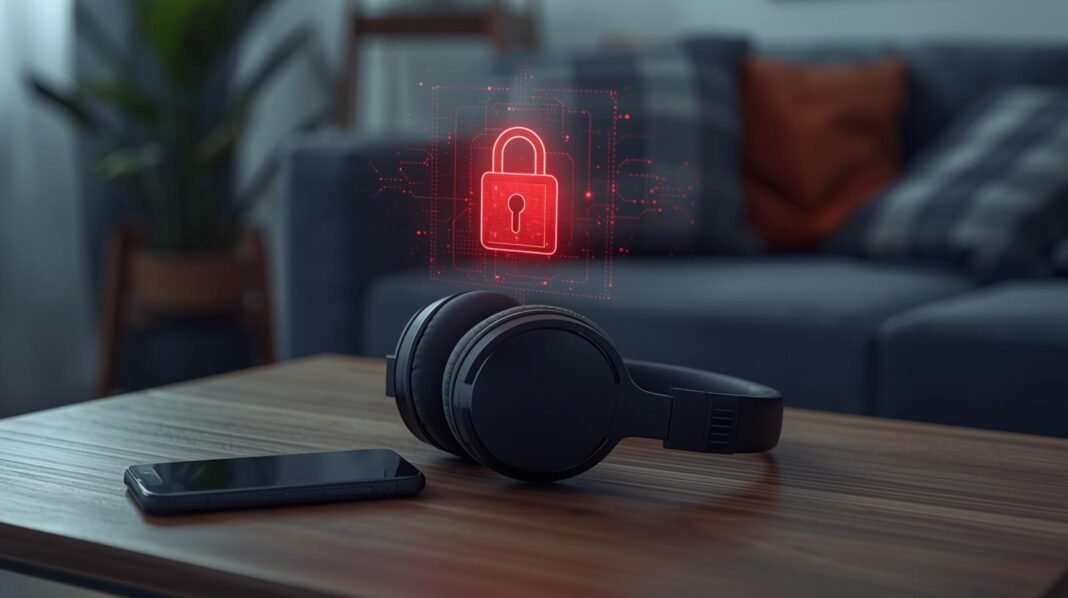
Leuven / Amsterdam – Millions of Bluetooth headphone users may be walking around with a digital target on their backs. Researchers at the prestigious KU Leuven University in Belgium have exposed a critical vulnerability in Google’s “Fast Pair” technology. Dubbed “WhisperPair,” this flaw allows attackers to bypass security checks and remotely hijack headphones from up to 14 meters away.
While Google has rolled out emergency patches for its own Pixel devices, the research warns that countless third-party devices from major brands like Sony, JBL, and Anker remain vulnerable, leaving consumers exposed to potential eavesdropping and tracking.
Table of Contents
- The Belgian Discovery: What is WhisperPair?
- The “Convenience Trap”: How Fast Pair Failed
- The Danger Zone: Tracking and Eavesdropping
- Google’s Response vs. Third-Party Silence
- How to Protect Yourself Immediately
- Key Takeaways
- Dutch Learning Corner
- Community CTA
The Belgian Discovery: What is WhisperPair?
The vulnerability was identified by the “Computer Security and Industrial Cryptography” (COSIC) group at KU Leuven. This is the same team famous for cracking the Tesla key fob and WPA2 WiFi encryption, cementing Belgium’s reputation as a global hub for cybersecurity research.
In their latest findings, released this January, they demonstrated how the “Fast Pair” protocol—designed to make connecting Bluetooth devices to Android effortless—skips a vital authentication step.
“We found that we could force a connection without the user ever touching their screen,” the research team explained. “By injecting a specific signal, we can trick the headphones into thinking a trusted device is connecting, effectively whispering a false password that the device accepts without question.”
The “Convenience Trap”: How Fast Pair Failed
Introduced in 2017, Google Fast Pair was the Android answer to Apple’s seamless AirPods pairing. The promise was simple: open the case, and a pop-up appears on your phone. No digging through settings menus.
However, security experts argue this is a classic case of “The Convenience Trap.” To make the process lightning-fast, the protocol was designed to minimize “handshakes” (security verifications) between devices. The KU Leuven study reveals that in certain implementations, the device fails to verify who is initiating the Fast Pair request, assuming proximity equals trust. The “WhisperPair” exploit proves that proximity can be faked or abused from a distance.
The Danger Zone: Tracking and Eavesdropping
Why should you care if someone connects to your headphones? It’s not just about playing annoying music. The implications are severe:
- Location Tracking: Once paired, an attacker can use the “Find My Device” feature to track the physical location of your headphones (and you).
- Audio Injection: Attackers can blast loud noises or disturbing audio, potentially causing hearing damage.
- Information Theft: In some scenarios, a compromised Bluetooth connection can be used as a gateway to access the connected phone’s notifications or metadata.
The attack requires no physical touch and can be executed in a crowded train station or cafe without the victim noticing.
Google’s Response vs. Third-Party Silence
Google has acknowledged the flaw and awarded the researchers a bug bounty. A spokesperson confirmed that patches have been deployed for Pixel Buds and Android phones via the January 2026 security update.
The Problem: Google doesn’t manufacture the millions of JBL, Sony, Bose, and Anker headphones that also use Fast Pair.
While Google provided the fix to manufacturers months ago, the rollout depends on individual companies pushing firmware updates. Many cheaper or older models may never receive a patch. This fragmentation leaves a massive portion of the Android ecosystem permanently vulnerable.
How to Protect Yourself Immediately
Until your headphone manufacturer releases a firmware update, cybersecurity analysts recommend the following steps:
- Update Firmware: Download the official app for your headphones (e.g., Sony Headphones Connect, JBL App) and check for updates daily.
- Disable Fast Pair: Deep in your Android settings (Google > Devices & Sharing > Devices), you can disable “Scan for nearby devices.”
- Manual Pairing: It’s old school, but pairing via the classic Bluetooth menu is currently more secure than the automated Fast Pair pop-up.
Key Takeaways
- Belgian Lead: KU Leuven researchers discovered the “WhisperPair” vulnerability.
- Wireless Hijack: Attackers can connect to headphones from 14 meters away.
- Patch Gap: Google devices are fixed, but 3rd party brands (Sony, JBL, etc.) may still be at risk.
- Action Required: Users must manually update their headphone firmware immediately.
Dutch Learning Corner
| Word | Pronun. (Eng) | Meaning | Context (NL + EN) |
|---|---|---|---|
| 🎧 De Koptelefoon | De Kop-tel-e-phone | Headphones | Mijn koptelefoon is verbonden via Bluetooth. (My headphones are connected via Bluetooth.) |
| 🔓 De Kwetsbaarheid | De Kwets-bar-hayt | Vulnerability | De update repareert de kwetsbaarheid. (The update fixes the vulnerability.) |
| 📡 Verbinden | Ver-bin-den | To Connect | Ik kan niet verbinden met mijn telefoon. (I cannot connect to my phone.) |
| 🕵️ De Privacy | De Pree-vah-see | Privacy | Privacy is belangrijk bij slimme apparaten. (Privacy is important with smart devices.) |
Check Your Headphones Now!
Are you using Sony, JBL, or Anker headphones? Have you checked for a firmware update recently? Share your model and update status in the comments to help others identify vulnerable devices.
Source / Research: KU Leuven COSIC Research Group