



Last updated:
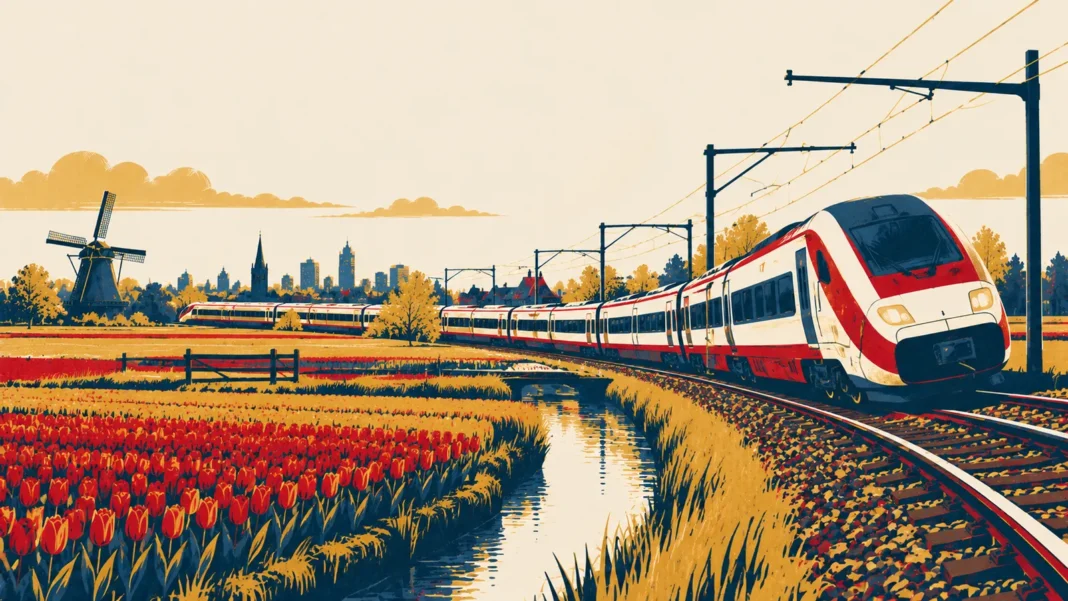
Barcelona, Spain – Tragedy has struck the Spanish railway network for the second time in 48 hours. Late Tuesday evening, a commuter train traveling on the R4 line derailed between Gelida and Sant Sadurní d’Anoia, near Barcelona. The accident, caused by a massive landslide triggered by torrential rains, resulted in the death of the train driver and left 37 passengers injured.
This latest disaster follows a catastrophic collision near Córdoba just two days ago, which claimed 41 lives. As Spain enters a period of national mourning, the focus has shifted from rescue efforts to a heated debate over the resilience of Europe’s aging infrastructure in the face of an increasingly volatile climate.
Table of Contents
- The Barcelona Derailment: A Night of Chaos
- Emergency Response and Casualties
- Spain’s Rail Dilemma: Aging Tracks and Budget Gaps
- Climate Change: The New Enemy of Engineering
- EU Context: A Warning for the Continent
- Key Takeaways
- Dutch Learning Corner
- Community CTA
The Barcelona Derailment: A Night of Chaos
The derailment occurred at approximately 10:00 PM local time on one of the busiest commuter routes in Catalonia. The R4 line, which connects thousands of workers to the heart of Barcelona daily, became the site of a disaster when a retaining wall collapsed onto the tracks.
The Cause:
Following hours of unrelenting rain, the soil behind a concrete retaining wall became saturated and unstable. The sheer weight caused the wall to buckle, dumping several tons of mud and debris directly onto the path of the oncoming train. The impact was unavoidable, leading several carriages to leave the rails and slam into the surrounding embankment.
Emergency Response and Casualties
The Catalan emergency services (SEM) launched an immediate “Code Red” response. Over 20 ambulances and nearly 40 fire crews were deployed to the rugged terrain between Gelida and Sant Sadurní.
Despite the swift arrival of paramedics, the train driver was pronounced dead at the scene after being trapped in the crushed cockpit. Of the 37 passengers treated, four remain in serious condition in Barcelona hospitals. Minister of the Interior, Nuria Parlón, emphasized that while all passengers have been safely evacuated, the emotional toll on the survivors is significant. Psychologists have been deployed to assist those who spent hours trapped in the dark carriages.
Spain’s Rail Dilemma: Aging Tracks and Budget Gaps
Coming so soon after the Córdoba tragedy, this accident has ignited a firestorm of criticism against Adif (Spain’s railway infrastructure manager). Critics argue that while billions have been poured into the high-speed AVE network, the conventional “Cercanías” lines—used by millions of ordinary citizens—have been neglected.
The Maintenance Deficit:
Independent rail analysts point to a “maintenance deficit” that has been accumulating for over a decade. Retaining walls, drainage systems, and signaling equipment on many secondary lines are outdated. In Barcelona, the R4 line has long been flagged by local commuters for frequent delays and minor technical failures, making this fatal derailment a “preventable tragedy” in the eyes of many activists.
Climate Change: The New Enemy of Engineering
Infrastructure experts are sounding the alarm: our current engineering standards were not built for the 2026 climate reality. The “torrential rains” experienced in Spain this week are becoming more frequent and intense.
“A retaining wall built 30 years ago was designed for 30-year flood levels,” explains a structural analyst specializing in resilience. “We are now seeing 100-year events every few months. Without a total reassessment of how we monitor soil stability and reinforce embankments, the entire European rail network remains at risk.”
EU Context: A Warning for the Continent
The crisis in Spain is a mirror for the rest of Europe, including the Netherlands. While ProRail (the Dutch infrastructure manager) maintains high standards, the shared challenge is the same: how to maintain a dense, high-frequency network while weather patterns become more extreme.
The European Union has called for an urgent safety review of cross-border rail corridors. The goal is to implement AI-driven monitoring systems that can detect soil movement in real-time before a wall collapses. For now, Spanish authorities are considering temporary speed restrictions across the entire northern network during heavy rainfall to prevent further loss of life.
Key Takeaways
- Double Tragedy: Two major rail accidents in Spain within 48 hours have left the nation in shock.
- Maintenance Gap: Focus on high-speed rail has allegedly led to the neglect of vital commuter lines.
- Environmental Impact: Extreme rainfall triggered the landslide, highlighting infrastructure vulnerability to climate change.
- Investigation: A nationwide review of retaining walls and embankments is now underway.
Dutch Learning Corner
| Word | Pronun. (Eng) | Meaning | Context (NL + EN) |
|---|---|---|---|
| 💥 De Ontsporing | De Ont-spor-ing | Derailment | De ontsporing vond plaats bij Barcelona. (The derailment took place near Barcelona.) |
| 🛤️ Het Spoor | Het Spoor | The Track / Rail | Er lag modder op het spoor. (There was mud on the track.) |
| 🚧 Het Onderhoud | Het On-der-houd | Maintenance | Onderhoud is cruciaal voor de veiligheid. (Maintenance is crucial for safety.) |
| 🌧️ De Overstroming | De Oh-ver-strom-ing | Flood / Overflow | Zware regen leidde tot een overstroming. (Heavy rain led to a flood.) |
Is Travel Safety Being Sacrificed for Speed?
As we build faster and more expensive rail networks, are we neglecting the foundation of our daily travel? Do you feel safe on the European rail network during extreme weather events, or is it time for a total overhaul of our safety standards? Share your thoughts below.
Source / Official Reports: Renfe Operadora & Generalitat de Catalunya.
Free: Netherlands 2027 Money Checklist
Every deadline and number you need before and after 1 January 2027, on two printable pages. Confirm your email and the PDF is yours; we will also email you when the 2027 figures are confirmed.
 Read nextWorldNATO War Prep: Why Europe (and The Netherlands) is Bringing Back the Draft