




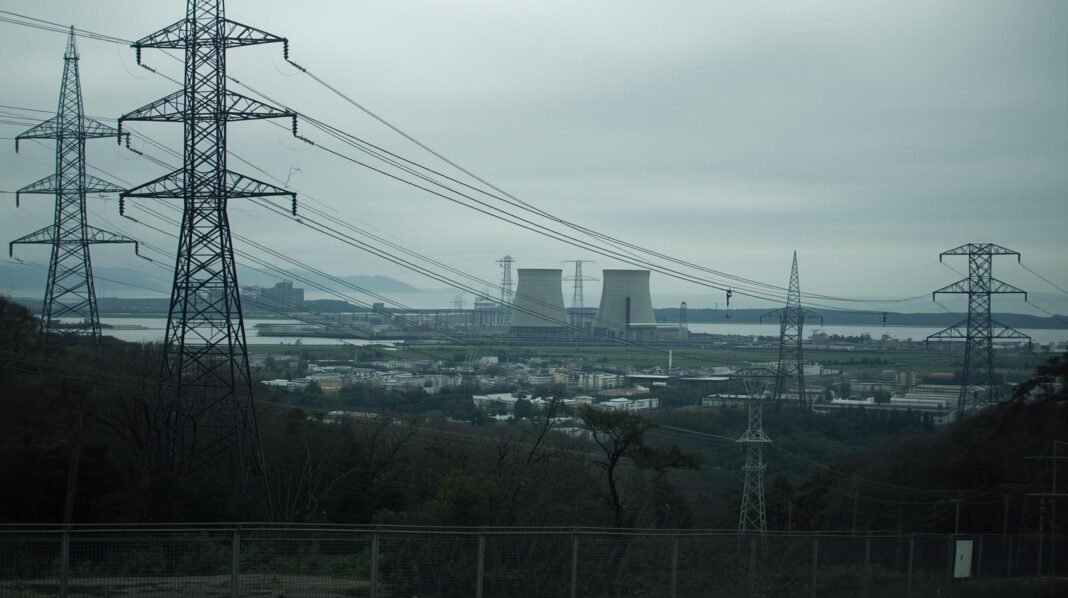
Nuclear Setback: World’s Largest Plant Halts Operations Just 24 Hours After Historic Restart
Niigata / Tokyo – Japan’s ambitious attempt to turn the page on its nuclear history hit a major stumbling block on Friday. The Kashiwazaki-Kariwa Nuclear Power Plant, the largest nuclear generation facility in the world by capacity, was forced to shut down its newly restarted No. 6 reactor less than a day after it went online.
Operated by TEPCO (Tokyo Electric Power Company), the restart was meant to be a symbolic victory, marking the facility’s return to service 15 years after the Fukushima Daiichi disaster. Instead, a malfunction in the control rod drive mechanism triggered an automatic shutdown, reigniting public anxiety and casting a long shadow over Prime Minister’s “Green Transformation” (GX) strategy to revitalize the nation’s energy grid.
Table of Contents
- The 24-Hour Failure: What Went Wrong?
- Control Rods and Sensors: The Technical Fault
- TEPCO’s Trust Deficit: A History of Errors
- Japan’s Energy Dilemma: LNG vs. Nuclear
- Future Implications: Will Unit 7 Follow?
- Expert Analysis: Safety Culture Under Scrutiny
- Key Takeaways
- Dutch Learning Corner
- Community CTA
The 24-Hour Failure: What Went Wrong?
On Thursday, engineers in the control room of Kashiwazaki-Kariwa initiated the fission chain reaction in Unit 6, a milestone that had been delayed for over a decade due to strict safety upgrades. However, by Friday morning, alarms blared, and the safety systems automatically inserted control rods to stop the reaction.
TEPCO officials were quick to hold a press conference, bowing in apology (a familiar sight in Japanese corporate culture). They confirmed that “Unit 6 was manually shut down following an alert related to the control rod drive power supply.” Crucially, they emphasized that no radiation leaked and the cooling systems remained fully operational. However, for the residents of Niigata Prefecture, “no leak” is the bare minimum requirement, not a reassurance.
Control Rods and Sensors: The Technical Fault
According to Kyodo News, the specific issue was traced to a faulty power supply cable connected to the reactor’s control rod monitoring system. Control rods are the “brakes” of a nuclear reactor; they absorb neutrons to slow down or stop the fission process.
While the rods themselves functioned correctly (they successfully shut down the plant), the sensor claiming a loss of power triggered the failsafe. This type of electrical fault, while not a nuclear danger, suggests that the decade-long dormancy of the plant may have led to the degradation of non-nuclear components—a phenomenon known as “mothball aging.”
TEPCO’s Trust Deficit: A History of Errors
The technical failure is compounded by the operator’s identity: TEPCO. This is the same company that managed the Fukushima Daiichi plant in 2011. Since then, TEPCO has struggled to regain public trust.
In 2021, the Nuclear Regulation Authority (NRA) effectively banned TEPCO from restarting Kashiwazaki-Kariwa after it was discovered that an employee had used a colleague’s ID card to enter the central control room, and that intrusion detection systems had been broken for months. This ban was only lifted in late 2023. This new “day-one” failure reinforces the narrative among critics that TEPCO’s safety culture remains fundamentally flawed.
Japan’s Energy Dilemma: LNG vs. Nuclear
Why is Japan pushing so hard to restart these plants? The answer is economic survival. Since shutting down its nuclear fleet, Japan has relied heavily on imported Liquefied Natural Gas (LNG) and coal, leading to massive trade deficits and high electricity bills for households.
The government views the restart of Kashiwazaki-Kariwa—which can generate 8.2 gigawatts when fully operational—as essential for energy security and for meeting carbon neutrality goals. This incident puts the government in a bind: pushing for a restart looks reckless, but abandoning it risks economic stagnation.
Future Implications: Will Unit 7 Follow?
Unit 6 was supposed to be the “test run” before the restart of the newer Unit 7. This failure will almost certainly delay the timeline for Unit 7 and potentially for other reactors across Japan. The Governor of Niigata, whose approval is needed for full operations, has previously stated that “trust is the prerequisite for operation.” That trust has just evaporated within 24 hours.
We can expect a renewed series of safety inspections, likely delaying any meaningful power generation from this site until late 2026 or 2027.
Expert Analysis: Safety Culture Under Scrutiny
Energy policy analysts in Tokyo suggest that this incident highlights a specific vulnerability in Japan’s restart strategy. “The hardware can be fixed, but the software—the human element and operational readiness—is rusty,” one analyst noted. “You cannot simply flip a switch on a machine that has slept for 15 years. This incident proves that the rigorous inspections focused too much on earthquake resilience and perhaps too little on basic electrical maintenance.”
Key Takeaways
- The Event: Kashiwazaki-Kariwa Unit 6 shut down due to a technical fault just 24 hours after restart.
- The Cause: A power supply issue in the control rod monitoring system (not a nuclear leak).
- The Context: This was the first restart attempt at the world’s largest plant since the 2011 Fukushima disaster.
- The Consequence: A major blow to TEPCO’s credibility and Japan’s timeline for reducing LNG imports.
Dutch Learning Corner
| Word (Dutch) | Pronun. (Eng) | Meaning | Context (NL + EN) |
|---|---|---|---|
| ☢️ De Kerncentrale | De Kern-sen-trah-le | Nuclear Power Plant | De kerncentrale is veilig afgesloten. (The nuclear power plant is safely shut down.) |
| 🛡️ De Veiligheid | De Vey-lig-heyt | Safety | Veiligheid is de prioriteit. (Safety is the priority.) |
| ⚡ De Stroomuitval | De Stroom-out-fal | Power Outage / Failure | Een technische stroomuitval veroorzaakte het probleem. (A technical power failure caused the problem.) |
| ⚠️ De Storing | De Stor-ing | The Malfunction / Fault | Er was een storing in het systeem. (There was a fault in the system.) |
Is Nuclear Power Worth the Risk?
Japan is desperate for cheap energy, but incidents like this remind us of the complexities of nuclear technology. Do you trust restarts of older plants, or should nations focus purely on renewables despite the higher initial cost? Join the debate below.
Source / Industry Data: TEPCO Official Press Release & Kyodo News Japan.

