



Last updated:
THE HAGUE – For decades, the Netherlands was the gas hub of Europe (thanks to the Groningen field). Then, it tried to be the wind hub of the North Sea. Now, in 2026, the national strategy has shifted dramatically once again.
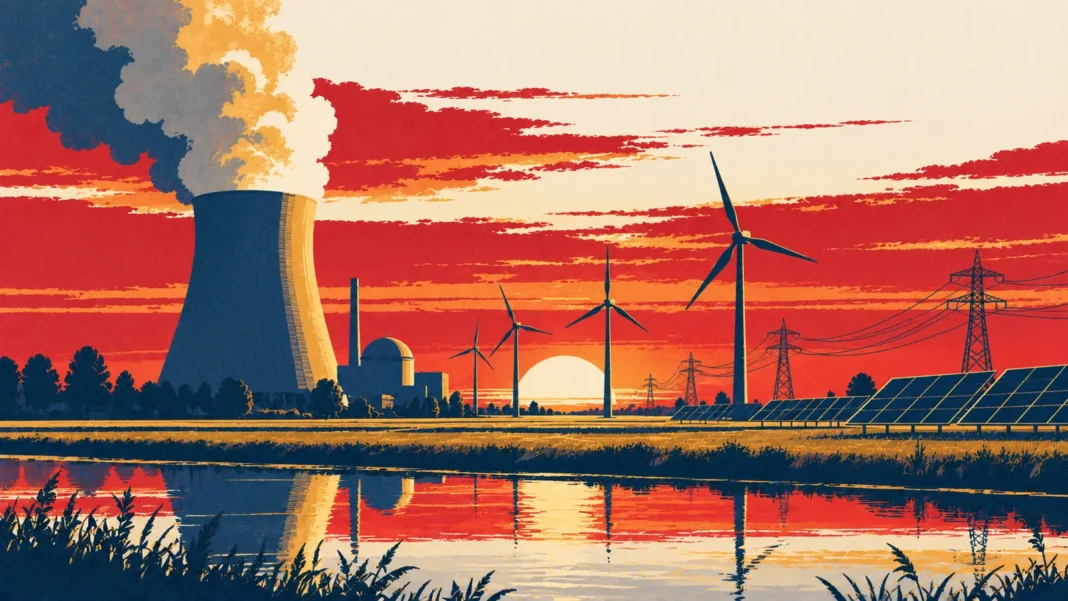
The new “Jetten I” cabinet has officially passed the Energy Crisis Act (Energiecrisiswet), marking the biggest shift in infrastructure policy since the Delta Works. The headline is bold: Four new nuclear reactors will be built to secure the nation’s baseload power. But while politicians talk about 2035, expats and homeowners are facing a much more immediate nightmare: Netcongestie (Grid Congestion).
The grid is full. You buy a Tesla, but you can’t install a charger. You buy solar panels, but the energy company charges you a fine for generating electricity. Renters are navigating new bans on drafty homes, and the subsidy landscape is a maze of acronyms.
In this massive, definitive 3200-word energy dossier, we break down the nuclear plans, the grid crisis map (which provinces are blocked?), the math behind home batteries, and how to survive the new “Solar Penalties” (Terugleverkosten).
Table of Contents
- The Nuclear Renaissance: 4 New Reactors
- The Real Crisis: What is “Netcongestie”?
- The “Red Zone” Map: Which Provinces are Blocked?
- The Solar Trap: Salderingsregeling & Penalties
- The “Terugleverkosten” List: Who Charges What?
- The Home Battery (Thuisbatterij): Is it Time?
- The Solution: Dynamic Contracts (Tibber/ANWB)
- The Heat Pump U-Turn & Noise Laws
- The “Stadsverwarming” Trap (District Heating)
- Can You Go “Off-Grid” in the Netherlands?
- Renters & Energy Labels: The New Law
- EV Charging: The Hidden Costs
- 2026 Price Forecast: Gas vs. Electricity
- Energy FAQ 2026
- Energy Vocabulary Corner
The Nuclear Renaissance: 4 New Reactors
After years of political taboo, nuclear energy is back on the menu. The government argues that wind and solar are too unreliable (“Dunkelflaute” – days with no sun or wind) and hydrogen is too expensive to produce without constant power.
The Master Plan
The Ministry of Economic Affairs has designated nuclear energy as “Crucial National Infrastructure,” allowing them to bypass local municipality objections.
- Location 1: Borssele (Zeeland). The existing plant (EPZ) will have its life extended. More importantly, two large Generation III+ reactors will be built next to it. These are massive 1000+ MW units capable of powering millions of homes.
- Location 2: Maasvlakte (Rotterdam). A new site designated for industrial hydrogen production. The plan is to use nuclear heat and electricity to produce “Pink Hydrogen” for the heavy industry in the port, replacing fossil fuels.
- SMRs (Small Modular Reactors): The province of Limburg and Noord-Brabant are actively investigating sites for 2 SMRs. These smaller, factory-built reactors are intended to power the chemical industry clusters (Chemelot) which are currently gas-hungry.
Timeline: Construction is set to begin in 2028, with the first electrons flowing in 2035.
Expat Impact: You won’t see cheaper bills from this immediately. This is a long-term play to lower the carbon tax (CO2 tax) on electricity and guarantee stability in the 2030s.
The Real Crisis: What is “Netcongestie”?
If you learn one Dutch word this year, make it Netcongestie (Network Congestion).
The Problem: The Dutch electricity cables were laid 50 years ago. They were designed for a simple life: lightbulbs, a TV, and a fridge. They were NOT designed for heat pumps, induction cooking, EV chargers, and solar farms exporting power.
The Traffic Jam: Just like the A10 highway at rush hour, the cables are physically full. If more power is pushed through, the cables will melt and transformers will explode.
Congestiemanagement: Grid operators (TenneT, Liander, Enexis) are now paying large industrial users (factories, cold storage) to turn off their machines during peak hours (17:00 – 20:00) to free up space for households.
The “Red Zone” Map: Which Provinces are Blocked?
Netcongestie is not evenly distributed. Depending on where you live or want to open a business, the reality changes drastically. Here is the 2026 Grid Status:
- Utrecht & Flevoland (Code Red): The grid is absolutely full.Impact: New businesses cannot get a connection until 2029. New housing projects in Almere and Utrecht are delayed unless they implement “Smart Grid” solutions (batteries + limited grid draw). If you buy a new-build here, ask specifically about the connection guarantee.
- Noord-Brabant & Limburg (Code Orange/Red):Impact: Enexis has paused large-scale solar connections. If you plan to install 50 panels on your barn, forget it. You will not be allowed to feed back into the grid.
- Amsterdam & Rotterdam (Code Orange):Impact: Stedin urges consumers to use power off-peak. There are pilots for “Flex-Tariffs” where grid fees (Netbeheerkosten) are cheaper at night to encourage washing/charging off-peak.
The Solar Trap: Salderingsregeling & Penalties
Holland is the solar champion of Europe (most panels per capita). But success has a price.
The Old System (Salderingsregeling):
You produce 1 kWh in summer, you use 1 kWh in winter. The meter subtracts them. You pay nothing. This was paradise.
The 2026 Reality:
1. Phasing Out: The Salderingsregeling is officially dropping. In 2026, you can only offset 64% of your usage. In 2027, it drops to 55%. By 2031, it reaches 0%.
2. Terugleverkosten (Feed-in Penalty):
This is the shocker. Energy companies (Vattenfall, Eneco, Budget) now charge YOU a fee for every kWh you send back to the grid on sunny days.
Why? Because your excess solar power destabilizes their grid and costs them money to balance (negative prices).
The Cost: Approx. €10 to €20 per month extra for an average household with 10 panels.
The “Terugleverkosten” List: Who Charges What?
Not all energy companies are equal. As of early 2026, here is how the major players punish solar owners:
| Provider | The Mechanism | Approx. Monthly Cost (10 Panels) |
|---|---|---|
| Vattenfall | Scaled Fee. Based on the total kWh you feed back per year. (e.g., 1000-1500 kWh bracket). | €12 – €18 |
| Eneco | Flat Rate per kWh. You pay approx €0.11 for every kWh fed back. | €15 – €22 |
| Budget Energie | Daily Fee. A fixed amount per day based on your system size. | €10 – €15 |
| Tibber / Frank | Dynamic. No penalty fee, BUT you get the spot price. If the price is negative, you pay to feed in. | Variable |
The Home Battery (Thuisbatterij): Is it Time?
With the “Terugleverkosten” rising and Salderingsregeling fading, everyone is asking: “Should I buy a battery?”
The Math in 2026:
A 10kWh battery (LFP technology) costs approx. €5,000 – €7,000 (installed).
The Benefit: You store your free solar energy at noon and use it at 7 PM. You avoid paying the grid fee penalty and avoid buying expensive evening electricity.
The ROI (Return on Investment):
- With Salderingsregeling (Current): 15+ years. (Not worth it purely for storage).
- Without Salderingsregeling (Future): 7-9 years.
- With “Trading”: 5-6 years.
The “Trading” Hack: Combined with a dynamic contract, smart batteries (like Sessy or Tesla Powerwall) can charge when grid prices are negative (you get paid to charge) and discharge when prices are high. This “Energy Trading” significantly reduces the payback period.
The Solution: Dynamic Contracts (Tibber/ANWB)
With fixed contracts becoming expensive due to risk premiums, savvy expats are switching to Dynamic Energy Contracts.
How it works:
You pay the “Spot Price” (hourly market price) plus a small handling fee.
- 14:00 (Sunny & Windy): Price might be negative (e.g., -€0.05). You literally get paid to turn on your washing machine.
- 19:00 (Evening Peak): Price spikes to €0.35/kWh.
Who is this for?
If you have an EV and a Smart Home system (Home Assistant), you can automate your consumption. If you are “lazy” and run the dishwasher at 6 PM regardless of price, do NOT do this.
Comparison:
Neighbor A (Fixed): Pays €0.32 flat rate. Yearly cost: €960.
Neighbor B (Dynamic): Pays €0.24 avg. Yearly cost: €720. Saving: €240.
The Heat Pump U-Turn & Noise Laws
Former Minister Hugo de Jonge wanted to ban traditional gas boilers (CV-ketels) completely by 2026.
The New Rule: The strict ban has been softened due to installer shortages and grid issues.
Hybrid Heat Pump Standard: From 2026, if your gas boiler breaks, you are required to replace it with a Hybrid Heat Pump (approx cost €6,000) UNLESS:
1. Your house is an apartment (VvE approval issues).
2. Your house is a monument.
3. Your payback period is calculated to be longer than 7 years.
Free Money: ISDE Subsidies Guide
The government pays you to go green via the ISDE (Investeringssubsidie duurzame energie):
- Heat Pumps: Approx. €2,500 – €3,750 cashback.
- Insulation: Approx. 15% (1 measure) or 30% (2 measures) of the cost covered.
- Condition: You must use a certified contractor. DIY work is NOT eligible.
The “Noise” Regulation (Geluideisen)
Installing a heat pump is not just about money; it’s about the law.
The Rule: Your heat pump’s outdoor unit generally cannot produce more than 40 decibels (dB) at the property line of your neighbor at night.
The Problem: Most standard heat pumps produce 50-60 dB.
The Solution: You might need to buy an expensive acoustic cover (approx. €1,000 extra) or place it further in the garden. If your neighbor complains and the municipality measures 41 dB, you will be forced to turn it off or move it. This is a common legal dispute in dense “Rijtjeshuis” neighborhoods.
The “Stadsverwarming” Trap (District Heating)
If you live in a new-build apartment in Amsterdam, Utrecht, or Rotterdam, you likely have Stadsverwarming (District Heating) instead of gas.
The Concept: Waste heat from industry heats your home.
The Reality: It is a Monopoly. Unlike gas/electricity, you cannot switch providers. You are stuck with Vattenfall or Eneco.
The Pricing (NMDA): Historically, heat prices were linked to gas prices (“Niet-Meer-Dan-Anders” principle). Even if gas prices spiked, your “waste heat” bill spiked too.
2026 Update: The new “Warmtewet” tries to base costs on actual production, but tariffs remain high. Budget +20% more for heating costs compared to gas.
Can You Go “Off-Grid” in the Netherlands?
With all these taxes, fees, and rising costs, many expats ask: “Can I just cut the cable?”
The Technical Answer: Yes, with enough solar and a massive battery (30kWh+).
The Legal Answer: It is extremely difficult.
The Obstacles:
1. Occupancy Permit (Woonvergunning): Building codes (Bouwbesluit) require a house to have reliable heating and electricity. If you cut the grid, the municipality might declare your house “uninhabitable” and revoke your permit.
2. Mortgage: Banks will almost never give a mortgage for an off-grid house because the risk is too high.
3. Winter: In December/January, NL gets very little sun. You would need a diesel generator, which conflicts with environmental permits.
Renters & Energy Labels: The New Law
The Affordable Rent Act (Wet betaalbare huur) has changed the game.
The Points System (WWS):
Energy labels now weigh heavily on the maximum rent a landlord can charge.
- Label A: Bonus points. Rent can be higher.
- Label E, F, G: Negative points (e.g., -10 points for Label G). Rent MUST be lower.
The Ban: It is increasingly illegal to sign new contracts for Label G apartments in the “regulated” sector.
Tenant Power: If you move into a drafty, single-glazed apartment, you can go to the Huurcommissie within the first 6 months. They can force a mandatory rent reduction (often hundreds of euros per month) until the landlord fixes the insulation.
EV Charging: The Hidden Costs
Driving a Tesla in NL is popular, but charging is complex.
Home Charging: €0.25 – €0.30 / kWh. (Cheapest).
Public Street Charging: €0.45 – €0.60 / kWh.
Fast Charging: €0.70 – €0.90 / kWh.
The Trap: “Blokkeertarief” (Blocking Fee)
To stop cars from hogging spots, many operators now charge a “Blocking Fee” (e.g., €0.05 per minute) after your car is full or after 4 hours connected. Leaving your car plugged in overnight on a street charger can result in a €20 extra fee by morning. Check the app (Shell Recharge/Plugsurfing) before you plug in!
2026 Price Forecast: Gas vs. Electricity
Gas: Prices are rising due to higher taxes (Energiebelasting). The government wants to “punish” gas usage to force the switch to electric.
Electricity: The bare price per kWh is dropping (thanks to abundant wind/solar), but the Grid Management Fee (Netbeheerkosten) has exploded by +20% to pay for the new cables.
Advice: Insulate your home. The “Gas Tax” will only go up.
Energy FAQ 2026
Q: I rent a house with Energy Label G. Can I force my landlord to improve it?
A: Yes. If you have a regulated contract, you can go to the Huurcommissie for a rent reduction.
Q: Should I buy a battery now?
A: If you have solar panels and are paying high feed-in fees, a battery is becoming attractive. If you have a dynamic contract, it’s a smart investment.
Q: Is nuclear energy safe in NL?
A: The Netherlands has one of the strictest nuclear regulators (ANVS). The Borssele region is geologically stable.
Energy Vocabulary Corner
| Word (Dutch) | Pronunciation | Meaning & Context |
|---|---|---|
| ⚡ Netcongestie | Net-con-ges-tie | Grid Congestion. The reason you can’t get a connection. |
| 💸 Terugleverkosten | Te-rug-le-ver… | Feed-in Costs. The penalty fee for solar panel owners. |
| 📉 Salderen | Sal-de-ren | Netting. Offsetting summer production against winter usage. |
| 🔥 Stadsverwarming | Stads-ver-war-ming | District Heating. Centralized heating system (Monopoly). |
📚 Sources & References
This report is based on the 2026 National Energy Outlook (NEV) and Ministry of Economic Affairs policy documents.
- Legislation: “Energiecrisiswet 2026” (Official Gazette).
- Grid Data: TenneT & Liander capacity maps (Schaarstegebieden).
- Subsidies: RVO.nl (ISDE Subsidies 2026).
- Pricing: CBS Inflation & Energy Price Index January 2026.
- Original analysis by The Dutch Daily Energy Desk.
TDD Community Question
Are you paying the “Solar Penalty”? Have you switched to a dynamic contract like Tibber? Or are you worried about the nuclear plants? Share your energy bills and strategies in the comments below!
More in our guide: Moving to the Netherlands – the newcomer guide for internationals
Free: Netherlands 2027 Money Checklist
Every deadline and number you need before and after 1 January 2027, on two printable pages. Confirm your email and the PDF is yours; we will also email you when the 2027 figures are confirmed.
 Read nextLiving in NLRent Increase Netherlands 2026 & Deposit Return: Huurcommissie, Legal Caps and How to Claim Your Borg