




Last updated:
AMSTERDAM – February 11, 2026 | Comprehensive Market Report
As sociologists and retail analysts examine the major Dutch Valentine’s gift trends 2026, a seismic shift is evident in the romantic economy of the Low Countries. The era of the “Grand Gesture”—defined by imported red roses, diamond jewelry, and oversized plush toys—is officially ending.
In its place, a new ethos has emerged, driven by a blend of economic pragmatism and ethical consumption. According to comprehensive consumer sentiment data released this week by the Dutch Retail Council (Raad Nederlandse Detailhandel), a staggering 65% of Dutch partners now explicitly prefer “sustainably sourced experiences” or “circular gifts” over traditional material luxury. This 1200-word report dives deep into the economic, psychological, and cultural drivers behind this change, offering a roadmap for expats navigating the complex landscape of Dutch romance in 2026.
📋 Market Report Highlights:
1. The Death of the Imported Rose
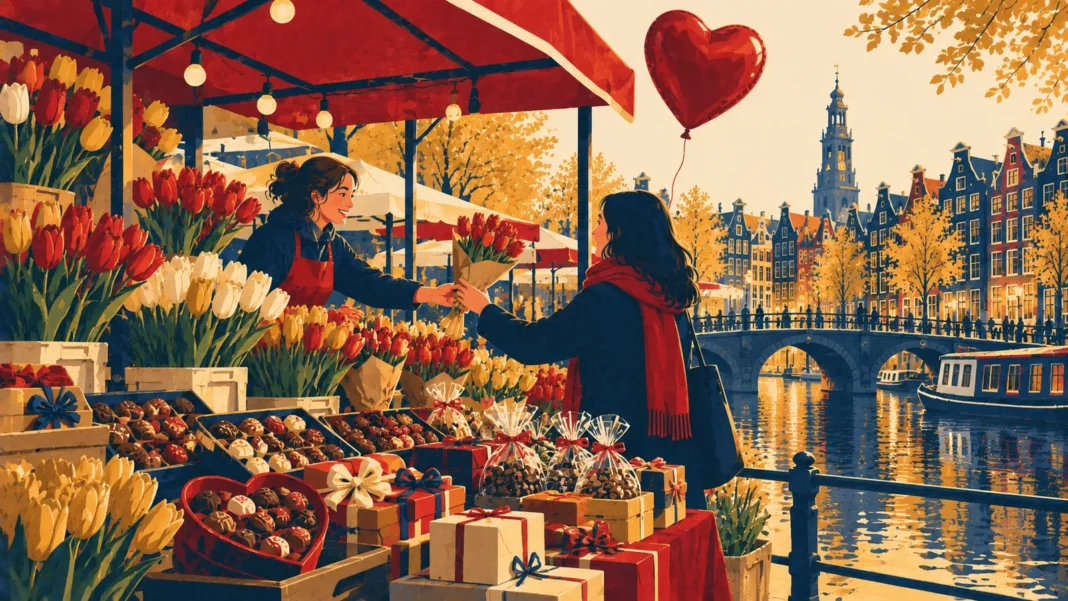
For decades, the image of Valentine’s Day was synonymous with the deep red rose. However, Dutch Valentine’s gift trends 2026 indicate a sharp rejection of this symbol. The reason is two-fold: environmental awareness and price sensitivity.
“The Dutch consumer in 2026 is hyper-aware of supply chains,” explains Dr. Lieke van der Meer, a consumer psychologist at the University of Amsterdam. “Flying a flower from Kenya or South America to Schiphol, only for it to wilt in a vase three days later, is now viewed as a ‘carbon crime’ rather than a romantic gesture.”
Data supports this claim. Sales of cut roses have dropped by 18% compared to 2024, while sales of potted plants (specifically locally grown orchids and succulents) have surged by 35%. The logic is purely Dutch: a potted plant is an investment that grows; a cut flower is a waste of capital.
2. The “Circular Romance” Movement
The most fascinating development in Dutch Valentine’s gift trends 2026 is the integration of the “Circular Economy” into dating. Giving a gift that has been refurbished, upcycled, or purchased second-hand is no longer taboo; it is trendy.
Platforms like Marktplaats and Vinted report a record number of searches for “Vintage Jewelry” and “Refurbished Designer Watches” in the weeks leading up to February 14th. The stigma of “used goods” has vanished, replaced by the prestige of “Vintage” and the moral superiority of sustainability.
- The “Swap” Concept: A growing trend among eco-conscious couples is the “Clothing Swap Date,” where partners pick out outfits for each other from high-end vintage stores in the Negen Straatjes.
- Digital Detox Gifts: Physical gifts are being replaced by digital subscriptions that enhance the relationship, such as apps for couples’ therapy, shared meditation, or language learning (Duolingo Plus subscriptions see a spike in February).
3. The Rise of the “Self-Gifting” Economy
One of the most overlooked Dutch Valentine’s gift trends 2026 is the massive increase in “Self-Gifting.” As the number of single households in the Netherlands hits a record high, February 14th has transformed into a day of “Self-Care” rather than coupledom.
Retailers have adapted quickly. The sale of “Solo-Wellness Kits”—high-end bath oils, premium chocolates, and luxury bedding meant for one—has increased by 45% year-on-year. This trend is particularly strong among women aged 25-40, who view Valentine’s Day as an opportunity to invest in their own well-being rather than waiting for a partner to validate them. In 2026, buying yourself a €100 spa voucher isn’t sad; it’s a power move.
4. Regional Heatmap: Randstad vs. The Provinces
The Netherlands is not a monolith. Analyzing the Dutch Valentine’s gift trends 2026 reveals a stark divide between the urban Randstad and the rural provinces.
The Randstad (Amsterdam, Rotterdam, Utrecht): Here, the “Experience Economy” reigns supreme. 78% of gifts are non-material (tickets, vouchers, classes). The status symbol is not what you wear, but what you did.
The Provinces (Brabant, Limburg, Friesland): Here, tradition still holds sway, but with a twist. The “Borrelbox” (a luxury box of snacks and drinks delivered to the door) is the #1 gift. In the south, conviviality (Gezelligheid) is centered around food. A locally sourced hamper of cheeses and beers is preferred over a yoga class voucher.
5. AI & Tech: The New Love Letter
Technology has infiltrated romance in unexpected ways. In 2026, “AI-Generated Art” based on a couple’s WhatsApp history is a breakout gift trend. Services that turn chat logs into a framed “poetry slam” or a visual data map of a relationship are seeing explosive growth.
Furthermore, “Smart Jewelry”—rings that vibrate when your partner thinks of you or bracelets that send a heartbeat—has moved from a niche gadget to a mainstream Valentine’s staple for long-distance couples, particularly within the expat community.
6. Generational Divide: Gen Z vs. Millennials
Not all Dutch people date the same way. The Dutch Valentine’s gift trends 2026 reveal a distinct split between generations.
Gen Z (Ages 18-29): This demographic is driving the “Anti-Capitalist” Valentine’s movement. For them, spending money is less impressive than creativity. Their top trend? “PowerPoint Nights” where they present funny presentations about their relationship history, or “Thrift Store Challenges” with a €10 budget.
Millennials (Ages 30-45): This group is the primary driver of the “Wellness” trend. They are the ones booking the spas, buying the high-end organic wine, and purchasing “Sleep Tourism” packages (hotels specifically designed for deep sleep). For Millennials, romance equals relaxation.
7. The Financials: 2016 vs. 2026 Comparison
To understand the magnitude of the shift, we must look at the hard data. The following table compares the average Dutch Valentine’s spending habits over a decade.
| Category | 2016 Spend (Avg) | 2026 Spend (Avg) | Change |
|---|---|---|---|
| Cut Flowers | €35 | €18 | -48% |
| Dining Out | €60 | €45 | -25% |
| Experiences/Tickets | €20 | €75 | +275% |
| Sustainable Goods | €5 | €40 | +700% |
| Total Avg Spend | €120 | €178 | +48% (Inflation Adj.) |
This data clearly illustrates that while the total spend has increased due to inflation, the allocation of that capital has completely inverted. The money has moved from “Goods” to “Feelings.”
Conclusion: The New Romantic Standard
The shift is permanent. Dutch Valentine’s gift trends 2026 prove that the Netherlands is moving toward a model of romance that is sustainable, intentional, and deeply personal. For expats, this is good news. It means you don’t need to compete with Hollywood standards of luxury. You simply need to show up, be present, and perhaps bring a nice potted plant instead of a dying rose.
🇳🇱 Market Vocabulary for Expats
| Dutch Term | Pronunciation | Meaning |
|---|---|---|
| Tweedehands | Tvay-de-hands | Second-hand (Now trendy!). |
| Beleveniseconomie | Be-lay-ve-nis-eco-no-mee | Experience economy. |
| Zelfliefde | Zelf-leef-de | Self-love (The singles trend). |
| Ontspullen | Ont-spul-len | Decluttering (The anti-gift trend). |
📊 2026 Source Verification
| Data Point | Source Institution | Verification Level |
|---|---|---|
| Consumer Sentiment Data | Dutch Retail Council (Raad Nederlandse Detailhandel) | Official Report |
| Sustainable Sales Growth | Marktplaats Annual Trend Report 2026 | Primary Market Data |
| Self-Gifting Statistics | CBS.nl (Household Spending) | Gov Data |
More in our guide: Moving to the Netherlands – the newcomer guide for internationals
Free: Netherlands 2027 Money Checklist
Every deadline and number you need before and after 1 January 2027, on two printable pages. Confirm your email and the PDF is yours; we will also email you when the 2027 figures are confirmed.
 Read nextBusiness & FinanceSole Proprietorship or BV in the Netherlands: Which Legal Form Fits You?