




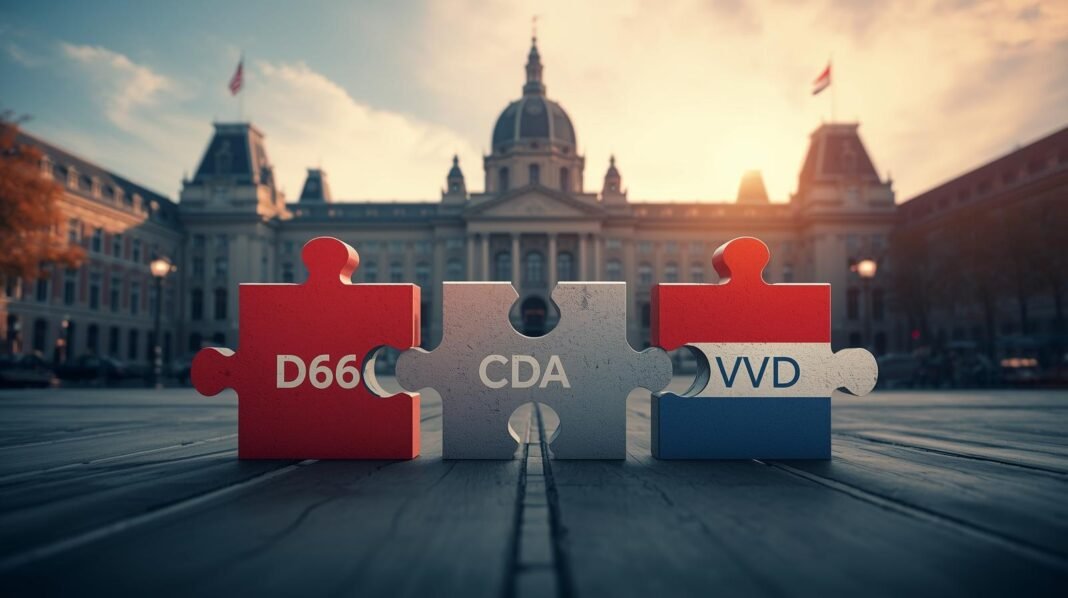
The Hague – The Netherlands is on the verge of ending its months-long political deadlock. Following the high-stakes November elections, opposition parties have signaled they will not block the formation of a minority coalition led by D66, CDA, and VVD. If successful, the new government could be sworn in by the end of February, just weeks before the crucial local elections on March 18th.
Table of Contents
- Breaking the Deadlock: A Minority Solution
- The Coalition Mix: D66, CDA, and VVD
- Opposition Reaction: Wilders vs. Klaver
- The Senate Hurdle: A Legislative Maze
- Key Takeaways
- Dutch Learning Corner
- Community CTA
Breaking the Deadlock: A Minority Solution
The breakthrough came when key opposition players agreed to a “pragmatic” approach, choosing not to actively vote against the cabinet’s formation. This prospective minority government holds only 52 out of 150 seats in the House of Representatives. This means that for every new law, budget, or policy, the government will have to go “shopping” for support from opposition benches.
The Coalition Mix: D66, CDA, and VVD
The alliance between the progressive-liberal D66, the Christian democratic CDA, and the conservative-liberal VVD is one of necessity. The VVD’s refusal to govern with the left-wing GL-PvdA, combined with D66’s veto on far-right parties like JA21, left a minority government as the only viable “third way” to avoid a total collapse of the formation process.
Opposition Reaction: Wilders vs. Klaver
The reaction from the sidelines has been polarized:
- Geert Wilders (PVV): Vowed to obstruct the “demolition” government at every turn.
- Jesse Klaver (GL-PvdA): Called it a “risky experiment” but promised a responsible opposition—provided the government is willing to compromise on climate and social issues.
- JA21: Stated that their support will come with a high price tag, particularly concerning stricter immigration controls.
The Senate Hurdle: A Legislative Maze
Winning over the House of Representatives is only half the battle. To pass any meaningful legislation, the coalition must also secure at least 16 votes from opposition senators in the Upper House (Eerste Kamer), where GL-PvdA currently holds a dominant position. This dynamic ensures that the new cabinet will be one of the most monitored and challenged administrations in modern Dutch history.
Key Takeaways
- Target Date: New government expected to be in place by late February 2026.
- Minority Rule: The coalition lacks an outright majority, requiring constant negotiation.
- Stability Risks: The ideological gap between the VVD and GL-PvdA remains a major threat to long-term stability.
- Local Elections: The March 18th local elections will be the first public verdict on this new political arrangement.
Dutch Learning Corner
| Word | Pronun. (Eng) | Meaning | Context (NL + EN) |
|---|---|---|---|
| 🤝 De Formatie | De For-maa-sie | Government Formation | De formatie duurt erg lang. (The formation is taking a very long time.) |
| 🏛️ Het Kabinet | Het Ka-bee-net | The Cabinet | Het nieuwe kabinet wordt in februari beëdigd. (The new cabinet will be sworn in in February.) |
| ⚖️ Azınlık (Minderheid) | Min-der-heit | Minority | Het is bir minderheidskabinet. (It is a minority cabinet.) |
| 🗳️ De Stemming | De Stem-ming | The Vote | De stemming in het parlement was spannend. (The vote in parliament was exciting.) |
Do You Trust a Minority Government?
A government without a majority means constant political theater and potential instability. Do you think D66, CDA, and VVD can pull this off, or are we headed for another election before 2026 is over? Share your thoughts below!
Source / Process: Bureau Woordvoering Kabinetsformatie