



Dutch Exodus: Why Hollanders are Flocking to Germany for Affordability
As the cost of living in the Netherlands continues its relentless climb into 2026, a growing number of Dutch citizens are seeking respite across the border in Germany. From fuel and groceries to tobacco and alcohol, a wide range of expenses are significantly cheaper just a few kilometers away. This trend is transforming cross-border shopping from a weekend luxury into a weekly necessity, particularly for those living in border regions like Enschede, Venlo, and Arnhem.
Table of Contents
Holland’s Exploding Living Costs
While official inflation figures project a slight stabilization, the real economic pressure felt by the Dutch public remains high. Successive tax increases on energy, plastic, and consumption are effectively negating wage increases. Families and the middle class are acutely aware that the Netherlands has become structurally more expensive compared to its eastern neighbor.
The Pain at the Pump: 2026 Fuel Hikes
Effective January 1, 2026, fuel prices in the Netherlands increased yet again due to inflation corrections on excise duties:
Gasoline (Euro 95): +5.5 cents/liter
Diesel: +3.5 cents/liter
LPG: +1.5 cents/liter
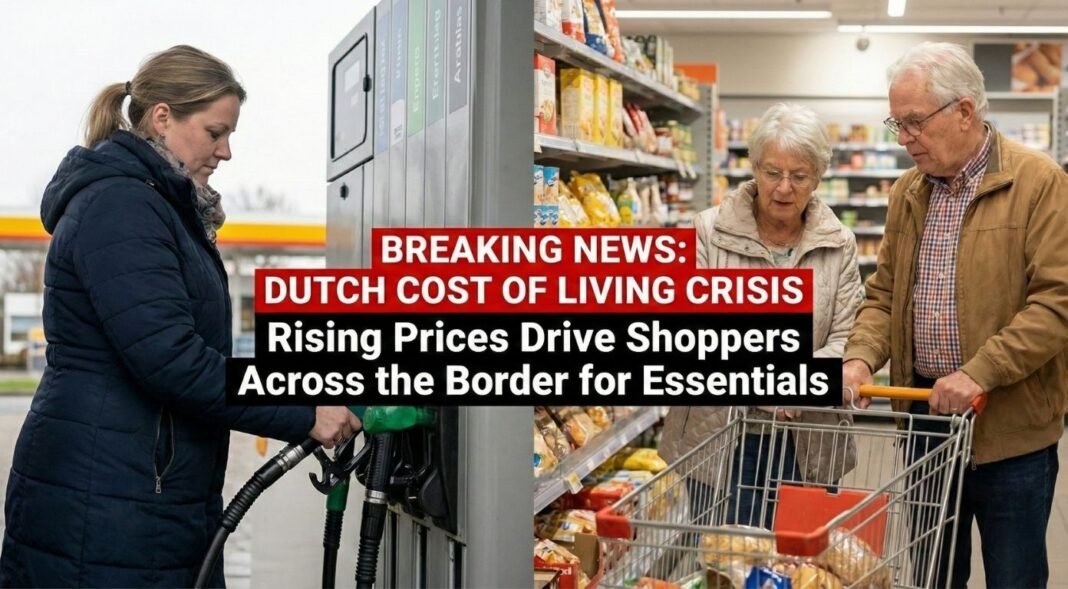
The CNV union warns that these increases punish commuters. Gasoline prices at German stations are currently 25-30 cents per liter cheaper, leading to massive queues of yellow-plated cars at German pumps (Tanktoerisme).
Market Runs: Groceries & Drugstore Items
Germany offers significantly lower prices not only on fuel but also on daily essentials. Dutch shoppers report savings of up to 40% on:
Personal Care: Shampoo, deodorant, and toothpaste (Drugstores like DM and Rossmann are hugely popular).
Meat & Dairy: Often cheaper and VAT differences play a role.
Beverages: Soft drinks and bottled water (no high sugar tax or Dutch deposit system complexity).
Tobacco and Alcohol: The Price Gap
Years of aggressive tax increases have made the Netherlands one of the most expensive countries in Europe for “vice” products.
Cigarettes: A pack can be €3-4 cheaper in Germany.
Alcohol: Spirits and beer enjoy lower excise duties. Consequently, many Dutch citizens stock up in bulk, depriving the Dutch state of significant tax revenue while boosting the German border economy.
Historical Context
The trend of Dutch citizens shopping in neighboring countries isn’t new. However, the motivation has shifted from “finding special products” to “basic survival.” The widening gap in indirect taxes (VAT, excise, energy tax) between the Netherlands and Germany has intensified the phenomenon, making cross-border shopping a financial no-brainer for thousands.
Future Implications
If the cost of living disparity continues to widen, the “exodus” to Germany will accelerate. This poses a threat to Dutch border businesses (gas stations, supermarkets) which face unfair competition. Politically, it increases pressure on The Hague to reconsider the accumulation of consumption taxes that hurt purchasing power.
Expert Analysis
Economists from Nibud (National Institute for Family Finance) point out that this behavior is a rational response to policy. “Dutch consumers are price-sensitive,” analysts explain. “When the government increases taxes on energy, fuel, and sugar simultaneously, people vote with their wallets. The leakage of purchasing power to Germany is a direct signal that the tax burden in the Netherlands has reached a tipping point for many households.”
Key Takeaways
Fuel Shock: Jan 2026 hikes made Dutch gas ~30 cents/liter more expensive than German gas.
Drugstore Runs: Personal care products are significantly cheaper in Germany (DM/Rossmann effect).
Tax Gap: Higher Dutch taxes on tobacco, alcohol, and sugar drive the cross-border traffic.
Economy: Dutch border businesses are losing millions in revenue.
| Word | Pronun. (Eng) | Meaning | Context (NL + EN) |
|---|---|---|---|
| ⛽ Tanken | Tan-ken | To Refuel | Ik ga in Duitsland tanken. (I am going to refuel in Germany.) |
| 🚧 De Grens | De Grens | The Border | Wonen aan de grens is voordelig. (Living on the border is advantageous.) |
| 📉 Goedkoper | Ghood-ko-per | Cheaper | Boodschappen zijn daar goedkoper. (Groceries are cheaper there.) |
(Swipe left to see more)
Is Driving to Germany Worth It?
Do you cross the border for your weekly shopping? At what point does the fuel cost outweigh the savings? Share your tips and favorite German shopping spots in the comments!