




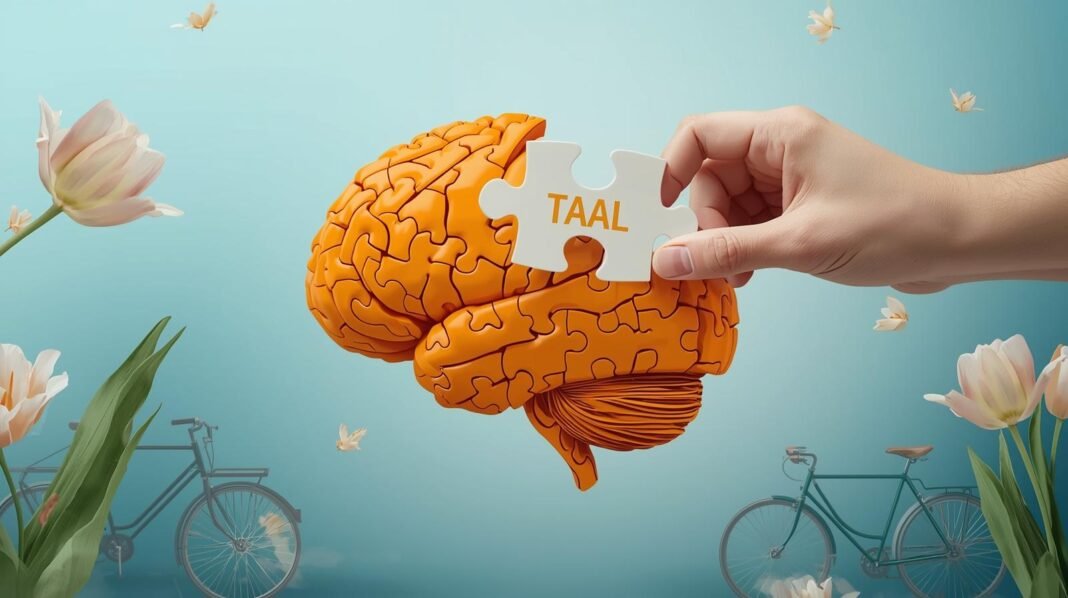
Breaking the “Orange Wall”: Why You Still Can’t Speak Dutch (And How to Fix It)
Amsterdam – It is the classic expat paradox: You live in the Netherlands, you work here, you pay taxes here, yet your Dutch is limited to “Dankjewel” and “Lekker”. You are not alone. Thousands of internationals find themselves trapped in the “English Bubble,” struggling to bridge the gap between surviving and truly belonging.
Learning Dutch is notoriously difficult, not because the language is impossible, but because the environment works against you. This guide dives deep into the psychology of learning, the famous “Delft Method,” and practical strategies to finally force yourself to speak.
Table of Contents
- The Efficiency Trap: Why Locals Switch to English
- The Delft Method: Learning Like a Child
- The Grammar Paralysis: Forget the Rules
- Immersion Hacks: TV, Radio, and Podcasts
- The Social Strategy: Sports over Drinks
- Deep Analysis: The “Survival” Instinct
- Key Takeaways
- Dutch Learning Corner
- Community CTA
The Efficiency Trap: Why Locals Switch to English
The biggest obstacle for learners in the Netherlands is the Dutch people themselves. It is a common scenario: You muster the courage to order a coffee in broken Dutch, and the barista immediately replies in flawless English.
Don’t take it personally. Cultural anthropologists explain that this is not about rudeness; it is about efficiency. Dutch culture values directness and speed. If switching to English saves 10 seconds, they will do it.
How to counter this? You must be the stubborn one. A useful phrase to memorize is: “Ik wil graag Nederlands oefenen, mag ik het in het Nederlands proberen?” (I would like to practice Dutch, may I try in Dutch?). Most people will appreciate the effort and slow down.
The Delft Method: Learning Like a Child
Many language institutes in the Netherlands now favor the “Delft Method” (De Delftse Methode), developed by linguists at TU Delft University. Unlike traditional courses that focus on heavy grammar books, this method mimics how babies learn their mother tongue.
The core principle is “High-Frequency Exposure.”
- Listening First: Students listen to a text dozens of times before they even try to read or speak it.
- Pure Repetition: By the time you speak, the sentence structure is embedded in your auditory memory.
- No Grammar Rules: The method avoids explaining why the verb goes to the end. It just forces you to do it until it feels natural.
This approach is particularly effective for adults who “overthink” and get stuck trying to construct perfect sentences in their heads.
The Grammar Paralysis: Forget the Rules
Adult learners often suffer from “Grammar Paralysis.” They are terrified of using the wrong article (de vs. het) or messing up the complex Dutch word order (syntax). The result? They stay silent.
Language experts suggest adopting a “Good Enough” mindset. Communicating a message with incorrect grammar is infinitely better than saying nothing perfectly. When you focus on communication rather than perfection, the fear dissipates. Your brain needs to build “muscle memory” for the sounds, and that only happens through physical speaking, mistakes and all.
Immersion Hacks: TV, Radio, and Podcasts
You cannot learn a language only inside a classroom. You need to surround yourself with the sound of it. Here are the top resources recommended by successful learners:
- NOS Jeugdjournaal: The evening news for children. The articulation is clear, the vocabulary is simplified, and the topics are explained visually. It is the gold standard for beginners (level A2/B1).
- NPO Start: The Dutch national broadcaster’s streaming service offers subtitles (ondertiteling) for almost all programs. Watching reality TV (like Wie is de Mol?) gives you exposure to conversational, slang-heavy Dutch.
- Podcasts: Look for “Slow Dutch” podcasts or topic-specific shows like Man man man, de podcast if you are more advanced.
The Social Strategy: Sports over Drinks
Making Dutch friends is famously difficult; “Agenda Culture” means spontaneous hangouts are rare. To break into a circle, you need a shared activity.
Join a Team Sport or Club:
In a bar, conversation is complex and fast. On a football pitch, rowing boat, or tennis court, the language is functional and repetitive (“Pass the ball,” “Watch out,” “Left”). This low-pressure environment builds bonds without the pressure of maintaining a deep philosophical conversation. Volunteering at local festivals or community gardens is another excellent, low-stakes way to practice.
Deep Analysis: The “Survival” Instinct
The Motivation Gap
Linguists argue that expats in the Netherlands lack “Survival Motivation.” If you move to rural China or Brazil, you must learn the language to eat. In Amsterdam or Rotterdam, you can live for 20 years without it. This means you must rely entirely on “Intrinsic Motivation”—the internal desire to integrate. This is much harder to sustain when you are tired after work.
The Plateau Effect
Most learners hit a wall at level B1. They can manage daily tasks but cannot express their personality or humor. This “Identity Gap” is frustrating. The only way through is to consume native media (books, papers) that genuinely interests you, rather than textbook materials.
Key Takeaways
- Be Stubborn: Politely refuse to switch to English. It is your right to learn.
- Embrace the Delft Method: Listen and repeat until your brain stops translating.
- Consume Local Media: Watch Jeugdjournaal and use subtitles religiously.
- Accept Mistakes: Perfectionism is the enemy of fluency. Speak badly to speak eventually.
Dutch Learning Corner
| Word | Pronun. (Eng) | Meaning | Context (NL + EN) |
|---|---|---|---|
| 🗣️ De Uitspraak | De Out-sprahk | Pronunciation | Nederlandse uitspraak is moeilijk. (Dutch pronunciation is difficult.) |
| 🔁 Oefenen | Oo-fe-nen | To Practice | Oefening baart kunst. (Practice makes perfect.) |
| 📺 De Ondertiteling | De On-der-tee-tel-ing | Subtitles | Ik kijk tv met ondertiteling. (I watch TV with subtitles.) |
| 🤝 Integreren | In-te-hree-ren | To Integrate | Taal is belangrijk om te integreren. (Language is important to integrate.) |
What is Your “Orange Wall”?
Is it the guttural “G”, the confusing word order, or simply the fact that everyone switches to English? Share your biggest frustration and your best tip for breaking through the barrier. Let’s help each other learn!
Analysis based on academic methods (Delftse Methode) and general language learning principles.