



Dutch New Year’s Damage Claims Plummet to €9 Million Amid Fireworks Ban
The Hague – Initial insurance data reveals a promising drop in property damage across the Netherlands during the 2025-2026 New Year’s Eve celebrations. Total insured losses for private homes and vehicles are estimated at €9 million. This represents a substantial decrease compared to the €15.5 million reported last year. While the decline in private damage is encouraging, the night was marred by significant commercial fires and continued violence against emergency workers.
Table of Contents
- Initial Estimates: Damage Below Expectations
- “A Mixed Picture”: Violence and Vandalism
- Commercial Damage: The Vondelkerk Incident
- The Impact of the Fireworks Ban
- Insurance Sector Reaction
- Deep Analysis & Context
- Key Takeaways
- Dutch Learning Corner
- Community CTA
Initial Estimates: Damage Below Expectations
According to preliminary calculations by the Dutch Association of Insurers (Verbond van Verzekeraars), the total insured damage to private homes and vehicles amounted to approximately €9 million. This figure is notably lower than the €15.5 million recorded during the previous turn of the year. The Association emphasizes that this is a “first cautious estimate” and claims may rise slightly as more reports come in.
“A Mixed Picture”: Violence and Vandalism
Richard Weurding, General Director of the Dutch Association of Insurers, cautioned that the data presents a “mixed picture” (gemengd beeld). While private property damage dropped, he highlighted aggressive behavior and violence directed towards emergency personnel (hulpverleners) as a major concern. Additionally, there was a significant amount of arson involving cars and vandalism in areas where enforcement was challenging.
Commercial Damage: The Vondelkerk Incident
The €9 million figure excludes damage to businesses, schools, and public property, which is expected to run into the “tens of millions”. Major incidents included:
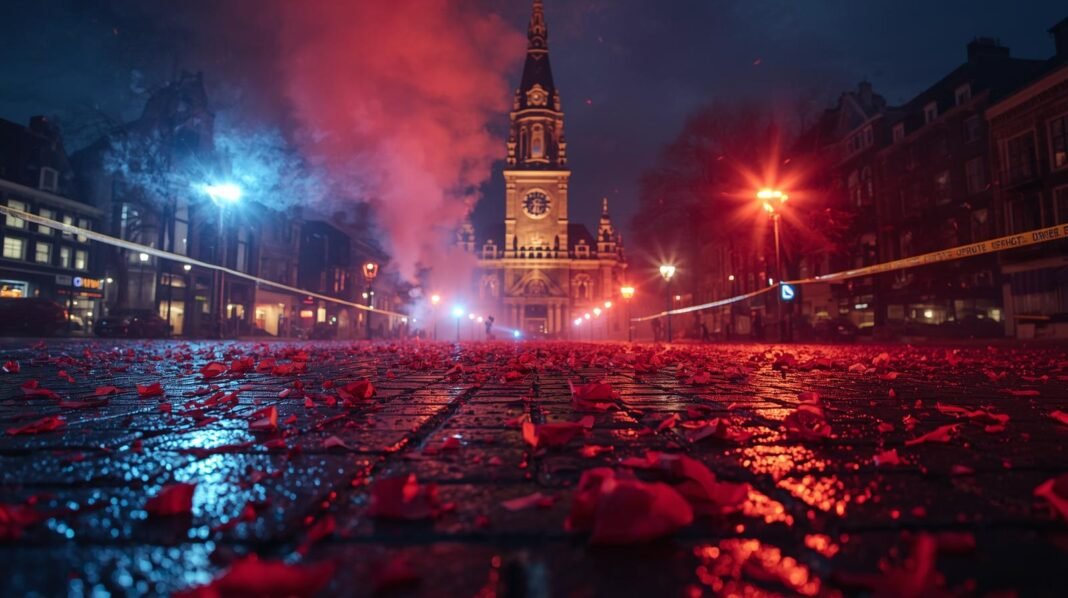
A large fire at the historic Vondelkerk in Amsterdam.
Significant commercial fires in Hillegom and Noord-Scharwoude.
A major fire in a residential flat in Rotterdam.
The Impact of the Fireworks Ban
The insurance sector suggests that local fireworks bans and “firework-free zones” contributed to the reduction in private home damage. Data indicates that municipalities with strict bans generally reported less damage to residential properties compared to those without. However, insurers argue that a patchwork of local rules is confusing and continue to advocate for a more uniform national approach to prevent “waterbed effects”.
Insurance Sector Reaction
Insurers like ASR, Nationale-Nederlanden, and Univé have noted the downward trend in private claims but remain concerned about the severity of specific incidents. The sector warns that while the financial cost to homeowners has dropped, the societal cost—visible in the high number of medical treatments and attacks on police—remains unacceptably high.
Background: Permanent Ban Debate
The current fireworks ban builds on temporary restrictions implemented during the coronavirus pandemic, which also saw a marked decrease in New Year’s damage claims. The success of these temporary measures fueled the debate over a permanent ban, with proponents arguing it is necessary to protect emergency services, reduce injuries, and minimize property damage. Opponents, however, maintain that it infringes on traditional celebrations and individual freedoms.
Deep Analysis & Context
The Shift in Damage Patterns The 2026 data reveals a shift in how New Year’s damage occurs. While the quantity of random claims from consumer fireworks hitting houses has decreased (likely due to bans and damp weather), the intensity of specific incidents has risen. The Vondelkerk fire illustrates the vulnerability of cultural heritage sites during unregulated festivities. Furthermore, the discrepancy between the drop in private damage (€9m) and the spike in commercial/public damage (tens of millions) suggests that vandalism is becoming more targeted or reckless, moving away from “accidental” backyard incidents to deliberate arson.
Key Takeaways
The Figure: Private insured damage fell to €9 million (down from €15.5m).
The Contrast: Business and commercial damage is much higher, estimated in the tens of millions.
Major Incidents: Significant fires reported at the Vondelkerk (Amsterdam) and in Rotterdam.
Social Impact: Violence against first responders remains a critical issue despite lower financial claims.
Dutch Learning Corner
| Word | Pronun. (Eng) | Meaning | Context (NL + EN) |
|---|---|---|---|
| 📄 De Verzekering | De Ver-zay-ke-ring | Insurance | De verzekering dekt de schade. (The insurance covers the damage.) |
| 📉 De Daling | De Dah-ling | Decrease | Er is een daling in het schadebedrag. (There is a decrease in the damage amount.) |
| 🔥 De Brandstichting | De Brant-stikh-ting | Arson | De politie onderzoekt brandstichting. (The police are investigating arson.) |
| 🚑 De Hulpverlener | De Hulp-ver-lay-ner | First Responder | Geweld tegen hulpverleners is onacceptabel. (Violence against first responders is unacceptable.) |
(Swipe left to see more)
Community CTA
Is the Drop in Damage Enough?
While €9 million is an improvement, the violence against emergency workers and the fire at Vondelkerk show the night was far from safe. Do you think strict bans are working, or do we need a different approach? Share your thoughts below!