



The End of the Plastic Era: Why the OV-chipkaart is Retiring After 20 Years
Utrecht / Amersfoort – It has been the yellow-and-blue key to the Kingdom of the Netherlands since 2007, but the ubiquitous OV-chipkaart is finally entering its sunset years. Transport authorities have officially confirmed that by the end of 2027, the physical chip card will be fully decommissioned, replaced by a sophisticated “Cloud-Based” ecosystem known as OVpay.
The transition marks one of the largest digital infrastructure overhauls in Dutch history. For the millions of commuters using trains, buses, and trams, the shift isn’t just about changing a card; it’s about moving from “storing value on plastic” to “managing mobility in the cloud.” As of early 2026, the phased rollout is already reaching a critical mass, forcing travelers to choose between their bank cards, smartphones, or the new digital-first OV-pas.
Table of Contents
- OVpay: The New Standard for Dutch Mobility
- Meet the ‘OV-pas’: The New Successor
- Cloud-Based Travel: No More ‘Lost Balance’
- Privacy Concerns: The Debate Over Tracking
- The 2026-2027 Timeline: When Do You Switch?
- Historical Context: The Rise and Fall of the Chip
- Key Takeaways
- Dutch Learning Corner
- Community CTA
OVpay: The New Standard for Dutch Mobility
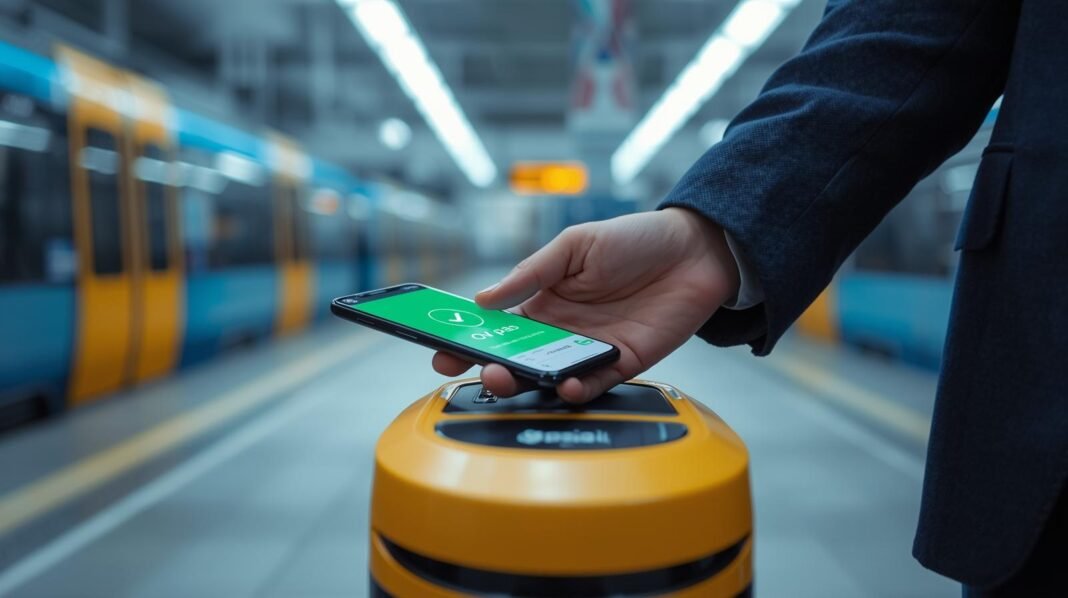
The core of this transformation is OVpay. Since its soft launch in 2023, OVpay has allowed passengers to “check-in” using a contactless debit card (debitkaart), credit card, or digital wallet (Apple/Google Pay).
The advantage is simplicity: no more topping up balances at machines or worrying about having a minimum of €20 for train travel. The fare is calculated automatically and deducted as a single transaction the following day. However, until recently, this was only available for second-class, full-fare travel. As we move through 2026, the system is finally integrating the complex web of Dutch korting (discounts) and trajectvrij (route-specific) subscriptions.
Meet the ‘OV-pas’: The New Successor
For those who don’t want to use their bank card for travel—or for children and seniors who may not have a smartphone—the OV-pas is the replacement.
Unlike the old card, the OV-pas doesn’t store money. It acts as a digital “ID” linked to an online account. If you lose the card, you don’t lose your money; you simply deactivate the old pas and link a new one to your existing account. It will be available in both a physical plastic version and a digital version within the official OVpay app.
Cloud-Based Travel: No More ‘Lost Balance’
The technical shift from “Chip-on-Card” to “Account-Based Ticketing” (ABT) solves a decade-long frustration for Dutch commuters. Currently, if an OV-chipkaart expires, reclaiming the balance is a bureaucratic nightmare.
In the new system, your balance and subscriptions live in the cloud. This allows for smarter features:
* Forgotten Check-out: The app can send a push notification to your phone if it detects you’ve left a station without scanning out.
* Dynamic Pricing: The potential for “peak-hour” versus “off-peak” rewards to be calculated instantly on the account level.
* Unified Billing: One monthly invoice for trains, buses, shared bikes (OV-fiets), and even parking.
Privacy Concerns: The Debate Over Tracking
The transition hasn’t been without its critics. Passenger advocacy groups like ROVERS have raised concerns about the “digital trail” left by account-based travel. While the old anonymous OV-chipkaart allowed for relatively untracked movement, the new digital-first system requires more personal data to function.
Authorities have countered these concerns by ensuring that Anonymous OV-pas options will still exist. However, these anonymous versions will likely lack the advanced features like automatic top-ups or digital subscription linking, creating what some call a “privacy tax” for those who wish to remain off the digital grid.
The 2026-2027 Timeline: When Do You Switch?
The “Great Switch-off” is moving in stages:
* 2025-2026: Integration of all business accounts (NS Business Card) and student travel products into the OVpay system.
* Early 2027: Phasing out of the “Saldoladen” (topping up balance) at station machines.
* December 31, 2027: The final day the original OV-chipkaart will be accepted at any gate or bus in the Netherlands.
Historical Context: The Rise and Fall of the Chip
When it launched in 2007, the OV-chipkaart was meant to replace the paper Strippenkaart. It was a rocky start—security vulnerabilities were exposed within months, and many found the system confusing. Yet, it eventually became a global model for national interoperability. The decision to retire it isn’t due to failure, but due to the “hardware ceiling.” The chips on the current cards simply cannot hold the complex data required for the future of integrated “Mobility as a Service” (MaaS).
Key Takeaways
- Retirement: The OV-chipkaart officially ends on December 31, 2027.
- Innovation: OVpay allows for bank card and smartphone check-ins.
- The OV-pas: A new cloud-linked card for those who prefer physical or anonymous travel.
- Convenience: Cloud-based systems prevent balance loss and allow for better “forgotten check-out” alerts.
Dutch Learning Corner
| Word (Dutch) | Pronun. (Eng) | Meaning | Context (NL + EN) |
|---|---|---|---|
| 🚉 Inchecken | In-shek-en | Check-in | Vergeet niet in te checken bij de paal. (Don’t forget to check in at the pillar.) |
| 💳 Het Abonnement | Het Ah-bo-nuh-ment | Subscription | Mijn abonnement is nu digitaal. (My subscription is now digital.) |
| 🚌 Het Vervoer | Het Ver-voor | Transport | Openbaar vervoer wordt steeds moderner. (Public transport is becoming more modern.) |
| 🔄 De Overstap | De Oh-ver-stap | Transfer / Connection | Ik heb een korte overstap op Utrecht. (I have a short transfer at Utrecht.) |
Bank Card or OV-pas: Which Do You Prefer?
Are you excited to stop carrying a separate transport card, or do you prefer the “privacy” of the old OV-chipkaart? How has your experience been with OVpay so far—any glitches during transfers? Let us know in the comments below!
Source / Mobility Infrastructure: OVpay Official, Nederlandse Spoorwegen (NS), and Translink Systems.