




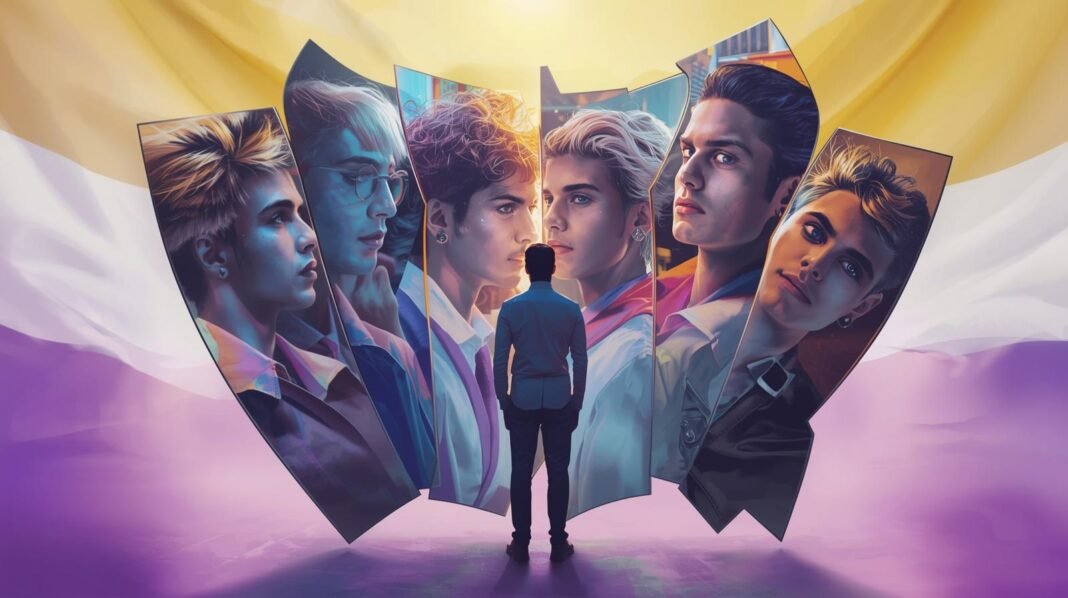
Beyond Attraction: “Gender Envy” and the Dutch Quest for Identity
Amsterdam – It starts with a look. You scroll through Instagram or watch a movie, and your eyes lock onto a character. Your heart beats faster, but the feeling is confusing. Is it a crush? Is it admiration? Or is it a desperate, unspoken wish to crawl into their skin and live their life?
This emotional cocktail has a name that is taking over queer discourse in the Netherlands: “Gender Envy”. In a recent, thought-provoking feature, the renowned Dutch LGBTQ+ platform Expreszo explored this phenomenon, shedding light on how “jealousy” can actually be a roadmap to self-discovery.
Table of Contents
- Decoding the Feeling: What is Gender Envy?
- The Great Dilemma: “Do I Want Them, or Do I Want to BE Them?”
- The Psychological Signal: Breaking the “Egg”
- From TikTok to Amsterdam: The Role of Social Media
- Constructive Envy: Turning Jealousy into Style
- The Dutch Landscape: Language and Acceptance
- Key Takeaways
- Dutch Learning Corner
- Community CTA
Decoding the Feeling: What is Gender Envy?
At its core, Gender Envy is a specific form of longing. Unlike toxic jealousy, which seeks to deprive someone else of their traits, Gender Envy is aspirational. It is the intense desire to possess the physical characteristics, style, voice, or social role of another person because those traits align with your internal sense of self.
For a cisgender person, this might look like a man wishing he had the muscular build of an athlete. But in the queer and trans context, it goes deeper.
* For Trans Men: It might be envying a cis man’s flat chest, jawline, or deep voice.
* For Trans Women: It could be envying another woman’s silhouette, hair, or makeup skills.
* For Non-Binary People: It often manifests as envying someone who looks “androgynous” or “unplaceable”—someone whose gender cannot be easily guessed by strangers.
Expreszo argues that naming this feeling validates an experience that many have suffered through in silence, thinking they were simply insecure.
The Great Dilemma: “Do I Want Them, or Do I Want to BE Them?”
One of the most confusing aspects of the queer experience, particularly for teenagers and young adults, is distinguishing between attraction and identification.
“I spent years thinking I had intense crushes on certain male celebrities,” says a Dutch trans man interviewed for the broader topic. “I realized later that I didn’t want to date them. I wanted to look like them. I wanted their walk, their clothes, their confidence.”
This confusion is often the first step in a gender identity crisis.
* Romantic Attraction: Focuses on interaction (kissing, holding hands, talking).
* Gender Envy: Focuses on embodiment (wearing their clothes, having their haircut, being perceived as they are).
Expreszo highlights that disentangling these two threads is a rite of passage. Once you separate the “crush” from the “goal,” the path to transition or social affirmation becomes much clearer.
The Psychological Signal: Breaking the “Egg”
In transgender slang, an “egg” is a person who is trans but hasn’t realized or accepted it yet. Gender Envy is often the first crack in the shell.
Psychologists and gender theorists suggest that envy acts as a subconscious signal. Your brain recognizes a congruence in someone else that is missing in your own life. It is a form of “Gender Euphoria” by proxy—you feel good just imagining yourself with those traits.
By suppressing this envy or labeling it as “wrong,” many people delay their own happiness. The Expreszo article encourages readers to lean into the feeling. Instead of pushing it away, ask: “Why this specific person? What specifically do they have that I feel I am missing?”
From TikTok to Amsterdam: The Role of Social Media
The term “Gender Envy” exploded on platforms like TikTok and Tumblr before entering the Dutch lexicon.
In the digital age, we are bombarded with images. For the queer community, this is a double-edged sword.
* The Positive: It provides endless “expanders”—examples of what is possible. A non-binary kid in a small Dutch village can see a gender-fluid influencer in New York and realize, “That’s an option for me.”
* The Negative: It can create unrealistic standards. Just as cisgender people struggle with body image issues from Instagram, trans people can suffer from “transition goals” that are genetically or financially impossible to achieve.
Dutch platforms like Expreszo play a vital role here by grounding these internet concepts in local reality, discussing them in Dutch, and connecting them to real-life community events.
Constructive Envy: Turning Jealousy into Style
So, what do you do with this envy? The healthiest approach is “Shadow Alchemy”—transforming the heavy feeling of jealousy into the light of action.
Expreszo suggests treating your “Gender Envy” icons not as rivals, but as mood boards.
1. Analyze the Look: Is it the haircut? The oversized hoodie? The posture?
2. Micro-Dosing: You don’t have to transition medically tomorrow. Start small. Buy a shirt similar to theirs. Try binding or padding. Change your pronouns in a safe group.
3. Experimentation: Use the envy as fuel to experiment with your presentation.
This shifts the mindset from “I will never be that” (passive suffering) to “I am working towards that” (active empowerment).
The Dutch Landscape: Language and Acceptance
The Netherlands was the first country to legalize same-sex marriage, but the conversation around gender identity is still evolving.
While Dutch culture is generally tolerant, the language itself poses challenges. Unlike English, which has a natural singular “they,” Dutch struggles with gender-neutral pronouns. The neopronouns “die/diens” or “hen/hun” are gaining traction but are not yet universally used in schools or workplaces.
In this context, concepts like “Gender Envy” (often translated as *genderjaloezie* or kept in English) serve as crucial bridges. They give young Dutch people the vocabulary to explain their inner world to parents, doctors, and friends. Organizations like COC Nederland and publications like Expreszo are essential in normalizing this vocabulary.
Key Takeaways
- The Distinction: Gender Envy is wanting to *be* someone, not necessarily *be with* them.
- The Signal: It is often a subconscious sign of repressed gender identity or desired gender expression.
- The Action: Instead of feeling guilty, use envy as a “mood board” for your own style evolution.
- The Culture: Dutch queer media is adapting global internet terms to help local youth navigate their identities.
Dutch Learning Corner
| Word | Pronun. (Eng) | Meaning | Context (NL + EN) |
|---|---|---|---|
| 🏳️🌈 De Genderidentiteit | De Ghen-der-i-den-ti-tyt | Gender Identity | Het ontdekken van je genderidentiteit kost tijd. (Discovering your gender identity takes time.) |
| ✨ De Uitstraling | De Ouyt-strah-ling | Vibe / Aura / Charisma | Ik ben jaloers op zijn zelfverzekerde uitstraling. (I am envious of his confident aura.) |
| ⚖️ Onzijdig / Non-binair | On-zey-dikh | Neutral / Non-binary | Hen draagt graag onzijdige kleding. (They like wearing gender-neutral clothing.) |
| 🎨 De Zelfexpressie | De Zelf-eks-pres-see | Self-expression | Kleding is een vorm van zelfexpressie. (Clothing is a form of self-expression.) |
Who Are Your Icons?
Is there a celebrity, fictional character, or even a stranger on the street who embodies your “Gender Envy”? Sharing these icons can help others realize what they are looking for. Let’s discuss in the comments below!
Source / Lifestyle: Psychology Today, Expreszo