



Healthcare Netherlands 2026: How to Survive the Crisis, Find a GP & Avoid Fines
Amsterdam/Rotterdam – Welcome to the Netherlands, a country famous for its efficient infrastructure, high quality of life, and direct communication. However, for the international community arriving in 2026, there is one massive, glaring exception to this efficiency: The Dutch Healthcare System. What was once considered one of the best systems in Europe is now creaking under the weight of a severe “Double Grey” wave (aging population), chronic staff shortages, and budget austerity measures.
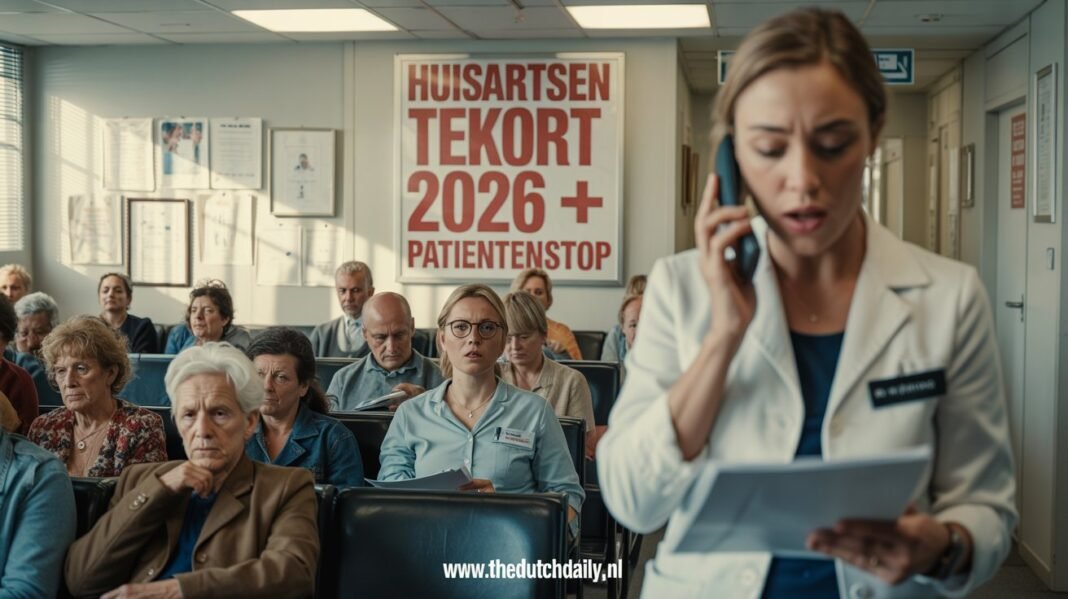
The reality on the ground is stark. The days of simply walking into a neighborhood clinic and registering with a smile are long gone. The dreaded term “Patiëntenstop” (No new patients accepted) is plastered on the doors of General Practitioner (GP) practices from Groningen to Maastricht. Mental health waiting lists for simple conditions like anxiety have stretched to nine months in the Randstad. And if you show up at the Emergency Room (Spoedeisende Hulp) with a broken arm without a referral letter, you might be turned away or slapped with a bill that your insurance refuses to cover.
But do not panic. The quality of care is still excellent—if (and only if) you know how to access it. The system works on specific bureaucratic keys that most expats are never taught. In this massive, definitive 2600-word survival guide, we decode the 2026 healthcare landscape. We provide you with the specific scripts to force an insurer to find you a doctor, we break down the financial nuances of the “Zorgtoeslag” to put cash back in your pocket, and we explain why “Paracetamol” is not just a meme, but a cornerstone of national medical philosophy.
Table of Contents
- The 2026 Crisis: Why is the System Breaking?
- The GP Nightmare: Advanced Tactics to Find a Doctor
- Insurance 2026: Own Risk, Premiums & The “CAK” Fines
- Free Money: The “Zorgtoeslag” Eligibility Guide
- Emergency Care: 112 vs. Huisartsenpost (Avoid the €300 Fine)
- The “Paracetamol Culture”: Medical Philosophy Explained
- Mental Health (GGZ): POH-GGZ & Waiting List Hacks
- Physiotherapy: The Dutch Secret Weapon & “Chronic List”
- Children’s Health: Vaccinations & The “Consultatiebureau”
- Women’s Health & Pregnancy: The “Kraamzorg” Phenomenon
- Dentistry: The Price List & Insurance Trap
- Pharmacy & Medicines: The “Preference Policy”
- End of Life: Euthanasia Laws Explained
- Frequently Asked Questions (Expats FAQ)
- Dutch Medical Vocabulary Corner
The 2026 Crisis: Why is the System Breaking?
To navigate the system successfully, you must first understand the pressure it is under. This helps you manage your expectations and adjust your strategy.
The “Double Grey” Wave: The Netherlands has a massive population of retirees (Baby Boomers) who now require complex, long-term care. This consumes 70% of the healthcare budget.
The Staff Exodus: Post-pandemic burnout led thousands of nurses and doctors to quit the profession. In 2026, the sector is facing a shortage of approximately 45,000 healthcare workers.
The Efficiency Model: Efficiency is king in Dutch medicine. Doctors are allotted strictly 10 minutes per patient consultation. They do not have time for “chit-chat” or emotional reassurance. They focus strictly on medical necessity. This is often interpreted by expats as “cold” or “uncaring,” but it is actually a survival mechanism of an overburdened system.
The GP Nightmare: Advanced Tactics to Find a Doctor
The Huisarts (General Practitioner/GP) is the absolute Gatekeeper of Dutch medicine. You strictly cannot see a specialist (dermatologist, cardiologist, gynecologist, etc.) without a formal referral letter (verwijsbrief) from your GP. But what happens if every GP in your zip code says “Full”?
The “Zorgbemiddeling” (Care Mediation) Hack
If you have called 5 doctors and all rejected you, do not give up. Use the “Insurance Mediation” weapon. This is your legal right.
Step 1: Call your Health Insurer (Zorgverzekeraar) immediately.
Step 2: Ask specifically for the department of “Zorgbemiddeling” (Care Mediation) or “Wachtlijstbemiddeling.”
Step 3: Use this script:
“I live in zip code [1011 AB] and I have contacted [Name of Practice A] and [Name of Practice B], but they are full. Under the ‘Zorgplicht’ (Duty of Care) in the Health Insurance Act, you are legally obligated to find me a general practitioner within a reasonable distance of my home. Please assign me a doctor.”
The Result: The insurer has negotiating power that you do not. They can force a contracted practice to make an exception and squeeze you in. This is the #1 most successful method for expats in 2026.
Insurance 2026: Own Risk, Premiums & The “CAK” Fines
Health insurance (Basisverzekering) is mandatory for everyone living or working in the Netherlands. It is not tax-funded; it is private insurance regulated by the state.
The CAK Fine System (Warning!)
If you do not take out insurance within 4 months of registering at the municipality (Gemeente), the CAK (Central Administration Office) will hunt you down.
1st Warning: You get a letter telling you to insure yourself.
The Fine: If you ignore it, you receive a fine of approx. €496.
The Second Fine: If you still don’t insure, you get another fine of €496.
Forced Insurance: Finally, the CAK will forcibly sign you up for a generic, expensive plan and deduct the premium directly from your salary (Broninhouding). Do not let it get this far.
The “Eigen Risico” (Own Risk) Explained
For 2026, the standard mandatory deductible is frozen at €385 per calendar year.
What it means: You pay the first €385 of medical costs per year out of your own pocket before the insurance kicks in.
What is EXEMPT (Free):
- Visits to the GP (Huisarts) are always free.
- Maternity care (Kraamzorg) – basic package.
- Care for children under 18 (Free, no own risk).
- District Nursing (Wijkverpleging).
What you PAY for (Subject to Deductible): Ambulance rides, blood tests, X-rays, MRI scans, specialist consults, hospital stays, and prescription medicine. Even if your GP sends you for a “routine” blood test, you will receive a bill for approx €30-€50 from the diagnostic lab until you hit the €385 limit.
Free Money: The “Zorgtoeslag” Eligibility Guide
Many expats assume they earn too much to get government help, but the threshold is higher than you might think. Zorgtoeslag is a monthly subsidy to help pay for your insurance premiums.
The 2026 Criteria (Approximate):
- Single Income: If you earn less than approx. €38,000 gross per year.
- Fiscal Partners: If you earn less than approx. €49,000 combined gross per year.
- Asset Limit: You cannot have more than €140,000 in savings (Box 3 capital).
How much? You can get up to €131 per month deposited directly into your bank account.
How to Apply: Log in to “MijnToeslagen.nl” with your DigiD.
The Trap: If your salary increases mid-year (e.g., you get a promotion or a holiday bonus), you MUST stop the allowance immediately. If you don’t, the Belastingdienst (Tax Office) will demand every cent back with interest at the end of the year.
Emergency Care: 112 vs. Huisartsenpost (Avoid the €300 Fine)
In many countries (US, UK, Southern Europe), if you feel very sick at night or on the weekend, you go to the hospital ER. In the Netherlands, this is a financial and procedural mistake.
Scenario A: Life Threatening (Levensbedreigend)
Examples: Heart attack symptoms, stroke (face drooping), severe car accident, heavy bleeding, unconsciousness.
Action: Call 112 immediately. Ask for an Ambulance.
Cost: Covered by insurance (subject to Own Risk). The ambulance ride alone costs approx €800, but you only pay your remaining deductible.
Scenario B: Urgent but Not Deadly (Spoed)
Examples: High fever, cut finger needing stitches, sprained ankle, sudden allergic reaction, crying baby at 02:00 AM.
Action: Do NOT go to the hospital ER. Call the Huisartsenpost (HAP).
What is HAP? It is an after-hours GP clinic, usually located inside the hospital building but separate from the ER. You must call them first for a telephone triage.
The Difference:
- HAP Visit: Free (Covered by insurance, usually no Own Risk).
- ER Visit (Without Referral): You will likely be turned away at the door. If they do treat you, they may charge the full “passantentarief” (approx. €300) which falls entirely under your Own Risk.
Golden Rule: Always call the Huisartsenpost first. If they think it’s serious, they will send you to the ER next door, and then your referral is covered.
The “Paracetamol Culture”: Medical Philosophy Explained
You have a flu, a fever of 39C, and a hacking cough. You go to the doctor expecting antibiotics. The doctor checks your lungs and says: “Take two Paracetamol, drink plenty of water, and come back in two weeks if you are not dead.”
This is not negligence; it is a national philosophy. Dutch medicine is grounded in “Evidence-Based Medicine” and a belief in the body’s ability to heal itself.
Why no antibiotics? The Netherlands has one of the lowest rates of antibiotic resistance (MRSA) in the world because doctors refuse to prescribe them for viral infections. They believe the side effects outweigh the benefits for minor illnesses.
How to handle it:
1. Do not feel dismissed; this is standard protocol.
2. Be specific about “Functional Loss”: Do not just say “I feel bad.” Say “I cannot walk up the stairs,” “I have not slept for 3 nights,” or “I cannot lift my arm.” Dutch doctors respond to loss of function, not just pain.
Mental Health (GGZ): POH-GGZ & Waiting List Hacks
The Geestelijke Gezondheidszorg (GGZ) is the crisis within the crisis. Waiting lists for depression, ADHD, or anxiety treatment can range from 4 to 12 months in major cities.
Alternative Routes to Bypass the Wait:
1. POH-GGZ: Every GP practice has a “Praktijkondersteuner Huisarts GGZ” (Mental Health Support Worker). This is a nurse or psychologist who can see you fast (within weeks). It is free of charge and covered by basic insurance. They cannot diagnose complex disorders, but they can provide therapy and support.
2. Online Therapy: Insurers are pushing digital platforms like “Mindler” or “NiceDay.” You talk to a certified psychologist via video call. Wait times are often just 1-2 weeks.
3. Contract-Free Therapists: If you have a “Restitutiepolis” (or are willing to pay approx. 30% of the bill yourself), you can go to a private clinic that does not have contracts with insurers. These often have much shorter waiting lists.
Physiotherapy: The Dutch Secret Weapon & “Chronic List”
The Dutch go to the physiotherapist like other nations go to the pub. It is the first line of defense for back pain, RSI, sports injuries, and recovery.
Direct Access: You do NOT need a referral from your GP. You can just walk into any Physio clinic and book an appointment.
The Cost: Physiotherapy is NOT in the basic package (Basisverzekering) for adults (except for specific chronic conditions). You need Supplemental Insurance (Aanvullende verzekering). Without insurance, a session costs approx. €45.
The “Chronic List” (Chronische Lijst): If you have a condition on this government list (e.g., frozen shoulder, stroke recovery, certain fractures), the Basic Insurance pays from the 21st treatment onwards. You must pay for the first 20 sessions yourself (or via supplemental insurance).
Children’s Health: Vaccinations & The “Consultatiebureau”
If you move to the Netherlands with young kids, you will be invited to the Consultatiebureau (Child Health Clinic). This is separate from your GP and focuses purely on preventative care.
The Role: They monitor growth (weight/height), motor development, and administer vaccines.
Rijksvaccinatieprogramma (National Vaccination Program):
All standard vaccines (DKTP, BMR/MMR, HPV) are free of charge. They are not mandatory by law (there is no “no jab, no school” rule in NL), but uptake is very high (>90%).
The “Green Book” (Groeiboekje): You will receive a green booklet to track your child’s growth curves and shots. Keep this safe; you will need it for school registration and international moves.
Women’s Health & Pregnancy: The “Kraamzorg” Phenomenon
Pregnancy in the Netherlands is viewed as a natural physiological process, not a medical condition.
The Midwife (Verloskundige): Unless you have a medically high-risk pregnancy, you will never see a doctor (Gynecologist). You will be cared for by a midwife.
Home Birth: The Netherlands has the highest rate of home births in the western world. You are encouraged to give birth at home.
Hospital Birth: If you want to give birth in a hospital without a medical necessity (“Poliklinische bevalling”), you must pay a “own contribution” (eigen bijdrage) of approx. €400 yourself.

Kraamzorg (The Crown Jewel): This is unique to NL. After birth, a trained maternity nurse comes to your house for 8 days (approx 49 hours total). She checks the baby’s health, teaches you how to breastfeed, cleans the bathroom, checks the mother’s stitches, and makes you sandwiches. It is magical, heavily subsidized, and essential. Important: Register for Kraamzorg the moment you pee on the stick (Week 6-8); there are shortages here too!
Dentistry: The Price List & Insurance Trap
Dentists in the Netherlands are private entrepreneurs. They are not covered in the basic insurance package for adults (only for children under 18).
The Rates: The government sets the maximum rates (U-codes) annually. All dentists charge the same maximum rates.
- Periodic Check-up (C002): approx. €26
- 5-minute cleaning (M03): approx. €16
- Complex Filling (V94): approx. €100
- Root Canal (E-codes): €400 – €700
- Crown (R-codes): €600 – €900
The Insurance Trap: Many dental insurance policies have a maximum coverage of €250 or €500 per year. If you need a crown (€800) and your insurance covers max €250, you are still paying €550 out of pocket. Do the math before buying dental insurance; often, saving the premium in a jar is cheaper.
Expats beware: Always ask for a “Begroting” (Price Quote) before any treatment over €150. If the dentist does extra work without asking, you are legally allowed to dispute the bill.
Pharmacy & Medicines: The “Preference Policy”
You go to the Apotheek (Pharmacy) with a prescription for “Brand X.” The pharmacist hands you “Brand Y” in a plain white box. You argue, but they refuse to change it.
The Preference Policy (Preferentiebeleid): Dutch health insurers only pay for the cheapest generic version of a drug. The active ingredient is exactly the same, but the fillers or coating might differ. If you insist on the brand name (e.g., Pfizer or Bayer), you must pay the full price yourself, and it will NOT count toward your deductible.
Opening Hours: Pharmacies typically close at 17:30 and on weekends. For urgent medication at night, you must go to the Dienstapotheek (Night Pharmacy). Note: They charge an extra “Night Service Fee” of approx. €20 just for opening the window.
End of Life: Euthanasia Laws Explained
The Netherlands was the first country in the world to legalize euthanasia (in 2002), but there are many misconceptions about it. It is not “on demand.”
The Criteria:
1. The patient’s suffering must be unbearable and hopeless.
2. The request must be voluntary and well-considered.
3. A second, independent doctor (SCEN-arts) must agree.
2026 Updates: There is an ongoing debate about extending these rights to people over 75 who feel their “life is completed” but are not medically ill. However, currently, a medical diagnosis is still required.
Frequently Asked Questions (Expats FAQ)
Q: Do I need to register with a dentist?
A: Yes. Just like a GP, you need to find a dentist accepting new patients. Call them and ask to register. You usually have a “first intake” appointment.
Q: Can I go to a GP in a different city?
A: Generally, no. GPs usually only accept patients who live within a 15-minute travel radius so they can do home visits in emergencies.
Q: What is the number for the suicide prevention hotline?
A: 113. You can call 113 or 0800-0113 completely anonymously, 24/7. They speak English.
Q: Does my insurance cover alternative medicine (Acupuncture, Chiropractor)?
A: Not the Basic Insurance. You need Supplemental Insurance (Aanvullende verzekering) for this.
Q: My company offers a “Collective Insurance” (Collectieve Verzekering). Is it cheaper?
A: Usually, yes. Large employers negotiate a discount (usually 5% to 10%) on the supplemental insurance premiums. Check with your HR.
Dutch Medical Vocabulary Corner
| Word (Dutch) | Pronunciation | Meaning & Context |
|---|---|---|
| 👨⚕️ Huisarts | Huis-arts | General Practitioner (GP). Your first point of contact for everything. |
| 📜 Verwijsbrief | Ver-wijs-brief | Referral Letter. The golden ticket needed to see a specialist or go to the hospital. |
| 💸 Eigen Risico | Ei-gen Ri-si-co | Own Risk / Deductible. The first €385 you pay yourself. |
| 💰 Zorgtoeslag | Zorg-toe-slag | Health Allowance. Financial aid from the government to pay for insurance. Check if you qualify! |
| 👶 Consultatiebureau | Con-sul-ta-tie-bu-reau | Child Health Clinic. Where babies get weighed and vaccinated. |
TDD Community Question
Have you faced the GP shortage? Did the “Insurance Mediation” trick work for you? Or do you have a horror story about being sent home with Paracetamol? Help other expats by sharing your real-life experiences in the comments below!