




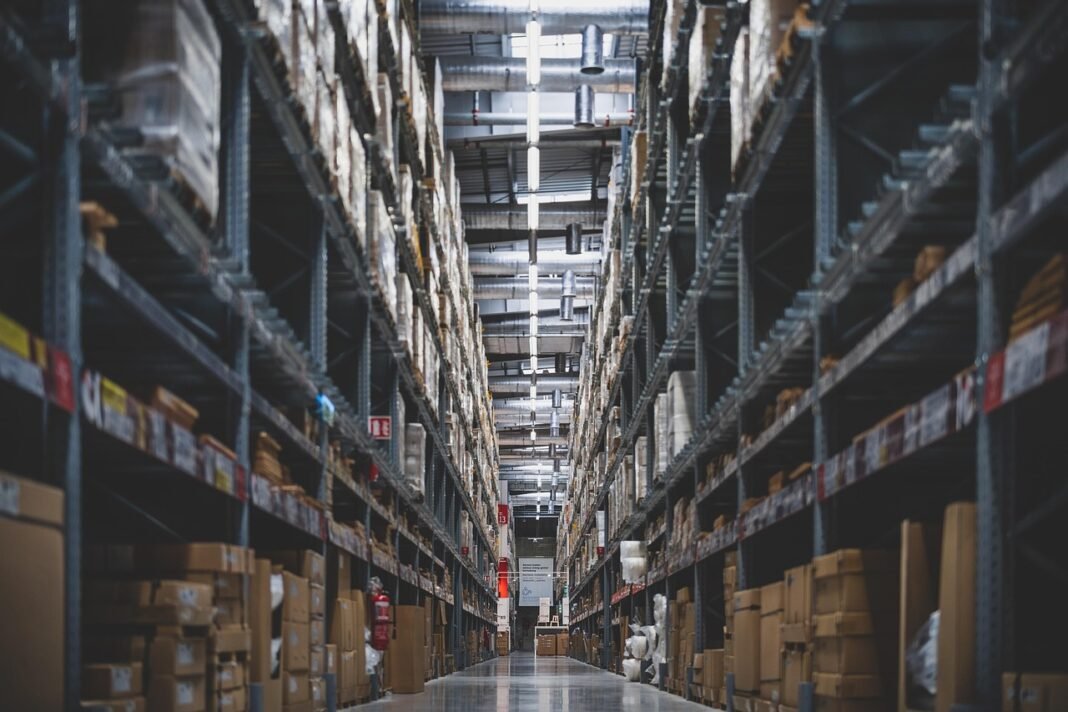
Logistics Boom: Major Distribution Centers in 2026
The Dutch logistics landscape is undergoing a significant transformation, fueled by the ever-increasing demands of e-commerce and global supply chains. Major distribution centers are popping up across the country, reshaping the industrial map and creating new economic opportunities. This year alone, five new distribution centers exceeding 50,000 m2 in size are slated for completion, with two behemoths in Flevoland and Limburg surpassing a staggering 130,000 m2 each. This article delves into the details of these developments, exploring the driving forces, regional impacts, and future implications of this logistics boom.
Table of Contents
- Driving Forces Behind the Expansion
- Regional Impact: Flevoland and Limburg
- Key Players and Tenants
- Sustainability Concerns and Green Logistics
- Future Outlook: Beyond 2026
Driving Forces Behind the Expansion
Several factors are converging to drive this expansion in distribution center capacity. The most prominent is the continued growth of e-commerce. Consumers increasingly prefer the convenience of online shopping, leading to a surge in parcel volumes and a need for larger, more efficient fulfillment centers. The COVID-19 pandemic further accelerated this trend, as lockdowns forced more people to shop online. Beyond e-commerce, the Netherlands’ strategic location as a gateway to Europe plays a crucial role. Its well-developed infrastructure – including ports, roads, and rail networks – makes it an ideal hub for distributing goods across the continent. Furthermore, the Netherlands offers a stable political and economic environment, attracting foreign investment in logistics infrastructure. Historically, the Netherlands has always been a trading nation, dating back to the Dutch Golden Age in the 17th century, and this tradition continues to shape its economic landscape.
Regional Impact: Flevoland and Limburg
The choice of Flevoland and Limburg as locations for these mega-distribution centers is not accidental. Flevoland, a relatively young province reclaimed from the sea, offers ample space for large-scale development and benefits from excellent connectivity to major transportation routes. Its proximity to Amsterdam and other key economic centers makes it an attractive location for logistics companies. Limburg, on the other hand, benefits from its location at the southern tip of the Netherlands, bordering Germany and Belgium. This strategic position allows for efficient distribution to these neighboring countries. The development of these distribution centers is expected to create significant employment opportunities in both provinces, boosting local economies. However, it also raises concerns about increased traffic congestion and pressure on local infrastructure.
Beyond traffic, a fierce national debate has erupted over ‘de verdozing van het landschap’ (the boxing-in of the landscape). Citizens and politicians alike are pushing back against these massive grey boxes cluttering the iconic Dutch horizons. Consequently, the government has significantly tightened permitting processes, now demanding that developers prove architectural quality and landscape integration before approval can be granted.
Key Players and Tenants
While specific tenant details are often confidential, it’s known that major players in the e-commerce, retail, and logistics industries are driving demand for this new space. Companies like Amazon, DHL, and Bolloré Logistics are actively expanding their presence in the Netherlands. Real estate developers such as Prologis, Panattoni, and WDP are leading the construction of these facilities, catering to the specific needs of their clients. The scale of these projects requires significant investment and expertise, highlighting the growing sophistication of the Dutch logistics sector. The competition for prime locations is fierce, driving up land prices and pushing developers to innovate in terms of design and efficiency.
Sustainability Concerns and Green Logistics
The rapid expansion of logistics infrastructure also raises important sustainability concerns. Distribution centers are energy-intensive operations, and their increased presence contributes to carbon emissions and environmental pollution. However, there is a growing focus on ‘green logistics’ – implementing sustainable practices to minimize the environmental impact of logistics operations. This includes using renewable energy sources, optimizing transportation routes, and adopting energy-efficient building designs. Crucially, the shift towards renewable energy is no longer just a corporate choice—it is an operational necessity due to the severe ‘netcongestie’ (grid congestion) crisis. With the national power grid reaching capacity, particularly in hotspots like Flevoland and Limburg, new mega-centers often cannot secure standard grid connections. As a result, developers are forced to make these facilities self-sufficient energy hubs, relying heavily on massive rooftop solar arrays and battery storage systems simply to operate. Many new distribution centers are being built to BREEAM or LEED standards, demonstrating a commitment to sustainability. The Dutch government is also promoting sustainable logistics through various incentives and regulations. The future of logistics will undoubtedly be shaped by the need to balance economic growth with environmental responsibility.
Future Outlook: Beyond 2026
The current boom in distribution center development is likely to continue in the coming years, albeit potentially at a slower pace. The demand for logistics space is expected to remain strong, driven by continued e-commerce growth and the increasing complexity of global supply chains. However, challenges such as land scarcity, rising construction costs, and sustainability concerns will need to be addressed. We can expect to see further innovation in logistics technology, including automation, robotics, and data analytics, to improve efficiency and reduce costs. The Netherlands is well-positioned to remain a leading logistics hub in Europe, but it will need to adapt to the changing landscape and embrace sustainable practices to ensure long-term success.
Key Takeaways
- The Netherlands is experiencing a significant logistics boom, with five major distribution centers (over 50,000 m2) coming online in 2026.
- Flevoland and Limburg are key locations, benefiting from strategic positioning and available land.
- Sustainability is becoming increasingly important, with a growing focus on ‘green logistics’ and energy-efficient building designs.
- The future of Dutch logistics will be shaped by technology, automation, and a commitment to environmental responsibility.
| 🇳🇱 Word | 🗣️ Pronun. | 🇬🇧 Meaning | 📝 Context (NL + EN) |
|---|---|---|---|
| 📦 Pakket | /ˈpɑkət/ | Package | Ik wacht op een belangrijk pakket. (I am waiting for an important package.) |
| 🚚 Vrachtwagen | /ˈvrɑxtʋaːɣə(n)/ | Truck | De vrachtwagen is al onderweg met de bestelling. (The truck is already on its way with the order.) |
| 🏭 Distributiecentrum | /distriˈbytsiːsɛntrʏm/ | Distribution Center | Het nieuwe distributiecentrum biedt veel werkgelegenheid. (The new distribution center offers a lot of employment.) |
(Swipe left to see more)
Will these massive distribution centers ultimately benefit local communities, or will the increased traffic and environmental impact outweigh the economic gains?
The development of these large-scale logistics hubs presents a complex trade-off. While they undoubtedly bring economic benefits in terms of job creation and investment, they also pose challenges to local infrastructure and the environment. It’s crucial that developers and policymakers work together to mitigate these negative impacts and ensure that these projects contribute to sustainable and inclusive growth. What role should local governments play in shaping the development of these facilities, and how can they ensure that the benefits are shared equitably?

