




The Ultimate Netherlands Energy Guide 2026: Master Your Bills, Taxes, and Tenant Rights
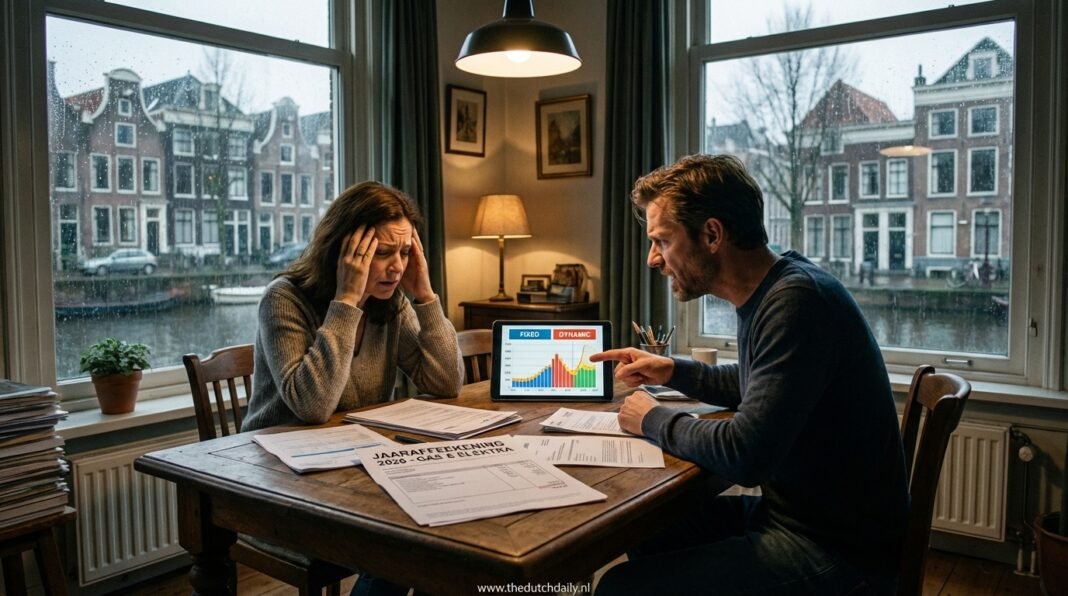
Amsterdam – It is a classic Dutch winter scene in February 2026: gray skies, horizontal rain driving against the windows, and the constant, low hum of a central heating boiler working overtime. But for many internationals living in the Netherlands, the real chill doesn’t come from the North Sea wind—it comes from the notification in their banking app. The monthly energy bill.
In 2026, the Dutch energy market has technically “stabilized” compared to the chaotic years of the early 2020s. However, stability does not mean simplicity. With the introduction of new tax structures, the phasing out of solar incentives, and the rise of complex “dynamic” contracts, it is harder than ever to know if you are paying a fair price or funding your provider’s CEO bonus.
Are you overpaying for your “Green Energy”? Is your landlord legally allowed to keep the €300 switching bonus for themselves? And what exactly is the difference between Liander and Vattenfall? In this comprehensive, deep-dive guide, we move beyond simple price comparisons. We explore the 2026 tax hikes on gas, the mandatory energy vouchers, and the legal battlegrounds of tenant-landlord energy disputes. Whether you are living in a brand-new A-label apartment in Rotterdam or a drafty 17th-century canal house in Leiden, this guide is your financial shield.
Table of Contents
- The 2026 Energy Market Landscape
- Fixed, Variable, or Dynamic: A Detailed Comparison
- Real Life Cost Scenarios: Single Expat vs. Family
- The 2026 Tax Shift: Why Gas is the New Luxury
- The Hidden Cost: Regional Grid Fees (Netbeheerkosten)
- Tenant vs. Landlord: Your Legal Rights Explained
- The Dispute Toolkit: How to Fight Unfair Bills
- Stadsverwarming: Surviving the Monopoly
- The “Switching Game”: Claiming Your Bonus
- Dutch Energy Glossary
The 2026 Energy Market Landscape
To understand your bill, you first need to understand the grid. The Netherlands operates on a split model that confuses many newcomers.
1. The Grid Operator (Netbeheerder): Companies like Liander, Enexis, or Stedin. You cannot choose them; they are determined by your postcode. They own the cables and pipes.
2. The Provider (Energieleverancier): Companies like Vattenfall, Eneco, Essent, or Tibber. These are the companies you pay. They buy energy on the wholesale market and sell it to you.
In 2026, the distinction is crucial because Grid Costs have risen by nearly 15% due to “Netcongestie” (grid congestion), while wholesale gas prices have actually dropped. This means a larger chunk of your bill is now fixed, regardless of how much energy you save.
Fixed, Variable, or Dynamic: A Detailed Comparison
The “Menu” of contracts has expanded in 2026. Choosing the right one depends entirely on your risk tolerance and lifestyle.
1. Fixed Contracts (Vast Contract)
For the first time in years, 3-year fixed contracts are back in style.
The Logic: With the 2026 geopolitical climate remaining “uncertain,” locking in a price provides financial peace of mind.
The Trap: Be warned that the Opzegvergoeding (cancellation fine) rules changed in mid-2023 and remain strict in 2026. If you break a fixed contract early, you don’t pay a flat €50 fee anymore; you pay the estimated loss of the energy company, which can be hundreds of euros.
2. Variable Contracts (Variabel Contract)
This is the default lane. If you haven’t switched in the last six months, you are likely here. Variable rates change on January 1st and July 1st. In 2026, these are often the most expensive option because providers add a significant “risk premium” to cover potential market volatility.
3. Dynamic Contracts (Dynamisch Contract)
The choice of the tech-savvy expat. Powered by apps like Tibber, Zonneplan, or ANWB Energie, you pay the hourly spot price for electricity.
The 2026 Reality: With the massive increase in North Sea wind power, electricity prices often hit negative values during windy weekend afternoons. If you can automate your car charger or dishwasher to run at 2:00 PM, you can practically get paid to use energy. However, during a cold, windless week in January at 6:00 PM, you will pay a premium.
Real Life Cost Scenarios: Single Expat vs. Family
What should you actually expect to pay? We ran the numbers for February 2026 based on average market rates (Gas: €1.25/m3, Elec: €0.28/kWh).
Scenario A: The “Zuidas Professional”
Profile: Single, living in a modern 60m2 apartment (Label A), rarely cooks, uses district heating.
Consumption: 1500 kWh electricity, 15 GJ heat.
Monthly Estimate: €110 – €130.
Best Strategy: A 1-year fixed contract to get a €200 welcome bonus. Since consumption is low, the rate matters less than the cashback.
Scenario B: The “Haarlem Family”
Profile: Family of four, living in a 1930s row house (Label C), drafty windows, daily laundry.
Consumption: 3500 kWh electricity, 1400 m3 gas.
Monthly Estimate: €380 – €450.
Best Strategy: Dynamic contract for electricity (to leverage smart charging) but a FIXED contract for gas. Gas is the budget killer here. Insulation (even simple draft strips) yields a higher ROI than switching providers.
The 2026 Tax Shift: Why Gas is the New Luxury
The Dutch government’s 2026 Tax Plan has a clear objective: discourage gas usage and force the population toward heat pumps. Here is the raw data for your budget:
- Gas Tax: Increased to approx €0.72 per m3 (including VAT). This means nearly 60% of your gas price is pure tax.
- Electricity Tax: Slightly lowered to encourage electrification.
- Tax Credit (Vermindering Energiebelasting): Every household receives a tax credit of approx. €628.96 in 2026. This is deducted automatically from your bill. If your annual bill is very low, you might even get money back from the tax authorities.
The Hidden Cost: Regional Grid Fees (Netbeheerkosten)
Did you know your address determines your base fee? This is a cost component you cannot negotiate or switch.
- Enexis (Eindhoven/Brabant/Limburg): Due to heavy industrial usage and solar farm congestion in the south, grid fees here are among the highest in 2026.
- Liander (Amsterdam/Haarlem/Almere): Slightly lower fees, but rapidly rising due to data center demand in the capital region.
- Stedin (Rotterdam/Utrecht): Faces massive challenges with electrifying the port areas, passing costs to consumers.
Tip: If you are comparing rent prices between two cities, factor in that “Netbeheerkosten” can vary by €5-€10 per month depending on the region.
Tenant vs. Landlord: Your Legal Rights Explained
Many expats move into apartments where the energy is “handled” by the landlord. This is the #1 source of legal disputes. Under the Good Landlordship Act (Wet goed verhuurderschap), you have specific protections.
The “All-In” vs. “Advance” Distinction
1. All-Inclusive Rent: You pay one flat fee (e.g., €1500) and the contract says “including gas/water/light.”
The Risk: If you use less energy, the landlord keeps the profit. If you use more, they can’t easily charge you more without changing the contract. This is rare and often legally disadvantageous for landlords.
2. Service Costs (Voorschot): You pay €1300 rent + €200 advance for energy.
Your Right: The landlord MUST provide a transparent annual settlement (Eindafrekening) before July 1st of the following year. They must show you the actual bills. If the actual cost was €150 per month, they owe you €600 back. If they refuse to pay, you can go to the Huurcommissie.
The Dispute Toolkit: How to Fight Unfair Bills
If your landlord sends you a bill for “extra energy costs” without proof, or if your provider charges you an astronomical amount based on an “estimated” reading, follow this escalation ladder:
- The “Inzage” Request: Send a formal email demanding to see the original invoices from the energy company. “My accountant requires the original source documents” is a polite but firm phrase to use.
- The Correction Request: If the reading is wrong, take a photo of your meter holding today’s newspaper (to prove the date) and send it to customer service.
- The Geschillencommissie: If the energy company ignores you, file a case at De Geschillencommissie Energie. It costs a small fee (approx. €52), but if you win—and consumers often do in cases of faulty meters—the company must refund the fee and fix the bill.
Stadsverwarming: Surviving the Monopoly
If your apartment uses “District Heating” (Stadsverwarming), you cannot switch providers. You are tied to the local supplier (often Vattenfall or Eneco).
The 2026 “Warmtewet” Update: To protect consumers from monopoly pricing, the ACM (Authority for Consumers and Markets) sets a maximum price cap (GJ price) every January.
Critical Check: Look at your bill. Is your provider charging the maximum rate? Many do. While you can’t switch, you can install smart radiator knobs (like Tado) to control the flow in every room, which is the only way to lower a district heating bill effectively.
The “Switching Game”: Claiming Your Bonus
In 2026, energy companies are desperate for market share. Because the “energy transition” involves high infrastructure investments, they want long-term customers. They offer “Welkomstkortingen” (Welcome Discounts) of up to €350 to get you in the door.
The TDD Strategy for Max Savings:
- Never Renew Automatically: When your contract ends, you automatically roll onto a variable “sleeper rate,” which is expensive.
- The “Job Hopper” Approach: Set a calendar reminder for 2 months before your contract ends. Use a comparison site like Gaslicht.com. Switch to a new provider to grab a new €250+ bonus.
- The Math: A slightly higher rate per kWh with a €300 bonus is often cheaper annually than the lowest rate with zero bonus, especially for smaller households.
Dutch Energy Glossary: Terms You Must Know
| Word (Dutch) | Pronunciation | Expat Context |
|---|---|---|
| 📉 Eindafrekening | Eynd-af-re-ken-ing | The “Final Bill” received when moving out. This is where most deposit disputes happen. |
| 🔌 Vastrecht | Vast-reht | Fixed delivery costs. You pay this even if you turn off every light in the house. |
| ⚡ Terugleverkosten | Te-rug-le-ver-kos-ten | Solar Feed-in Fees. A new 2026 charge for solar panel owners who export power to the grid. |
| 🏗️ Netbeheerder | Net-be-heer-der | The grid operator (e.g., Liander). You call them if the power goes out, not your billing company. |
TDD Community Question
Are you being overcharged by your landlord for “Service Costs”? Have you managed to get a refund by asking for the original bills? Share your victory stories or questions in the comments below to help the community!