



Netherlands Rent Increase Cap 2026: Official Maximum Rates for Tenants
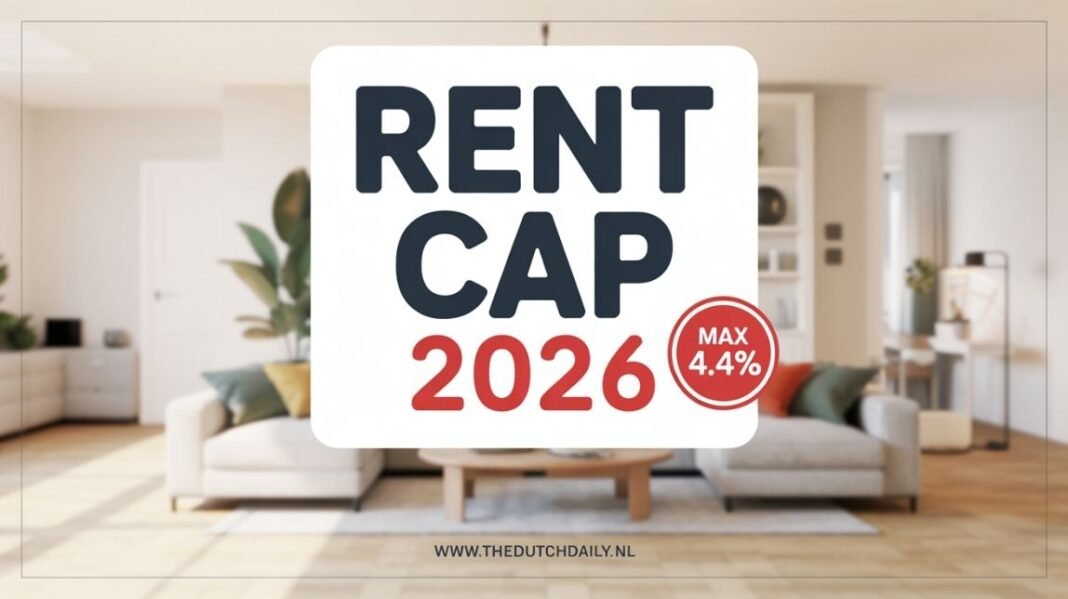
Amsterdam – The Netherlands rent increase cap 2026 has been officially confirmed by the Ministry of Housing, bringing clarity—and relief—to thousands of tenants in the private sector. Starting from January 1st, landlords in the free sector (vrije sector) are legally prohibited from raising rents by more than 4.4%.
This cap is a critical protection measure. Without it, landlords could legally index rents based on the skyrocketing inflation rates or simply force tenants out with double-digit hikes. Whether you are renting a shell apartment in Rotterdam or a furnished studio in Amsterdam, knowing this percentage is your first line of defense against illegal overcharging.
Table of Contents
- The Magic Number: 4.4% Explained
- Free Sector vs. Social Housing: Know Your Sector
- What If My Landlord Asks for More?
- Hidden Trap: Service Costs Are Not Capped
- Key Takeaways
- Dutch Learning Corner
The Magic Number: 4.4% Explained
For 2026, the government has tied the rent cap to the lowest of two figures: either the inflation rate + 1% or the collective wage development + 1%.
Since wage growth was the lower stability factor this year, the calculation settled at 4.4%. This applies to all existing contracts in the liberalized (free) sector.
Example Calculation:
If your base rent (kale huur) is €1,500 per month:
€1,500 x 4.4% = €66 increase.
Your new maximum rent should be €1,566. Any proposal higher than this is legally void.
Free Sector vs. Social Housing: Know Your Sector
The rules differ depending on your contract type. It is crucial to know which category you fall into:
| Housing Type | 2026 Max Increase | Who Decides? |
|---|---|---|
| Free Sector (Vrije Sector) (Rent > €879 at start) | Max 4.4% | National Govt Cap |
| Social Housing (Rent < €879 at start) | Max 4.1% | Income Dependent |
What If My Landlord Asks for More?
Expats are often targeted with illegal increases because landlords assume they don’t know the law. Common tactics include claiming “market adjustment” or “renovation fees” to bypass the cap.
Your Action Plan:
1. Do Not Sign: You do not need to sign a proposal to make it valid, but you should formally object if it’s too high.
2. Calculate: Use the percentages above.
3. Object: Send a formal objection letter (bezwaarschrift) citing the “Wet maximering huurprijsverhogingen”.
4. Huurcommissie: If the landlord persists, you can take the case to the Rent Tribunal (Huurcommissie), even in the free sector.
Hidden Trap: Service Costs Are Not Capped
Warning: The 4.4% cap applies ONLY to the basic rent (kale huur). It does not apply to service costs (gas, water, electricity, furniture, cleaning).
Landlords often try to increase the “Service Costs” by 20-30% to compensate for the rent cap. While service costs can rise, they must be based on actual consumption. You have the legal right to ask for a detailed annual breakdown (eindafrekening) of every cent spent. If they can’t prove the cost, you don’t have to pay the increase.
Key Takeaways
- The Limit: Landlords cannot raise basic rent by more than 4.4% in 2026.
- The Date: Increases usually happen on July 1st, but can occur on your contract anniversary.
- The Trap: Watch out for “Service Cost” hikes used to mask an illegal rent increase.
- The Right: You can refuse an illegal increase without fear of eviction.
Dutch Learning Corner
| Word (Dutch) | Pronunciation | Meaning | Context |
|---|---|---|---|
| 📈 De Huurverhoging | Huur-ver-ho-ging | Rent Increase | De maximale huurverhoging is 4.4%. (The max rent increase is 4.4%.) |
| 🏠 Kale Huur | Ka-le Huur | Basic Rent | Exclusief gas, water en licht. (Excluding gas, water, and light.) |
| ⚖️ De Huurcommissie | Huur-com-mis-sie | Rent Tribunal | Bij onenigheid ga je naar de Huurcommissie. (In case of dispute, go to the Rent Tribunal.) |
Did You Get a Letter?
Has your landlord proposed a rent increase for 2026 yet? Is it within the 4.4% limit, or are they trying to push for more? Share your numbers in the comments to help others benchmark!