



Public Transport Netherlands 2026: The Ultimate Expat Guide (NS, OVPay, Fatbikes & Driving)
Utrecht/Amsterdam – If you have lived in the Netherlands for a while, you probably have a collection of yellow and blue plastic cards in your wallet. In 2026, those cards are officially relics of the past. The Dutch mobility landscape has undergone its biggest transformation in twenty years. The iconic yellow OV-Chipkaart is effectively dead, replaced by OVPay. The Dutch Railways (NS) have hiked prices by another 8.7%, making a return trip from Amsterdam to Rotterdam cost nearly €40 without a discount. And on the bike paths, a culture war is raging: the government has finally cracked down on the “Fatbike” terror with strict new helmet laws and age limits effective January 1, 2026.
But mobility in the Netherlands is about more than just trains. It is about the seamless integration of OV-Fiets (rental bikes), the rise of Car Sharing apps as taxes make owning a car impossible, and the nightmare of exchanging your foreign driving license. Whether you commute by train, drive an electric car (whose tax breaks just expired), or cycle through the rain, the rules have changed.
In this massive, definitive 2600-word guide, we break down the new payment systems, calculate which NS subscription saves you the most money, compare Greenwheels vs. SnappCar, and explain why holding your phone on a bike will now cost you a staggering €160 fine.
Table of Contents
- The Death of OV-Chipkaart: Mastering OVPay & Refunds
- NS Trains 2026: Price Hikes & The “Flex” Subscription Guide
- The Fatbike War: New Rules (Helmets & Age Limits)
- The OV-Fiets System: The “Last Mile” Secret Weapon
- Cycling 2026: Phone Fines, Insurance & Theft
- Car Ownership: The End of EV Tax Breaks (MRB)
- Car Sharing Wars: Greenwheels vs. SnappCar
- Driving License Exchange: The “30% Ruling” Loophole
- Importing a Car: The BPM Nightmare
- Schiphol 2026: Security Scanners & Slot Restrictions
- Regional Transport: Connexxion, Arriva & The “Double Check-in”
- Fines & Penalties: How to Avoid Paying €50+
- Frequently Asked Questions (Mobility FAQ)
- Dutch Transport Vocabulary Corner
The Death of OV-Chipkaart: Mastering OVPay & Refunds
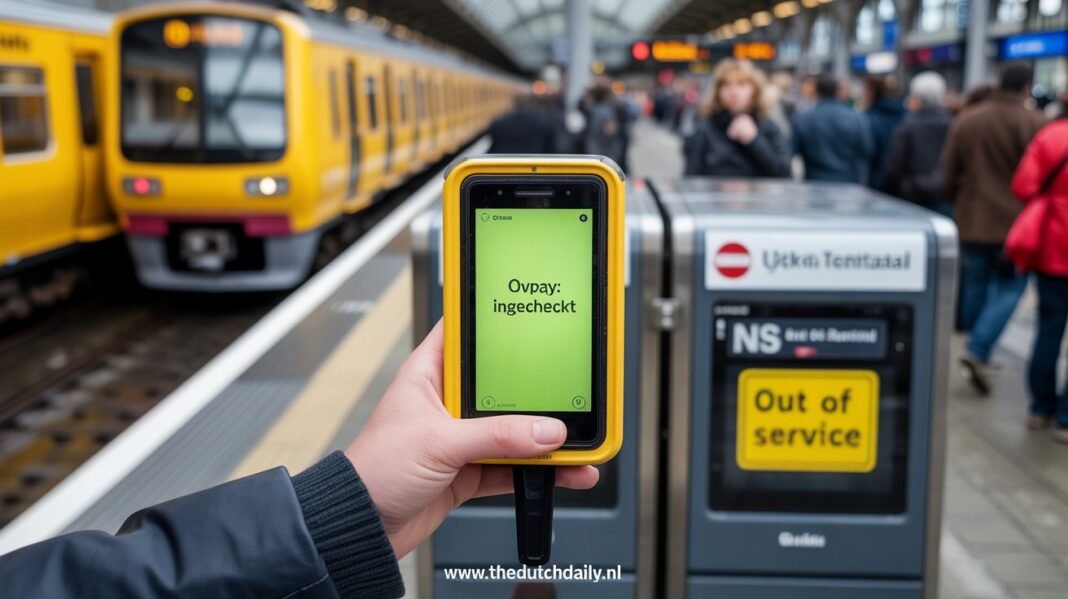
For decades, the yellow OV-Chipkaart was the key to the country. As of 2026, the transition to OVPay is effectively complete. The old anonymous cards are being withdrawn from sale, and the focus is entirely on contactless payment.
How OVPay Works
You no longer need to buy a ticket or top up a balance. You simply check in and out with:
- Your Debit Card (Maestro/V-Pay/Debit Mastercard).
- Your Credit Card (Visa/Mastercard).
- Your Smartphone (Apple Pay / Google Wallet).
The “Card Clash” Risk:
If you keep your bank card and your old OV-card in the same wallet and tap the wallet against the reader, you risk “Double Check-in.” The system might charge both cards, or check one in and the other out. Rule #1 of 2026: Take the card out of the wallet before tapping.
The “Missed Checkout” Nightmare & Refund Process
This is the most common issue. You check in with Apple Pay on your iPhone, but your battery dies during the journey. You cannot check out.
The Consequence: The system charges you the “Boarding Fare” (Instaptarief).
- Trains (NS): €20.00
- Bus/Tram/Metro: €4.00 – €6.00
How to fix it (Step-by-Step):
1. Wait 24 hours for the transaction to appear on your bank statement.
2. Note the payment reference number (Starts with NLOV followed by 14 digits).
3. Go to the OVPay.nl website or app.
4. Enter the NLOV number and the amount.
5. Manually adjust your trip (e.g., “I got off at Utrecht Centraal”).
6. The difference is refunded to your bank account within 5 days.
Warning: You can only do this 3 times per 6 months. If you do it too often, they block your card for travel.
NS Trains 2026: Price Hikes & The “Flex” Subscription Guide
The Nederlandse Spoorwegen (NS) has raised prices significantly to cover inflation and infrastructure repairs. Traveling “Full Fare” (Vol Tarief) in 2026 is financial suicide for commuters.
The “Dal Voordeel” Absolute Necessity
If you travel by train more than once a month, you MUST get a subscription.
The Subscription: NS Flex Dal Voordeel.
Cost: Approx. €5.60 per month.
Benefit: 40% discount on weekends and off-peak hours (09:00-16:00 and 18:30-06:30).
The Math: A return trip Amsterdam-Eindhoven costs approx. €44 full price. With the discount, it is €26.40. You save €17.60 on your first trip, covering the subscription cost instantly.
NS Flex Traject Vrij (Commuter)
If you commute 3+ days a week, a fixed route subscription (Traject Vrij) is usually cheaper.
2026 Feature: “Home Work Days.” You can pause your subscription instantly in the app if you go on holiday for 2 weeks, paying €0 for that period. This flexibility is the only good news about the price hikes.
The Fatbike War: New Rules (Helmets & Age Limits)
The “Fatbike”—an electric bike with wide tires and often illegal throttles—became the scourge of Dutch cycle paths in 2024/2025. In 2026, the government struck back hard.
The New Rules (Jan 1, 2026):
- Helmet Compulsion (Helmplicht): Riders of Fatbikes (even if limited to 25km/h) must now wear a helmet. This aims to make them “uncool” for teenagers.
- Minimum Age: There is a new pilot phase restricting e-bikes with wide tires to ages 14+. Police are fining parents who let their 10-year-olds ride them.
- Police Rollers: Police now carry portable “Rollerbanks” (Dynos) to test bikes. If your Fatbike provides assist above 25km/h, it is confiscated on the spot, and you get a criminal record (Strafblad).
Expat Warning: Do not buy a cheap Chinese e-bike online that has a “throttle” (gas handle). These are illegal on public roads. If you crash, your liability insurance (Aansprakelijkheidsverzekering) will refuse to pay, leaving you personally liable for thousands of euros.
The OV-Fiets System: The “Last Mile” Secret Weapon
You arrive at a station, but your destination is still 3km away. Do you walk? Take a bus? No, you take an OV-Fiets.
What is it? The ubiquitous Blue-and-Yellow bikes available at almost every station.
How to get one: You MUST have a personalized OV-Chipkaart (yes, this is the one reason to keep a card) with the “OV-Fiets” subscription enabled (it’s free to enable).
Cost (2026): Approx. €4.55 per 24 hours.
The 72-Hour Rule: You can keep the bike for up to 3 days (72 hours).
The Penalty: If you keep it longer than 72 hours, the price jumps to €5.00 extra per day, and after 21 days, they charge you a lost bike fee of approx. €350.
Pro Tip: You can rent 2 bikes with 1 card. Great if you have a visitor!
Cycling 2026: Phone Fines, Insurance & Theft
Cycling remains the soul of Dutch mobility, but enforcement has tightened.
The €160 Phone Fine:
Holding a phone while cycling (even for maps) is strictly illegal. Cameras with AI detection (Monocams) are positioned on bridges and cycle paths. You won’t even know you were caught until the CJIB fine arrives in the mail 2 weeks later.
Solution: Buy a €10 phone holder (telefoonhouder) for your handlebars. It is legal to touch the screen if it is in a holder.
Theft is Rampant:
In Amsterdam alone, 80,000 bikes are stolen annually.
The Rule: Buy a bike with a “Ring Lock” (wheel lock) AND a chain lock. Always chain your bike to something (rack, bridge). If you have an e-bike, battery theft is the new trend. ALWAYS remove your battery when parking.
Car Ownership: The End of EV Tax Breaks (MRB)
For years, electric vehicles (EVs) were exempt from Road Tax (Motorrijtuigenbelasting – MRB). In 2026, this party is over.
The Weight Trap:
Road tax is based on vehicle weight. EVs are extremely heavy due to batteries (e.g., a Tesla Model Y weighs 2000kg).
The New Rule: EVs now pay 75% of the regular road tax rate. Because they are so heavy, this means an EV owner might pay more tax than a small petrol car owner.
Example Cost: A Tesla Model 3 in North Holland now costs approx. €60 – €80 per month in road tax.
Petrol Prices: Still among the highest in the world (approx. €2.10/liter).
Verdict: Owning a car in the Randstad is a luxury status symbol, not a necessity. This brings us to Car Sharing.
Car Sharing Wars: Greenwheels vs. SnappCar
Why own a car when you can rent one for an hour? The Netherlands has one of the densest car-sharing networks in the world.
1. Greenwheels (The Station Car)
Best for: Short trips (IKEA run, grocery shopping).
Pros: Dedicated parking spots (you never hunt for parking), huge fleet.
Cons: You MUST return the car to the exact same spot.
Cost: Subscription + hourly rate (€3-€8) + km rate (€0.30).
2. SnappCar (The AirBnB of Cars)
Best for: Weekend trips.
Pros: Rent your neighbor’s car. Often cheaper for full days. Diverse cars (convertibles, vans).
Cons: You have to arrange key handover (unless it’s “Keyless”), car might be dirty.
3. Sixt Share / SHARE NOW
Best for: One-way trips (A to B).
Pros: Free floating. You can leave the car anywhere within the “Home Area” (e.g., drive from Amsterdam West to East).
Cons: Only available in major cities.
Driving License Exchange: The “30% Ruling” Loophole
This is the most critical information for new expats.
The Rule: You can drive with a foreign (non-EU) license for 185 days after registering at the municipality. After that, it is illegal.
Scenario A: You have the 30% Ruling
The Loophole: You (and your fiscal partner!) can exchange your foreign license (US, India, Turkey, Brazil, etc.) for a Dutch license without taking a test. It takes approx. 2-4 weeks.
Scenario B: You DO NOT have the 30% Ruling
The Nightmare: You cannot exchange it (unless from EU/EEA). You must take the Dutch driving exam.
The Exam: It consists of a Theory Test (hard), a Hazard Perception Test, and a Practical Exam. The pass rate is low. Total cost: Approx. €2,000 – €3,000 for lessons and exams.
Advice: If you are eligible for the 30% ruling, apply for the license exchange IMMEDIATELY, even if you don’t plan to buy a car. It is a golden ticket.
Importing a Car: The BPM Nightmare
Many expats think: “I’ll bring my car from Germany/Poland/UK, it’s cheaper.”
The BPM Tax: When you register a foreign car on yellow plates, you must pay BPM (Luxury Tax). This is calculated based on CO2 emissions.
The Shock: For a standard petrol car, this can be €3,000 to €10,000.
Exemption (Verhuisboedel): If you move to NL, you can apply for an exemption to bring your car tax-free.
The Condition: You must have owned it for 6 months before moving, and you cannot sell it for 12 months after moving. If you sell it early, you owe the full tax.
Schiphol 2026: Security Scanners & Slot Restrictions
Schiphol Airport is trying to recover from its reputation as a chaos hub.
The New CT Scanners:
All security lanes at Schiphol now use CT scanners.
The Benefit: You do NOT need to take liquids or laptops out of your bag. You can bring water bottles (larger than 100ml) through security, although rules change often, so check the “Schiphol App” before flying.
Slot Restrictions:
The government has capped the number of flights to reduce noise/nitrogen. This means fewer budget flights (EasyJet/Ryanair) from Schiphol. Expect to fly more from Rotterdam, Eindhoven, or even Düsseldorf (Germany) for cheaper fares.
Regional Transport: Connexxion, Arriva & The “Double Check-in”
NS operates the main trains, but regional buses and trams are run by companies like GVB (Amsterdam), RET (Rotterdam), HTM (The Hague), Connexxion, and Arriva.
The Check-in Rule:
If you switch from an NS train to an Arriva bus, you must Check OUT of the train and Check IN to the bus.
The “Overstap” (Transfer) Discount:
If you check in to the bus within 35 minutes of checking out of the train, you do not pay the “Boarding Fare” again.
The Trap: If you switch from an NS train to a regional train (e.g., Arriva in Groningen), you must check out at the yellow NS pole and check in at the blue/red Arriva pole. If you forget, you are traveling without a valid ticket and can be fined.
Fines & Penalties: How to Avoid Paying €50+
Ticket inspectors (Boa’s) are strict. “I didn’t know” is not a valid excuse.
- No Valid Ticket (Train/Bus): Fare + €50 fine.
- Feet on the Seat: €160 fine. (Yes, really. Don’t do it. Cameras are watching).
- Smoking on the Platform: All train stations are 100% smoke-free zones, even the open-air ones. Fine: €110.
- Running a Red Light (Cyclist): €110.
- Cycling in Pedestrian Zone: €60.
- No Lights on Bike at Night: €60. (Police do “Light Checks” in autumn).
Frequently Asked Questions (Mobility FAQ)
Q: Can I take my bike on the train?
A: Yes, but NOT during peak hours (06:30-09:00 and 16:00-18:30) on weekdays. You must buy a “Fietskaart Dal” ticket (€7.50). Folding bikes (Vouwfietsen) are free and allowed anytime, even in peak hours.
Q: My company offers a “Business Card” (NS Business Card). Should I take it?
A: YES. It is the holy grail. You travel for free (or employer pays), you don’t worry about subscriptions, and you can often use it for OV-fiets (rental bikes) and Greenwheels cars without a personal subscription.
Q: Is Uber legal in Netherlands?
A: Yes, but mostly in big cities (Randstad). In rural areas, it doesn’t exist. Uber prices are often similar to regular taxis due to regulations. Bolt is also popular and often slightly cheaper.
Q: Can I drink alcohol on the train?
A: Technically yes, but you cannot be “publicly intoxicated” or cause a nuisance. However, drinking alcohol is banned in station halls and on platforms.
Dutch Transport Vocabulary Corner
| Word (Dutch) | Pronunciation | Meaning & Context |
|---|---|---|
| 🚆 Inchecken / Uitchecken | In-check-en | Check in/out. The act of tapping your card. If you forget to check out, it costs you money. |
| 🛑 Spoorwijziging | Spoor-wij-zi-ging | Platform Change. The announcer says this when your train moves to another platform. Run! |
| 🕰️ Daluren | Dal-u-ren | Off-peak hours. When travel is 40% cheaper (approx 9:00-16:00). |
| 🚲 Helmplicht | Helm-plicht | Helmet Compulsion. Mandatory helmet wearing (now for Fatbikes). |
| 🚧 Vertraging | Ver-tra-ging | Delay. A word you will hear often with NS. “+5 minuten”. |
TDD Community Question
Have you switched to OVPay yet? Do you think the new Fatbike helmet laws will actually work? Or are you struggling with the Driver’s License Exchange? Share your commute horror stories and tips below!