




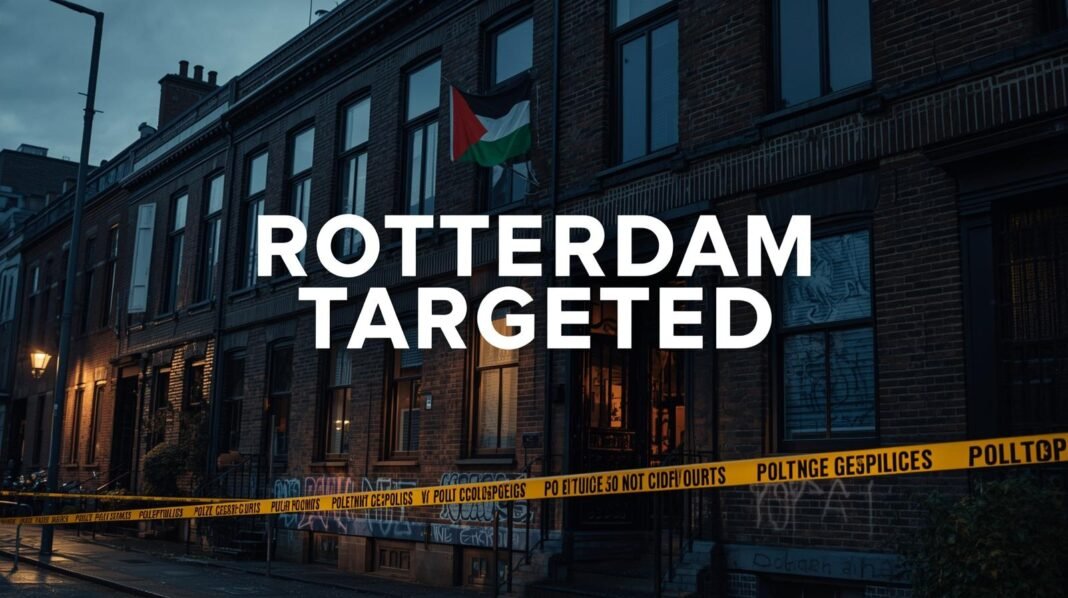
Rotterdam Targeted: Threats Against Muslims and Palestine Supporters Raise Alarm
Rotterdam is grappling with a disturbing surge in threats targeting Muslim residents and individuals expressing solidarity with Palestine. Several homes have received threatening letters and been marked with Nazi symbols, sparking a serious debate about security and freedom of expression within the city. The incidents, specifically aimed at those displaying Palestinian flags, have ignited widespread concern and prompted immediate action from local political parties.
Table of Contents
- Threats on the Agenda
- “This is Not an Isolated Incident”
- Police Response and Criticism
- Investigate Potential Organized Structure
- Historical Context: Rising Antisemitism and Islamophobia
- Future Implications: The Impact on Social Cohesion
- Expert Analysis: The Role of Online Extremism
- Key Takeaways
- Dutch Learning Corner
- Community CTA
Threats on the Agenda
The escalating situation has forced the issue onto the Rotterdam municipal council’s agenda. DENK Rotterdam, a political party representing diverse communities, has formally requested a thorough investigation into the incidents and assurances regarding the safety of those targeted. They have submitted a written inquiry to the municipality, demanding a comprehensive response and a plan to protect vulnerable residents.
“This is Not an Isolated Incident”
Serkan Soytekin, a DENK Rotterdam council member, emphasized that these incidents should not be dismissed as isolated occurrences. He stated that the threats are directed not only at those showing support for Palestine but also at the broader Muslim community. “Receiving death threats based on one’s beliefs or conscience is unacceptable,” Soytekin declared, highlighting the severity of the situation and the need for a firm response. He stressed the importance of protecting fundamental freedoms and ensuring that all residents feel safe and secure.
Police Response and Criticism
Some victims have filed reports with the police, but initial responses have been criticized as inadequate. Reports indicate that complainants received only generic acknowledgements stating that an “investigation is underway.” More concerningly, some individuals were advised by police to refrain from displaying Palestinian flags for their own safety. This advice has drawn sharp criticism, with many arguing that it effectively punishes victims and undermines their right to freedom of expression. Critics argue that the police should be protecting individuals’ rights, not advising them to suppress their political views.
Investigate Potential Organized Structure
DENK’s inquiry to the municipality also raises the possibility of an organized group or structure behind the threats. The party urges the authorities to take this possibility seriously and prioritize a thorough investigation to determine if a coordinated effort is responsible. They have requested information on previous similar incidents and the outcomes of police investigations, seeking to understand the scope of the problem and identify any patterns or connections.
Historical Context: Rising Antisemitism and Islamophobia
The current situation in Rotterdam is not occurring in a vacuum. Europe, and the Netherlands specifically, has witnessed a concerning rise in both antisemitism and Islamophobia in recent years. The Israeli-Palestinian conflict often serves as a catalyst for these prejudices, with expressions of support for either side frequently triggering hateful rhetoric and violence. The historical context of the Holocaust and the ongoing discrimination faced by Muslim communities are crucial to understanding the sensitivity of these issues and the potential for escalation. Furthermore, the rise of far-right political movements across Europe has contributed to a climate of intolerance and xenophobia.
Future Implications: The Impact on Social Cohesion
If left unaddressed, these threats could have a devastating impact on social cohesion in Rotterdam. The fear and intimidation experienced by targeted communities could lead to self-censorship and a reluctance to participate in public life. This could further marginalize already vulnerable groups and exacerbate existing tensions. The long-term consequences could include increased polarization, distrust in authorities, and a weakening of democratic values. Proactive measures are needed to counter hate speech, promote interfaith dialogue, and foster a sense of belonging for all residents.
Expert Analysis: The Role of Online Extremism
Experts point to the role of online extremism in fueling these types of incidents. Social media platforms and online forums often serve as breeding grounds for hate speech and conspiracy theories. The anonymity afforded by the internet can embolden individuals to express extremist views and incite violence. Furthermore, the rapid spread of misinformation and disinformation can exacerbate tensions and create a distorted perception of reality. Addressing online extremism requires a multi-faceted approach, including content moderation, counter-narrative campaigns, and education initiatives.
Key Takeaways
- The threats against Muslims and Palestine supporters in Rotterdam represent a serious attack on fundamental freedoms and require a swift and decisive response.
- The police response has been criticized as inadequate, and there is a need for greater sensitivity and protection of victims’ rights.
- The possibility of an organized structure behind the threats must be thoroughly investigated.
- Addressing the root causes of antisemitism and Islamophobia, including online extremism, is crucial for preventing future incidents and fostering social cohesion.
Dutch Learning Corner
| Word | Pronun. | Meaning | Context (NL + EN) |
|---|---|---|---|
| Huis 🏠 | /hœys/ | House | Ik ga naar mijn huis. (I am going to my house.) |
| Dreiging 🚨 | /ˈdrɛi̯ɣɪŋ/ | Threat | De dreiging is serieus. (The threat is serious.) |
| Vrijheid 🕊️ | /ˈvrɛi̯ɦɛit/ | Freedom | Vrijheid van meningsuiting is belangrijk. (Freedom of speech is important.) |
(Swipe left to see more)
Community CTA
How can Rotterdam ensure the safety and freedom of expression for *all* its residents?
This incident raises critical questions about the responsibility of local authorities to protect vulnerable communities and uphold democratic values. What steps can be taken to address the underlying causes of hate speech and discrimination? How can we foster a more inclusive and tolerant society where everyone feels safe and respected? Share your thoughts and ideas in the comments below.