




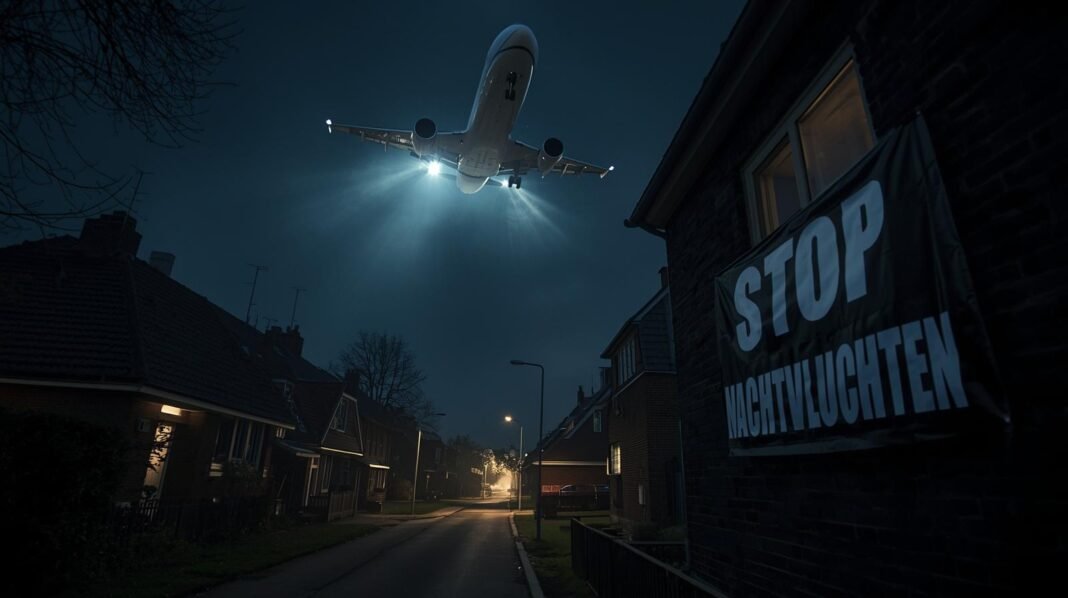
Schiphol Night Flights: Councils Demand Health-Focused Shutdown
A coalition of fifteen local authorities surrounding Schiphol Airport are escalating pressure on the next Dutch government, demanding a complete ban on night flights to safeguard the health and wellbeing of residents. The councils, representing areas including Amsterdam, Leiden, Haarlem, and Zaanstad, cite mounting evidence linking nighttime aircraft noise to serious health problems, including sleep deprivation, stress, cardiovascular disease, and reduced cognitive function. The move comes amidst ongoing debate over flight capacity at the busy international hub, and follows separate legal action threatened by residents over the airport’s alleged disregard for public health. Over 25,000+ night flights were recorded at Schiphol in 2024 alone, fueling the growing discontent.
Table of Contents
- The News: Councils’ Urgent Plea
- Detailed Report: Noise Levels and Resident Concerns
- Deep Analysis & Context
- Key Takeaways
- Dutch Learning Corner
- Community CTA
The News: Councils’ Urgent Plea
The coordinated call for a nighttime shutdown represents a significant intensification of local opposition. The councils, led by major municipalities like Amsterdam and Haarlem, argue that the current situation is unsustainable. Their joint statement explicitly links prolonged exposure to aircraft noise to a range of ailments, relying on data from health services like GGD.
Detailed Report: Noise Levels and Resident Concerns
The demand for a night flight ban isn’t new. Amsterdam city council, a 20% shareholder in Schiphol, already called for a 400,000 flight ceiling and an end to night flying in June 2024. This latest push, however, is broader, uniting a wider coalition of affected municipalities. Adding fuel to the fire, a group of local residents announced plans to sue Schiphol at the end of 2024, alleging the airport has been “mishandling” or failing to adequately protect their health. The complainants claim that years of excessive noise pollution have “robbed people of their sleep” and constitute an attack on their wellbeing. The lawsuit specifically targets Schiphol, the state, and KLM and Transavia, identified as the “biggest night noise makers.”
Deep Analysis & Context
Historical Context: Flight Restrictions in Europe
Schiphol’s current night flight regulations are comparatively lax when benchmarked against other major European airports. London Heathrow, Frankfurt, and Paris Charles de Gaulle all enforce stricter rules, often involving reduced flight schedules or limitations on the types of aircraft permitted to operate during nighttime hours. This discrepancy has long been a point of contention for Dutch residents, who argue that Schiphol prioritizes economic growth over the health and quality of life of those living nearby. The airport’s status as one of the world’s most intensively used, with approximately 480,000 take-offs and landings annually, exacerbates the problem.
Future Implications: Capacity Cuts and Legal Battles
The debate over Schiphol’s capacity is far from settled. The Dutch government has been grappling with the issue since June 2022, initially targeting a reduction to 440,000 flights. This proposal faced strong opposition from airlines and the United States, concerned about the impact on transatlantic routes. The government later revised the target to 478,000 flights, a compromise that still drew criticism. The European Commission, while generally supportive of the flight reduction plans, identified “shortcomings” in the proposals last April. The potential legal action by residents adds another layer of complexity, potentially forcing Schiphol to implement more stringent noise mitigation measures, regardless of government policy. The outcome of this legal battle could set a precedent for similar cases across Europe.
Expert Analysis: Health Impacts of Noise Pollution
The health impacts of chronic noise exposure are well-documented. Reports from GGD Kennemerland consistently demonstrate a strong correlation between aircraft noise and increased risk of cardiovascular disease and sleep disorders. Local health officials explain, “Nighttime noise is particularly damaging because it disrupts the natural sleep cycle, preventing the body from fully recovering.” The councils’ demand for a ban reflects a desire to prioritize resident wellbeing over flight capacity.
Key Takeaways
- The coordinated effort by fifteen local councils signals a significant escalation in opposition to Schiphol’s operations.
- The demand for a complete night flight ban highlights the growing concern over the health impacts of aircraft noise.
- The potential legal action by residents adds another layer of uncertainty to Schiphol’s future, potentially forcing stricter noise mitigation measures.
- Schiphol’s comparatively lax night flight regulations, when compared to other major European airports, are under increasing scrutiny.
Dutch Learning Corner
| Word | Pronun. | Meaning | Context (NL + EN) |
|---|---|---|---|
| De nachtsluiting | Duh NACHT-slou-ting | Night closure | Gemeenten eisen een nachtsluiting. (Municipalities demand a night closure.) |
| De geluidshinder | Duh ghuh-LOUTS-hin-der | Noise nuisance | De geluidshinder is onacceptabel. (The noise nuisance is unacceptable.) |
| De omwonenden | Duh om-WO-nen-den | Local residents | De omwonenden zijn boos. (The local residents are angry.) |
(Swipe left to see more)
Community CTA
Should economic interests always take precedence over the health and wellbeing of local communities?
The debate surrounding Schiphol highlights a fundamental tension between economic development and public health. Do you believe that the economic benefits of a major airport like Schiphol justify the negative health impacts experienced by nearby residents? Share your thoughts in the comments below and join the discussion!