




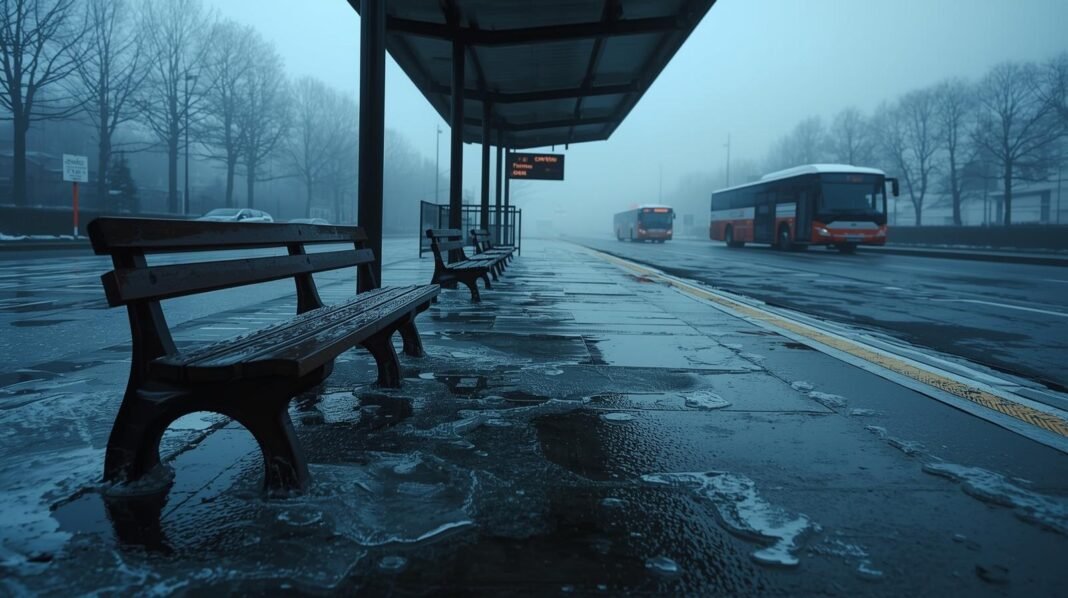
Train Services Recovering, Northern Buses Suspended Amid Icy Conditions
Amsterdam, Netherlands – Train services across the Netherlands are largely returning to normal on Monday morning following a week of severe winter weather, though adjustments remain in place, particularly in the east of the country. However, all Qbuzz bus services in the northern provinces of Groningen, Friesland, and Drenthe have been suspended due to a code orange warning for icy roads. The disruption highlights the ongoing challenges posed by the recent cold snap and the delicate balance between maintaining public transport and ensuring passenger safety. Passengers are advised to check for updates before travelling.
Table of Contents
- NS Train Services
- Qbuzz Bus Suspension
- KNMI Code Orange Warning
- Historical Context: Winter Transport Disruptions
- Future Implications: Climate Change & Infrastructure
- Expert Analysis: Resilience of Dutch Transport
- Key Takeaways
- Dutch Learning Corner
NS Train Services
NS (Nederlandse Spoorwegen) reported that while most trains are running on schedule, modified timetables are still in effect due to lingering effects from the frost and snow. “The aftermath of the frost and snow of the past few days means that the full number of required trains is not yet available,” an NS spokesperson stated. Adjustments include longer travel times and more frequent transfers, specifically on routes between Amersfoort and Barneveld, Amsterdam and Oostvaarders, and Arnhem and Doetinchem, where passengers should anticipate delays of approximately 15 minutes. The international train service from Maastricht to Liège has been temporarily replaced with stop buses.
ProRail and NS crews worked throughout the weekend to repair damage to switches, tracks, and trains. While a return to the regular timetable is expected on Tuesday, January 13th, some disruptions are still possible. Passengers are strongly encouraged to check the NS website or app for the latest information before commencing their journey.
Qbuzz Bus Suspension
The situation is more severe for bus passengers in the north. Qbuzz has suspended all bus services in Groningen, Friesland, and Drenthe due to dangerously slippery road conditions. The company anticipates resuming services in Friesland around 10:00 a.m., and in Groningen and Drenthe around noon. Bus services to the Wadden Islands – Terschelling, Ameland, and Vlieland – are also affected, with a planned resumption of services around 10:00 a.m.
KNMI Code Orange Warning
The Royal Netherlands Meteorological Institute (KNMI) has issued a code orange warning for icy roads across a large portion of the country. The warning highlights a “high risk of accidents due to slippery bridges, roads, cycle paths, and sidewalks.” The KNMI emphasizes that the icy conditions are often difficult to detect, posing a significant hazard to all road users. The slippery conditions are expected to gradually improve from the southwest throughout the day.
Historical Context: Winter Transport Disruptions
The Netherlands, while generally well-prepared for winter weather, is occasionally brought to a standstill by heavy snowfall and ice. The winter of 2009-2010 saw particularly severe disruptions, with widespread travel chaos lasting for several weeks. More recently, the ‘Beast from the East’ in 2018 caused significant disruption to train and road transport. These events underscore the vulnerability of the Dutch transport network to extreme weather events, despite significant investment in infrastructure and preventative measures. The current situation, while less severe than those past events, serves as a reminder of the potential for disruption.
Future Implications: Climate Change & Infrastructure
The increasing frequency of extreme weather events, linked to climate change, poses a growing challenge to the Dutch transport infrastructure. While the Netherlands is renowned for its water management expertise, adapting to more frequent and intense winter storms and periods of freezing weather requires ongoing investment and innovation. This includes improving the resilience of tracks and switches, developing more effective de-icing strategies, and enhancing real-time information systems for passengers. The long-term sustainability of the transport network depends on proactive adaptation to a changing climate.
Expert Analysis: Resilience of Dutch Transport
Transport analysts and representatives from Reizigersvereniging Rover (Travelers’ Association) note that while the Dutch transport system is generally resilient, extreme winter conditions continue to expose vulnerabilities. “Investment in heated switches has helped, but ‘black ice’ remains a critical challenge for road-based public transport,” experts explain. They emphasize that while suspending bus services is a difficult decision, passenger safety must prioritize over punctuality during Code Orange events. The focus now shifts to how quickly operators like Qbuzz can resume services once the thaw sets in.
Key Takeaways
- Partial Recovery: Train services are largely returning to normal, but passengers should expect some delays and check for updates.
- Northern Bus Suspension: All Qbuzz bus services in Groningen, Friesland, and Drenthe remain suspended due to dangerous icy conditions.
- Code Orange Warning: A code orange warning for icy roads is in effect across much of the Netherlands, posing a significant risk to all road users.
- Climate Adaptation: The need for continued investment in climate-resilient transport infrastructure is becoming increasingly urgent.
Dutch Learning Corner
| Word | Pronun. | Meaning | Context (NL + EN) |
|---|---|---|---|
| IJs 🧊 | /iːs/ | Ice | De weg is bedekt met ijs. (The road is covered with ice.) |
| Trein 🚂 | /trɛin/ | Train | Ik neem de trein naar Amsterdam. (I am taking the train to Amsterdam.) |
| Vorst ❄️ | /vɔrst/ | Frost | De vorst heeft veel schade veroorzaakt. (The frost has caused a lot of damage.) |
(Swipe left to see more)
Is the Netherlands adequately prepared for increasingly frequent extreme weather events, and what further investments are needed to ensure the resilience of its transport infrastructure?
The recent disruptions highlight the ongoing challenges of maintaining a reliable transport network in the face of a changing climate. While the Netherlands has a strong track record of innovation in water management and infrastructure, the increasing frequency of extreme weather events demands a continued commitment to adaptation and resilience. Share your thoughts and experiences in the comments below.