



London / Amsterdam – A digital firestorm has erupted between the Netherlands and the UK. Eva Vlaardingerbroek, the prominent Dutch right-wing commentator and former FvD member, claims she has been effectively banned from entering the United Kingdom. After publicly calling Prime Minister Keir Starmer an “evil, despicable man,” her Electronic Travel Authorisation (ETA) was abruptly revoked, sparking a fierce debate about free speech, border control, and political persecution.
Table of Contents
- The “Ban”: What Actually Happened?
- “Not Conducive to Public Good”: The Legal Basis
- Vlaardingerbroek’s Reaction: “Shocked but Not Surprised”
- The Geert Wilders Precedent
- Legal Analysis: Can She Fight It?
- Key Takeaways
- Dutch Learning Corner
- Community Discussion
The “Ban”: What Actually Happened?
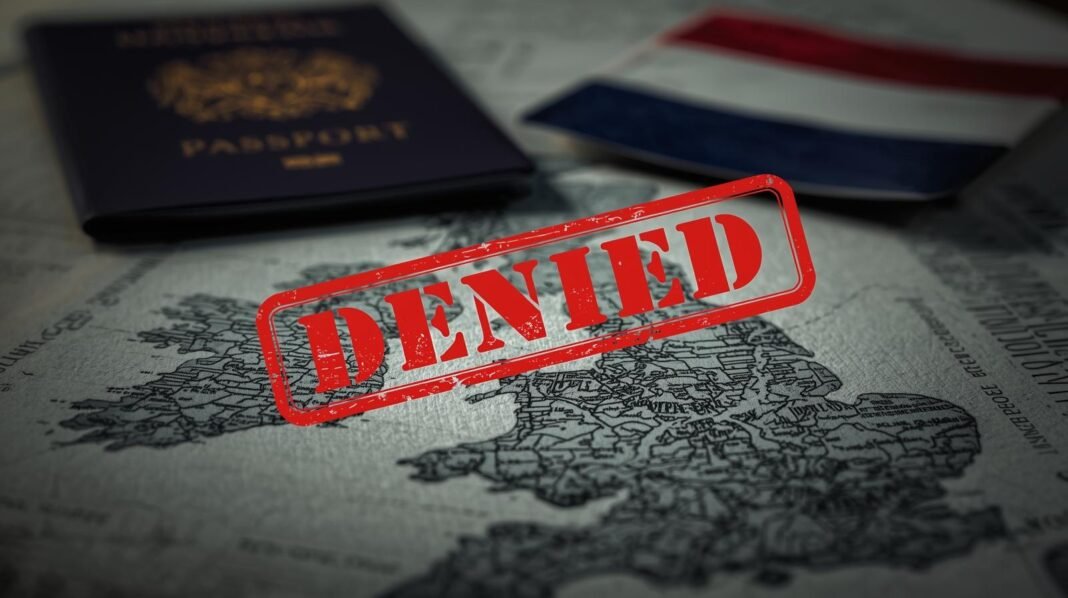
The controversy began when Vlaardingerbroek posted a screenshot of an email on X (formerly Twitter). The email, allegedly from the UK Home Office, informed her that her ETA—a digital permit required for EU citizens to visit the UK visa-free—had been cancelled.
Without an ETA, she cannot board a flight or train to Britain. While technically not a lifetime ban, it forces her to apply for a standard visitor visa, a process that allows British intelligence to deeply scrutinize her background and potentially deny entry formally.
“Not Conducive to Public Good”: The Legal Basis
The specific clause cited in the email is the most severe tool in the British immigration arsenal: “Presence in the UK is not conducive to the public good.”
According to UK Home Office guidelines, this vague but powerful phrase is reserved for individuals whose character, conduct, or associations pose a threat to British society. It is typically used for hate preachers, war criminals, or organized crime figures. Applying it to a mainstream political commentator suggests the UK government views her rhetoric—particularly her association with figures like Tommy Robinson—as a potential trigger for public disorder.
Vlaardingerbroek’s Reaction: “Shocked but Not Surprised”
Vlaardingerbroek, who has over a million followers, immediately framed the decision as a direct attack on free speech.
“I was planning to speak at a rally in May,” she stated. “This is clearly retaliation for my criticism of Keir Starmer.” She argues that banning a European citizen for political opinions sets a dangerous precedent for all travelers. Her supporters, including Elon Musk who commented on her post, have rallied around her, accusing the UK of becoming a “police state.”
The Geert Wilders Precedent
This is not the first time London has shut its doors to a Dutch firebrand. In 2009, Geert Wilders (now the leader of the largest party in the Netherlands) was famously refused entry at Heathrow Airport due to his anti-Islam film Fitna.
Wilders fought the ban in court and won, eventually entering the UK later that year. Political analysts suggest Vlaardingerbroek may follow the same legal playbook, turning this administrative hurdle into a high-profile freedom of speech trial.
Legal Analysis: Can She Fight It?
Immigration law experts from Free Movement note that while the Home Office has broad powers, they must be proportionate. “Criticizing a Prime Minister is rarely grounds for exclusion in a democracy,” analysts argue.
However, if the Home Office holds intelligence linking her to groups that incite violence (like the EDL), the ban could stand. The burden of proof is now on the British government to show that her words are not just offensive, but dangerous.
Key Takeaways
- The Event: Eva Vlaardingerbroek’s ETA travel permit was revoked by the UK.
- The Reason: Cited as “not conducive to public good,” likely due to far-right associations.
- The Context: She recently insulted PM Keir Starmer and planned to attend a Tommy Robinson rally.
- The Precedent: Echoes the 2009 ban on Geert Wilders, which was later overturned.
Dutch Learning Corner
| Word | Pronun. (Eng) | Meaning | Context (NL + EN) |
|---|---|---|---|
| 🚫 De Toegang | De Too-khang | Access / Entry | De toegang tot het land is geweigerd. (Entry to the country has been denied.) |
| 🛂 De Grens | De Hrens | The Border | Ze werd gestopt aan de grens. (She was stopped at the border.) |
| 🗣️ De Vrijheid van Meningsuiting | De Vry-hayt van May-nings-out-ing | Freedom of Speech | Dit is een kwestie van vrijheid van meningsuiting. (This is a matter of freedom of speech.) |
| ⚖️ De Beslissing | De Bes-lis-sing | The Decision | De beslissing is definitief. (The decision is final.) |
Protecting Borders or Silencing Critics?
Where do you draw the line? Should a government have the right to ban someone simply because they hold “extreme” views, or is this a dangerous overreach that threatens democratic values? Share your opinion on the Vlaardingerbroek case below.
Source / Analysis: The Independent & Eva Vlaardingerbroek (X)