


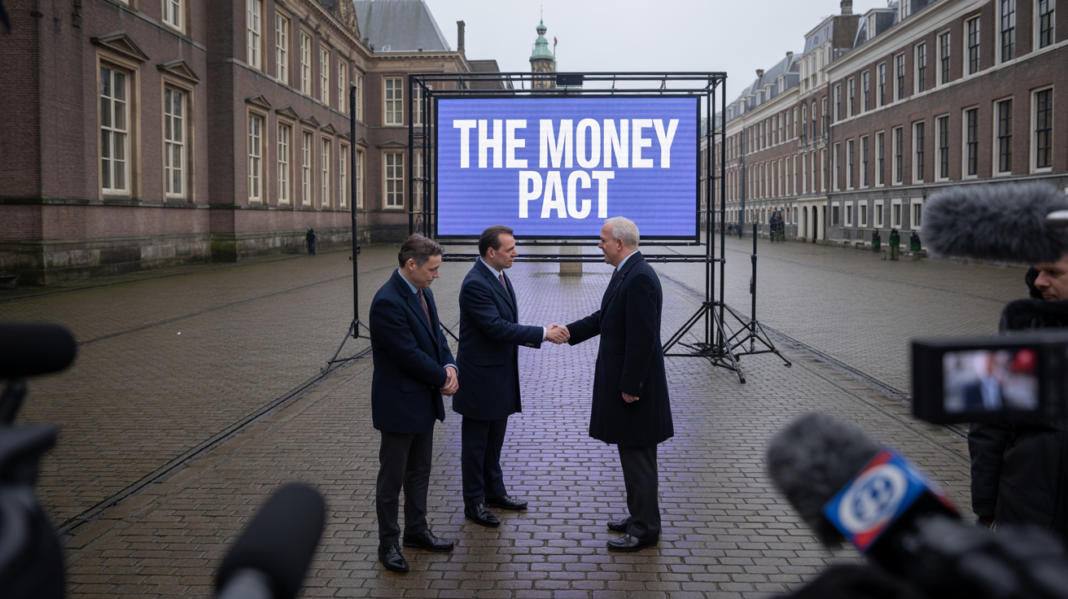
Breakthrough in The Hague: VVD, D66, and CDA Near Financial Deal for New Cabinet
The Hague – The dense fog surrounding the formation of the next Dutch government is finally beginning to lift. After months of political stalemate and exploratory talks, insiders from the Binnenhof report a significant breakthrough: the negotiating teams of the VVD (People’s Party for Freedom and Democracy), D66 (Democrats 66), and CDA (Christian Democratic Appeal) are reportedly “very close” to a definitive agreement on the nation’s finances.
This development marks a pivotal moment in the 2026 formation process. Finance has long been the stumbling block, with parties divided on how to address the national deficit while tackling urgent crises in housing, climate adaptation, and purchasing power. The emerging consensus suggests a “Centrist Compromise” that could pave the way for a stable, albeit likely minority, administration or a stepping stone to invite a fourth partner.
Table of Contents
- The Financial ‘Motor Block’: What Changed?
- The Tug-of-War: Austerity vs. Investment
- The Economic Backdrop of 2026
- Remaining Hurdles: Migration and Ethics
- Understanding the Dutch ‘Formatie’ Process
- Expert Analysis: A Fragile Balance
- Key Takeaways
- Dutch Learning Corner
- Community CTA
The Financial ‘Motor Block’: What Changed?
According to sources close to the negotiation table, the financial framework—often referred to as the “budgetary bible” of a coalition—is 90% complete. This agreement covers the projected government spending for the next four years, tax reforms, and the handling of the national debt.
The collaboration between VVD, D66, and CDA is reminiscent of the “motor block” that powered previous cabinets. Their ability to find common ground on money suggests that despite ideological differences, the “polder model” of consensus is still alive. The breakthrough reportedly involves a swap: strict adherence to EU fiscal rules (a VVD demand) in exchange for secured funding for education and green energy transition (D66 priorities), and targeted support for families and rural regions (CDA demands).
The Tug-of-War: Austerity vs. Investment
Getting to this point required navigating three distinct economic philosophies:
1. VVD (The Liberals): Fiscal Discipline
Led by Dilan Yeşilgöz, the VVD has insisted on curbing government spending. After years of crisis spending (COVID, energy), the Liberals want to return to a “small government” approach, focusing on tax cuts for businesses and reducing the deficit.
2. D66 (The Progressives): Invest to Grow
Rob Jetten’s D66 argues that you cannot “cut your way to prosperity.” They have pushed hard for maintaining high investment levels in climate technology and education, arguing these are essential for future economic competitiveness.
3. CDA (The Christian Democrats): The Social Middle
Under Henri Bontenbal, the CDA has played the mediator. Their red line has been “bestaanszekerheid” (livelihood security) for the middle class and support for the agricultural sector, ensuring that financial cuts do not disproportionately hit rural provinces.
The Economic Backdrop of 2026
This financial agreement is being forged in a challenging economic climate. While inflation has cooled from the peaks of 2023-2024, the Netherlands is facing a “cost of living plateau”—prices aren’t rising fast, but they remain high.
Furthermore, the government faces a structural deficit. The new agreement likely addresses the “betonrot” (concrete rot) in public finances: the aging population. Healthcare costs are exploding, and the pension system reform is still in a delicate implementation phase. The rumored deal likely includes controversial decisions on healthcare deductibles (“Eigen Risico”) and potential adjustments to wealth taxes (Box 3) to balance the books.
Remaining Hurdles: Migration and Ethics
While money is the fuel, policy is the steering wheel. Even if the financial ink is dry, significant hurdles remain.
* Migration: This was the issue that collapsed the previous Rutte IV cabinet. The VVD wants strict caps on asylum seekers, while D66 advocates for a humane, European solution. It is unclear if the financial deal includes budget for stricter border controls or more reception centers.
* Agriculture & Nitrogen: The CDA is under immense pressure from the BBB (Farmer-Citizen Movement) on the right. Any financial agreement that cuts agricultural subsidies too deeply could cause the CDA to walk away, fearing electoral annihilation.
Political analysts warn that “nothing is agreed until everything is agreed.” A deal on money could still unravel if the parties clash on medical ethics or asylum policy next week.
Understanding the Dutch ‘Formatie’ Process
For expats, the Dutch formation process can seem interminable. Here is where we likely stand:
We are currently in the “Formatie” phase, led by a Formateur (usually the intended Prime Minister). The fact that a financial agreement is near suggests we are past the “sniffing” phase (exploratory talks) and deep into the technical details. If VVD, D66, and CDA solidify this deal, they will present a “Regeerakkoord” (Coalition Agreement) to the House of Representatives. However, since these three parties likely do not hold a majority on their own, they may be forming a Minority Cabinet that seeks support from parties like NSC or GroenLinks-PvdA on a case-by-case basis.
Expert Analysis: A Fragile Balance
Political commentators in The Hague view this development with cautious optimism. “It is a marriage of reason, not love,” notes one parliamentary historian. “The VVD knows it cannot govern with the extreme right due to international image, and D66 knows it cannot push a purely progressive agenda in a right-leaning country. The CDA is the glue holding this fragile center together. If they pull this off, it will be a victory for stability, but perhaps a loss for bold reform.”
Key Takeaways
- The News: VVD, D66, and CDA are close to a financial agreement for a new cabinet.
- The Compromise: A mix of fiscal discipline (VVD), climate investment (D66), and social security (CDA).
- The Risks: Migration and Nitrogen policies remain unresolved and could still derail the talks.
- The Outcome: A minority cabinet or a centrist coalition seems the most likely result.
Dutch Learning Corner
| Word (Dutch) | Pronun. (Eng) | Meaning | Context (NL + EN) |
|---|---|---|---|
| 🤝 Het Akkoord | Het Ah-koord | The Agreement | Er is bijna een financieel akkoord. (There is almost a financial agreement.) |
| 🏛️ De Kabinetsformatie | De Ka-bie-nets… | Cabinet Formation | De formatie duurt erg lang. (The formation is taking very long.) |
| ✂️ De Bezuinigingen | De Buh-zoy-ni-ging-en | The Cutbacks / Austerity | De VVD wil bezuinigingen. (The VVD wants cutbacks.) |
| 📉 De Begroting | De Buh-gro-ting | The Budget | De begroting moet kloppen. (The budget must add up.) |
Stability or Stagnation?
Are you relieved to see the centrist parties taking charge again, or were you hoping for a more radical change in Dutch politics? Do you think a cabinet of VVD, D66, and CDA can solve the housing and climate crises? Share your political predictions below!
Source / Official Formation Status: Bureau Woordvoering Kabinetsformatie & Tweede Kamer der Staten-Generaal.