




Last updated:
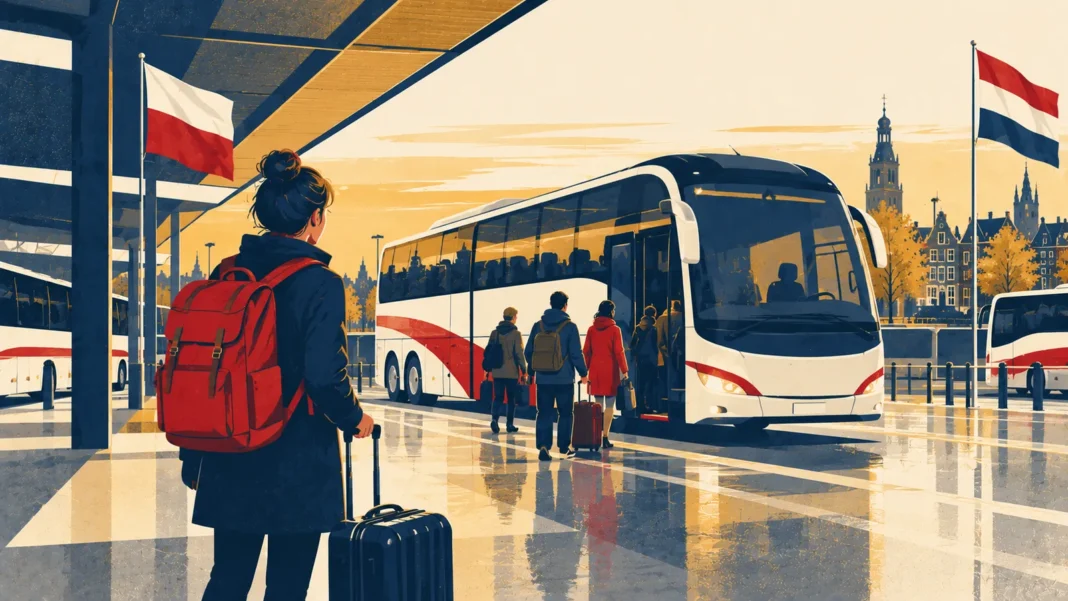
The latest CBS figures point to a significant shift in Polish migration to the Netherlands. For years, Polish workers have played an important role in Dutch agriculture, logistics, construction and other sectors. But provisional data for 2025 shows that the balance of migration involving people of Polish origin has turned negative.
The provisional data for 2025 reveals a notable turning point: the net migration balance of people of Polish origin in the Netherlands was -1,100. In other words, more people of Polish origin left the Netherlands than arrived in 2025.
This does not by itself prove that a permanent “exodus” has begun. However, it marks an important change after years of positive migration and raises questions about the future of East-to-West labour migration within the European Union.
This 1600-word analysis examines the possible economic factors behind this shift, including housing costs, changing wage differences, Poland’s economic development, Germany’s growing attractiveness and the potential impact on Dutch industries.
📉 The Anatomy of a Migration Shift:
- 1. The End of an Era (2004-2026)
- 2. The Data: A Negative Balance Explained
- 3. The “Push”: The Housing Calculation & Living Costs
- 4. The “Pull”: The Polish Economic Growth
- 5. The Political Paradox: “Less Migration” vs. “More Workers”
- 6. The “Germany Factor”: Why Drive Further?
- 7. Sector Impact I: Agriculture & Logistics
- 8. Sector Impact II: Construction & Housing
- 9. Future Outlook: Automation or Restructuring?
- 10. 🇳🇱 Dutch Learner Corner
1. The End of an Era (2004-2026)
To understand the significance of this shift, we must look back. When Poland joined the European Union in 2004, it became increasingly integrated into the European labour market. Large numbers of Polish workers moved West, including to the Netherlands, where they became an important part of sectors facing labour shortages.
The Netherlands developed a significant demand for flexible workers in agriculture, horticulture, construction, logistics, food production and other industries. Polish workers became an important part of this workforce, particularly through temporary employment agencies and flexible employment arrangements.
The Changing Deal: For many years, the wage difference between Poland and Western Europe was a major incentive for migration. That difference has narrowed as Poland’s economy and wages have developed. At the same time, housing and living costs in the Netherlands remain high.
For some workers, this may reduce the financial advantage of working in the Netherlands compared with living and working in Poland. However, the effect varies considerably by occupation, income, household situation and location.
2. The Data: A Negative Balance Explained
The CBS figures are significant, but they need to be interpreted carefully.
- Net Migration: The provisional CBS figures put the 2025 net migration balance for people of Polish origin at -1,100. This means that more people of Polish origin left the Netherlands than arrived during the year.
- A Significant Shift: The negative balance represents a notable change from the positive migration balances recorded in previous years. However, the figure alone does not establish why people left or whether the trend will continue.
- Broader Trend: Migration from several Central and Eastern European countries has also changed in recent years. Poland is particularly notable because of the size and long history of its migrant population in the Netherlands.
3. The “Push”: The Housing Calculation & Living Costs
Why might some workers decide to leave the Netherlands? Two important factors are housing affordability and the overall cost of living.
The Housing Trap
Historically, temporary employment agencies played an important role in providing accommodation for migrant workers. Concerns about overcrowding and accommodation standards led to recommendations for better housing conditions, including recommendations associated with the Roemer Commission.
Better accommodation standards are important for workers’ quality of life, but improving housing conditions can also increase accommodation costs.
| Illustrative Scenario | Netherlands | Poland |
|---|---|---|
| Example Net Income | €2,400 | €1,700 |
| Example Housing Cost | €900 | €500 |
| Example Living Costs | €400 | €300 |
| Illustrative Savings | €1,100 | €900 |
Note: This is an illustrative example rather than official statistical data. Actual income, housing and living costs vary significantly by occupation, city, household and individual circumstances.
The example illustrates why the financial advantage of migration can become less compelling when higher Dutch housing and living costs are taken into account. It should not, however, be interpreted as a representative income or cost-of-living comparison for all Polish workers.
The Dignity Deficit
Beyond money, social integration and long-term prospects can also influence migration decisions. Some migrant workers may experience a sense of temporary status when working through agencies or living in temporary accommodation.
However, the reasons for leaving the Netherlands differ from person to person and cannot be attributed to a single factor.
4. The “Pull”: The Polish Economic Growth
Poland is no longer the lower-income economy it was when it joined the European Union in 2004. Its economy has developed significantly and the country has become an important manufacturing, business-services and technology location in Europe.
- GDP Growth: Poland’s economy is expected to continue growing faster than many Western European economies. The World Bank’s 2026 forecast puts Polish GDP growth at approximately 3.1%.
- Tax Incentives: Poland’s “Ulga na powrót” (Return Relief) provides qualifying returning residents with a personal income tax exemption for up to four years, subject to specific conditions and limits. Poland also has a tax exemption for qualifying employment income of people under 26.
- Tech & Manufacturing: Poland has developed a significant manufacturing and business-services sector, alongside a growing technology industry. These developments have increased the range of professional opportunities available within the country.
5. The Political Paradox: “Less Migration” vs. “More Workers”
Here lies an important policy challenge for the Netherlands. The country has faced political pressure to reduce migration while businesses in several sectors continue to experience labour shortages.
The “Careful What You Wish For” Question: Lower migration does not automatically mean lower pressure on the Dutch economy. The Netherlands continues to face labour shortages in several sectors, creating a difficult policy balance between controlling migration and ensuring that businesses can find enough workers.
Some of the potential consequences of persistent labour shortages include:
- Higher Labour Costs: Employers may need to offer higher wages or improve working conditions to attract and retain workers.
- Pressure on Services: Labour shortages can contribute to longer waiting times or reduced capacity in sectors that depend heavily on human labour.
- Political Debate: The government faces the challenge of balancing migration policy with the labour needs of the Dutch economy.
The question is therefore not simply whether migration should increase or decrease, but which types of workers the Dutch economy needs and under what conditions.
6. The “Germany Factor”: Why Drive Further?
A critical factor is geography. For Polish workers living relatively close to the German border, Germany can offer an attractive alternative to employment further west in the Netherlands.
The “Interceptor” Effect: Germany has also become an increasingly relevant alternative for Polish workers because of its geographical proximity to Poland and rising wage levels. Germany’s statutory minimum wage increased to €13.90 per hour in 2026.
For workers living in western Poland, employment in Germany can offer an attractive combination of relatively high wages and geographical proximity. A worker can potentially return home more frequently than someone employed several hundred kilometres further west in the Netherlands.
This does not mean that the Dutch wage premium has disappeared across all occupations. Wages, taxes, housing costs and employment conditions differ considerably between countries and sectors. Nevertheless, Germany’s proximity may reduce one of the traditional advantages of working in the Netherlands for some Polish workers.
7. Sector Impact I: Agriculture & Logistics
The potential impact of changing migration patterns extends beyond individual workers.
Agriculture (The Westland): Polish workers have historically been an important part of the Dutch agricultural and horticultural workforce. If labour shortages intensify, employers may face increasing pressure to invest in automation, improve working conditions or recruit workers from other countries.
The effect on food prices is less certain, however. Vegetable prices depend on many factors, including energy costs, weather, production volumes, imports and international markets.
Logistics (The Distribution Hubs): The Netherlands is one of Europe’s major logistics and distribution hubs, and Polish and other European workers are part of this workforce.
Persistent labour shortages could increase recruitment costs and put pressure on delivery operations, although companies can respond through automation, wage increases and recruitment from other labour markets.
8. Sector Impact II: Construction & Housing
Perhaps the most important potential impact is on the housing market itself. The Dutch government has set an ambitious target of building around 100,000 new homes per year to address the housing shortage.
The Potential Vicious Cycle:
- Building new homes requires sufficient construction capacity and skilled workers.
- Foreign workers, including workers from Poland and other European countries, form an important part of the wider Dutch labour market.
- If labour shortages become more severe, construction companies may face higher costs or longer project timelines.
- Slower construction could make it harder to increase housing supply quickly.
- At the same time, high housing costs can make the Netherlands less attractive to some migrant workers.
This creates a potential policy challenge: the Netherlands needs more housing while also needing enough workers to build it.
However, there is currently no evidence that Polish migration alone will cause a nationwide “construction paralysis”.
9. Future Outlook: Automation or Restructuring?
What happens next is uncertain. Several scenarios are possible:
- The Japanese Model (Automation): Greater investment in robotics and automation could reduce dependence on manual labour in agriculture, logistics and other sectors.
- The New Frontier (Non-EU Migration): Employers may increasingly look outside the EU when domestic and European labour supply is insufficient. However, non-EU recruitment is subject to immigration rules and government policy.
- Higher Wages and Better Conditions: Employers could respond to labour shortages by increasing wages, improving accommodation and offering better working conditions.
- Economic Restructuring: Some low-margin activities could become less competitive in the Netherlands if labour and production costs continue to rise.
TDD Analysis: The negative Polish migration balance is an important signal, but it is too early to conclude that it represents a permanent “exodus”. The coming years will show whether the Netherlands can remain attractive to European workers as wage differences narrow and housing costs remain high.
🇳🇱 Dutch Learner Corner: The Vocabulary of Labor
To understand the news debates on NPO1, these are the essential terms:
| Dutch Term | Pronunciation | Meaning & Context |
|---|---|---|
| Arbeidsmigrant | Ar-beids-mi-ghrant | Labour migrant (EU worker). |
| Krapte op de arbeidsmarkt | Krap-te… | Tightness in the labour market (labour shortage). |
| Terugkeer | Te-rug-keer | Return / returning home. |
| Vergrijzing | Ver-ghrei-zing | Ageing population. |
| Flexwonen | Flex-wo-nen | Temporary/flexible housing solutions. |
📊 Key Data Sources (February 2026)
Key statistics and economic figures referenced in this analysis.
| Data Point | Figure | Source Agency |
|---|---|---|
| Net Migration of People of Polish Origin (2025) | -1,100 | CBS (Centraal Bureau voor de Statistiek) |
| Total NL Population Growth (2025) | 87,200 | CBS |
| Polish GDP Growth Forecast 2026 | 3.1% | World Bank |
| Natural Increase (Births vs Deaths) | -7,500 | CBS |
Free: Netherlands 2027 Money Checklist
Every deadline and number you need before and after 1 January 2027, on two printable pages. Confirm your email and the PDF is yours; we will also email you when the 2027 figures are confirmed.
 Read nextHousingHomeownership Declines in Germany and Netherlands: A Growing European Trend




The idea that the Netherlands is ranked as the number one best country in the world for quality of life is quite intriguing, especially considering the exodus of Polish nationals. As someone who’s spent a considerable amount of time snorkeling and scuba diving, I’ve seen firsthand how delicate ecosystems can be disrupted by external factors. Similarly, the migration patterns of Polish nationals could be indicative of underlying issues that need to be addressed. I’ve noticed that when reef conditions deteriorate, even the most beautiful and thriving ecosystems can rapidly decline. The parallel between the decline of reef health and the decline of a country’s appeal to immigrants is something I’ve been thinking about because it highlights the importance of maintaining a balance between economic growth and quality of life. Perhaps the key to understanding this phenomenon lies in examining the factors that contribute to a country’s overall well-being, such as education, healthcare, and environmental sustainability. I wonder if the author has considered exploring the potential consequences of this migration trend on the Netherlands’ long-term economic and social stability.