




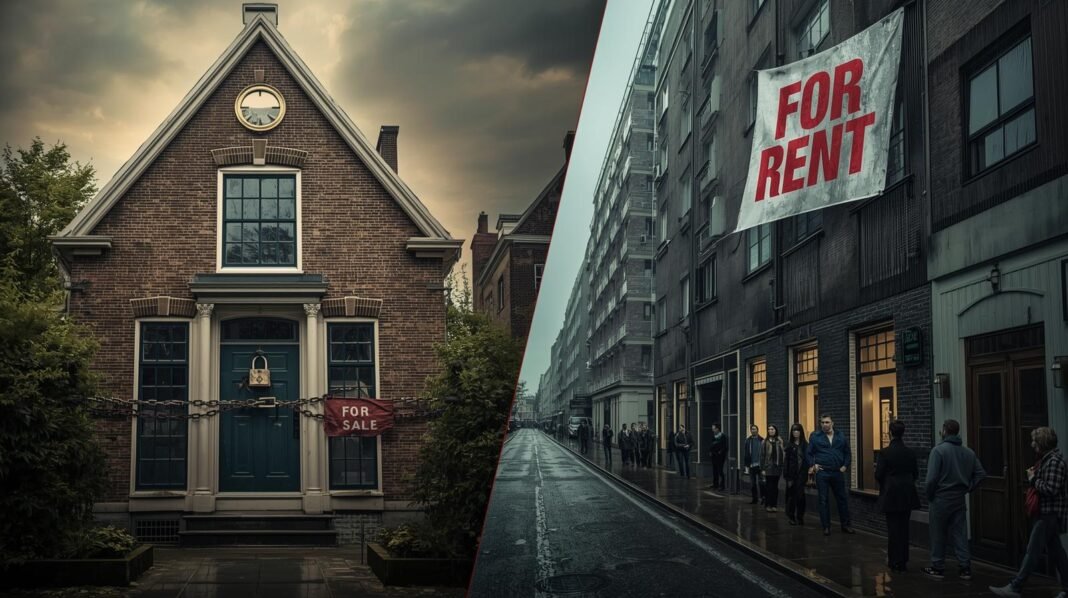
The Renters of Europe: Why Homeownership is Fading in the Netherlands & Germany
Amsterdam – The dream of obtaining the keys to your own front door is fading fast across Western Europe. New, sobering data from Eurostat reveals a stark continental divide: while Eastern Europeans almost universally own their homes, wealthy nations like Germany and the Netherlands are increasingly transforming into nations of permanent tenants.
The statistics paint a picture of a broken market. Germany has hit near-record lows in homeownership, and the Netherlands is grappling with a “squeezed middle” class that earns too much for social housing but too little to buy. As 2026 unfolds, the housing crisis has shifted from a shortage to a systemic deadlock.
Table of Contents
- Germany: The Land of Tenants (and Rising Rents)
- The Dutch Dilemma: The “Middenhuur” Trap
- The “Buy-to-Let” Backfire
- The East-West Divide: Why is Romania #1?
- The Construction Crisis: Nitrogen & Red Tape
- Key Takeaways
- Dutch Learning Corner
- Community CTA
Germany: The Land of Tenants (and Rising Rents)
If you think the Dutch housing market is tough, a look across the eastern border offers little comfort.
Germany currently ranks 31st out of 32 European countries for homeownership.
* The Rate: Only 47% of Germans own their home.
* The Reality: More than half the population rents. In major hubs like Berlin, Hamburg, and Munich, this figure climbs to nearly 80%.
Why is this happening?
Historically, Germany had strong tenant protections and rent controls (Mietpreisbremse), making renting an attractive, lifelong option. You didn’t need to buy to feel secure. However, this model is cracking. A massive shortage of new apartments has driven market rents up, while property prices remain out of reach for the average worker due to high interest rates and construction costs.
The Dutch Dilemma: The “Middenhuur” Trap
In the Netherlands, the situation is different but equally frustrating. Ranking 25th with a homeownership rate of roughly 69%, the Dutch market is defined by a massive gap known as the “Middenhuur” (Middle Rent) problem.
The Gap:
* Social Housing: Accessible only if you earn below approx. €47,000 (gross/year). Waiting lists in the Randstad are 10-15 years long.
* Buying: Requires an average salary of €75,000+ for a decent apartment, plus substantial savings for “k.k.” (buyer’s costs).
The Trap:
Expats and young professionals often fall exactly in between. They earn too much for social housing but cannot get a mortgage large enough to buy. The result? They are forced into the unregulated private rental sector, paying €1,500–€2,000 for small apartments, preventing them from saving for a down payment. It is a vicious cycle.
The “Buy-to-Let” Backfire
Government policies have inadvertently worsened the situation. In recent years, major Dutch cities (Amsterdam, Rotterdam, The Hague) implemented “purchase protection” (opkoopbescherming) laws to stop investors from buying homes to rent them out.
The Unintended Consequence:
While intended to help first-time buyers, this policy caused investors to sell off their rental properties en masse.
* Result: The supply of rental homes in the private sector shrank drastically.
* Impact: With fewer rental homes available, rental prices for remaining properties skyrocketed, squeezing tenants even harder.
The East-West Divide: Why is Romania #1?
The Eurostat map shows a fascinating contrast that puzzles many Westerners.
Top Homeowners (Eastern Europe):
1. 🇷🇴 Romania: ~95% ownership.
2. 🇸🇰 Slovakia: ~93% ownership.
3. 🇭🇷 Croatia: ~91% ownership.
The Context:
In many post-communist countries, state-owned apartments were privatized and sold to residents for nominal sums in the 1990s. This created a generation of homeowners with no mortgage debt. In the West, housing has been treated as a financial asset (to be traded and leveraged) rather than a utility, driving up prices beyond local wages.
The Construction Crisis: Nitrogen & Red Tape
Why not just build more houses? In the Netherlands, the answer is one word: Stikstof (Nitrogen).
Strict environmental regulations regarding nitrogen emissions have brought thousands of construction projects to a halt. The government’s target of building 100,000 new homes per year remains a distant dream.
* Permits: Getting a permit to build is slower and more expensive than ever.
* Labor Shortage: Even with permits, there aren’t enough construction workers to lay the bricks.
As long as supply cannot meet demand, prices—both for buying and renting—will remain stubbornly high.
Key Takeaways
- The German Low: Only 47% own homes; the rental model is under pressure.
- The Dutch Trap: The “Middenhuur” segment is squeezed between social housing limits and high mortgage requirements.
- The Policy Failure: Bans on investors have reduced rental supply, driving rents up.
- The Supply Chain: Nitrogen rules (stikstof) continue to block new construction in NL.
Dutch Learning Corner
| Word | Pronun. (Eng) | Meaning | Context (NL + EN) |
|---|---|---|---|
| 🔑 De Huurder | De Huur-der | Tenant | Huurders hebben het moeilijk in deze markt. (Tenants are having a hard time in this market.) |
| 🏘️ De Middenhuur | De Mid-den-huur | Mid-market rent | Er is een groot tekort aan middenhuur woningen. (There is a large shortage of mid-market rental homes.) |
| 🚜 De Stikstof | De Stik-stof | Nitrogen | De stikstofcrisis vertraagt de bouw. (The nitrogen crisis is slowing down construction.) |
| 📉 De Woningnood | De Wo-ning-nood | Housing shortage | De regering probeert de woningnood op te lossen. (The government is trying to solve the housing shortage.) |
Are You Stuck in the “Middle”?
Do you earn too much for social housing but can’t afford to buy? You are not alone. Share your experience with the “Middenhuur” trap. Have you considered moving to a smaller city or even crossing the border to Belgium or Germany (despite their own issues) to find affordable housing?
Source / Housing: Eurostat, CBS & TurkInfo.

