




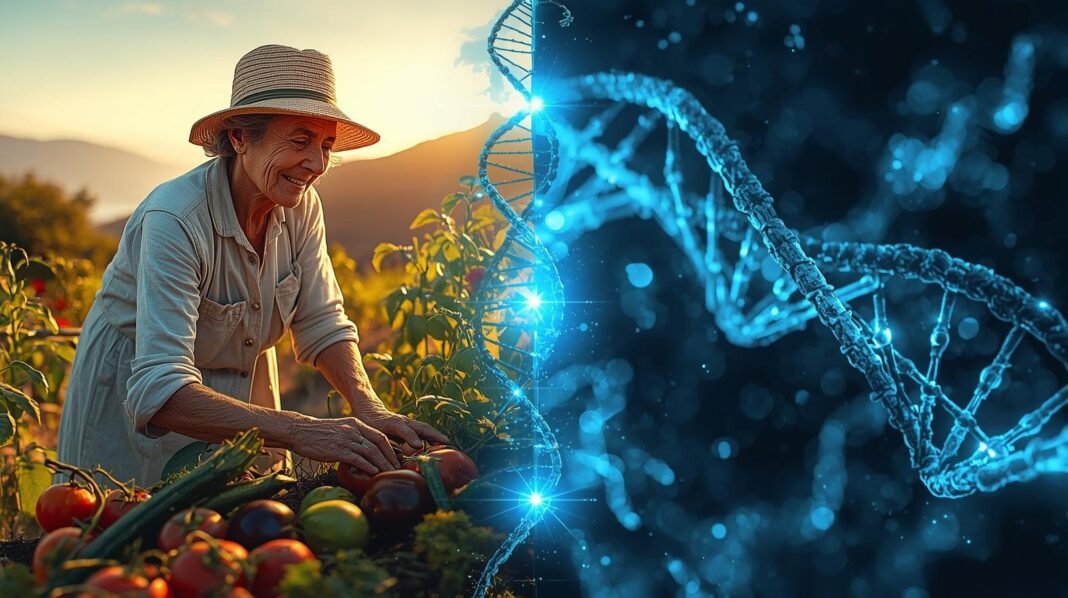
Longevity Science: Extending Lifespans Through Cellular Renewal
Amsterdam – For centuries, aging was accepted as an inevitable decline, a one-way ticket to fragility. But in 2026, a new scientific consensus is emerging: Aging is not just a natural process; it is a biological condition that can be slowed, stopped, and perhaps even reversed.
Longevity science is moving from “miracle cures” to hard biology. By combining ancient wisdom from the world’s “Blue Zones” with cutting-edge discoveries in cellular renewal and AI-driven diagnostics, experts now believe that the first person to live to 150 has already been born. The question is: Are you preparing your body to go the distance?
Table of Contents
- The Crisis: Why Younger Generations Age Faster
- The Hayflick Limit: Our 122-Year Warranty
- The Proof: Lessons from the “Blue Zones”
- The Power of Hunger: Autophagy and Fasting
- Redefining Aging as a Disease
- The Future: AI and Organ Printing by 2030
- Key Takeaways
- Dutch Learning Corner
- Community CTA
The Crisis: Why Younger Generations Age Faster
It sounds contradictory: we have better medicine than ever before, so why are younger people “aging” faster?
Researchers point to a sharp decline in foundational health. Individuals currently aged 50+ grew up eating real, unprocessed food and moving naturally. Today’s youth (Gen Z and Gen Alpha) have been exposed to ultra-processed foods, microplastics, and constant digital stress since birth.
“We are seeing fragility in 20-year-olds that we used to see in 40-year-olds,” notes a leading biotech researcher. “Gluten intolerance, autoimmune issues, and chronic fatigue are signs that the cellular machinery is under attack earlier than ever.”
The lesson is clear: Longevity isn’t a game for the elderly. To protect your lifespan, the defense must start in your 20s and 30s.
The Hayflick Limit: Our 122-Year Warranty
Biologically, humans are built to last much longer than our current average.
This potential is based on the Nobel Prize-winning concept of the “Hayflick Limit.” It states that a normal human fetal cell will divide between 40 and 60 times before entering a phase of senescence (cellular death).
The Math: Based on the speed of cell division, this limit suggests a maximum natural human lifespan of approximately 120 to 122 years. The reason most people die at 80 isn’t because their warranty expired; it’s because lifestyle factors (stress, toxins, bad diet) and disease broke the machine early. The goal of modern longevity science is simply to help us reach our factory settings.
The Proof: Lessons from the “Blue Zones”
We don’t need to look at lab rats to see longevity in action. We can look at the “Blue Zones”—regions like Sardinia (Italy), Okinawa (Japan), and Ikaria (Greece), where people regularly live active lives past 100.
What do they have in common? It’s not expensive supplements.
- Plant-Slanted Diets: 95% of their calorie intake comes from plants, beans, and whole grains. Meat is a rare celebratory side dish.
- Natural Movement: They don’t go to the gym for an hour; they move naturally all day (gardening, walking, kneading bread).
- Purpose (Ikigai): They have a reason to wake up in the morning, usually centered around family or community duties.
- Stress Shedding: Whether it’s a nap (siesta) or a happy hour with friends, they have daily rituals to lower cortisol.
Modern science confirms that these habits drastically reduce inflammation, the primary driver of aging.
[Image of a world map highlighting the Blue Zones locations like Okinawa, Sardinia, and Nicoya]
The Power of Hunger: Autophagy and Fasting
One of the most powerful tools for longevity costs absolutely nothing: Not eating.
Biologists emphasize the importance of Intermittent Fasting (e.g., eating only within an 8-hour window). This isn’t just for weight loss; it triggers a critical biological process called Autophagy.
What is Autophagy?
Think of it as the body’s internal recycling program. When you are in a fasted state (usually after 12-16 hours), your cells, deprived of new glucose, start to hunt for energy. They turn on themselves, eating up damaged proteins, old organelles, and “cellular junk” to survive.
“Fasting is like a spring cleaning for your cells,” explains Dr. Yoshinori Ohsumi, whose research on autophagy won a Nobel Prize. “If you never stop eating, your body never gets the chance to take out the trash.”
Redefining Aging as a Disease
The biggest shift in 2026 is philosophical. Major health organizations are actively debating whether to classify “Old Age” as a treatable disease rather than a natural cause of death.
Why does this matter?
- Funding: If aging is a disease, pharmaceutical companies can legally develop drugs to “treat” it.
- Prevention: Instead of waiting for cancer or Alzheimer’s to appear, doctors would treat the root cause: the aging cell itself.
The critical window is age 50. This is when the body’s natural repair systems begin to falter significantly. Interventions started here can have exponential benefits.
The Future: AI and Organ Printing by 2030
We are standing on the edge of a biotech revolution. By 2030, three technologies are expected to go mainstream:
- AI Diagnostics: Artificial Intelligence can already detect breast cancer 5-6 years earlier than a human doctor. Soon, it will predict Alzheimer’s decades in advance.
- Senolytics: Drugs that specifically target and kill “zombie cells” (senescent cells) that accumulate as we age and cause inflammation.
- 3D Bioprinting: Instead of waiting for a donor, we may soon be able to print fresh liver or kidney tissue from our own stem cells, replacing parts like a vintage car.
Key Takeaways
- Lifestyle First: The “Blue Zones” prove that diet, movement, and community are the foundation of a long life.
- Clean Your Cells: Intermittent fasting triggers autophagy, removing cellular waste.
- Start Young: Modern environmental factors mean we must protect our health earlier than previous generations.
- Tech is Coming: By 2030, AI and bioprinting will offer tools to repair the damage we can’t prevent naturally.
Dutch Learning Corner
| Word | Pronun. (Eng) | Meaning | Context (NL + EN) |
|---|---|---|---|
| 🧬 De Cel | De Sel | The Cell | Cellen vernieuwen zich voortdurend. (Cells renew themselves constantly.) |
| 🍽️ Het Vasten | Het Vas-ten | Fasting | Intermitterend vasten is populair. (Intermittent fasting is popular.) |
| 👴 De Veroudering | De Ver-ow-der-ing | Aging | Wetenschappers onderzoeken het proces van veroudering. (Scientists are investigating the process of aging.) |
| 🥗 De Levensstijl | De Lay-vens-style | Lifestyle | Een gezonde levensstijl is belangrijk. (A healthy lifestyle is important.) |
What is Your Longevity Strategy?
Do you practice intermittent fasting? Do you try to eat like they do in Okinawa? Or do you think life is short and meant to be enjoyed without restrictions? Share your philosophy in the comments below.
Source / Science: Nature Aging Journal, Blue Zones Project & Nobel Assembly.