



Contents
- 1. Bijzondere bijstand at a glance
- 2. Not the same as a bijstand benefit
- 3. The four conditions
- 4. What it can pay for, and what never
- 5. Apply before you pay
- 6. If the municipality says no
- 7. The yearly extra: individuele inkomenstoeslag
- 8. Living here on a residence permit
- 9. FAQ
- 🇳🇱 Dutch Corner
- Sources
Checked on 26 November 2026. Rules and amounts can change, so follow the linked sources before you decide.
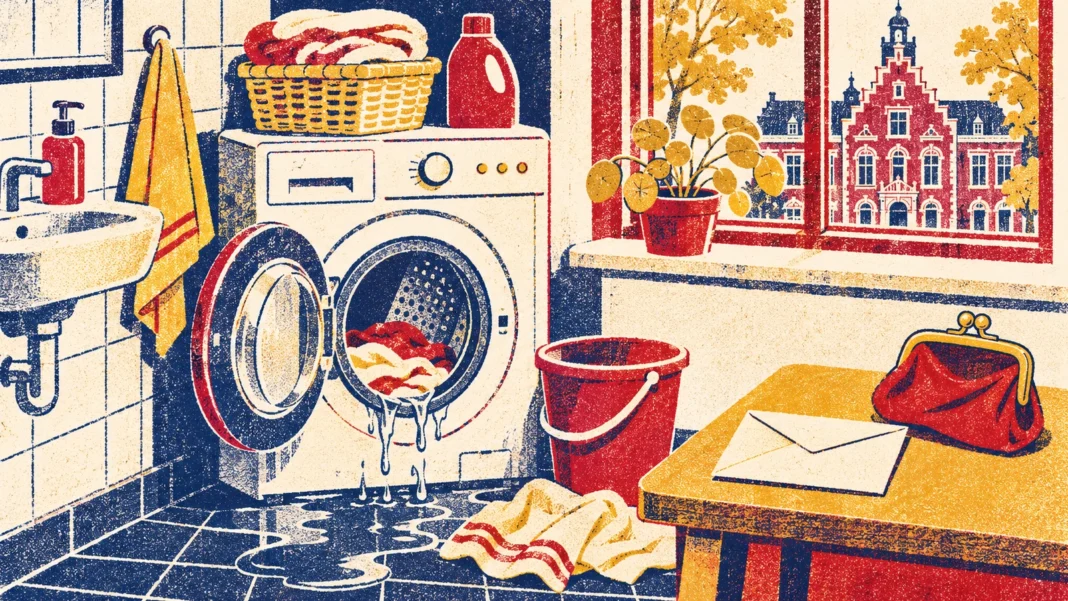
The washing machine floods the bathroom in the first week of the month, the repair is not worth it, and there is no money for a new one: that is the kind of moment bijzondere bijstand was made for. It is a payment from your municipality for necessary costs you cannot cover yourself, and you do not need to be on benefits to apply.
The name can be misleading. “Bijstand” sounds like the monthly welfare benefit, so it is easy to assume this help is only for people on benefits. It is not. Below: who qualifies, what the money can and cannot pay for, the one timing rule that matters most, and what to do if the answer is no.
1. Bijzondere bijstand at a glance
| Question | Answer | Source |
|---|---|---|
| Who decides? | Your municipality decides whether you qualify and how much | Rijksoverheid |
| Do I need a bijstand benefit? | No | Het Juridisch Loket |
| When to apply? | Usually before you make the costs; in principle not for costs already paid | Rijksoverheid; Juridisch Loket |
| How long does a decision take? | 8 weeks; can be extended if your application is incomplete | Rijksoverheid |
| How much? | Never more than the cost; a maximum or guideline price may apply | Rijksoverheid |
| Always a gift? | No: sometimes a loan you repay in parts, or goods | Het Juridisch Loket |
Sources: Rijksoverheid (pages updated December 2025 and September 2026) and Het Juridisch Loket. Checked 26 November 2026.
2. Not the same as a bijstand benefit
The Netherlands has two kinds of bijstand, and the government separates them clearly. Algemene bijstand (general assistance) is the monthly safety net for people who do not have enough income or assets to live on. Bijzondere bijstand (special assistance) is a contribution towards extra and special costs that, because of special circumstances, you cannot pay from your own income or assets. The government’s examples: the costs of an operation, legal aid or a move.
So the test is not whether you receive a benefit, but whether a specific, necessary expense is beyond what you can manage. The municipality only pays if it is convinced the costs are necessary and that you really cannot pay them. If you are already on algemene bijstand, our guides to the gift rules in bijstand explain what you may receive on the side.
3. The four conditions
The Juridisch Loket, the free legal advice service, lists four conditions. Check each one against your own situation before you fill in a form:
- The costs are necessary.
- There is a special or urgent reason. For example, you suddenly need a lawyer.
- The costs are unexpected, so you could not have saved for them.
- Nobody else pays. If your insurer or another party covers the cost, the municipality will not.
You will not get bijzondere bijstand if you have enough income or savings, or if you can take out a loan. The municipality decides whether you qualify and how much, and it may use maximum amounts or guideline prices, so the municipal website or counter is where you learn the local rules.
4. What it can pay for, and what never
Typical costs the Juridisch Loket mentions:
- the own contribution for a lawyer under legal aid;
- court fees (griffiekosten);
- the costs of a financial administrator (bewindvoerder);
- a disabled parking card;
- large purchases that last a long time, such as a washing machine;
- necessary medical costs.
It is not available for alimony, fines, or damage you suffered or caused. If your problem is a growing pile of bills rather than one unexpected cost, bijzondere bijstand is not the right tool; the municipality’s free debt help is. And if municipal taxes are the issue, see our guide to kwijtschelding, the waiver of local taxes on a low income.
5. Apply before you pay
This is the step that matters most. According to the Rijksoverheid, bijzondere bijstand can in principle not be granted retroactively or for costs you have already paid. So before you order the new washing machine, sign the moving contract or book the treatment, contact your municipality.
Ask for the application form, or apply online if your municipality offers that. Put in the cost (a quote or price list helps), why it is necessary, why it came unexpectedly and why you cannot pay it yourself. The municipality must decide within eight weeks of receiving your application. If information is missing, it can extend that period, and it should tell you so; sending a complete file the first time avoids the delay.
Sometimes you cannot wait, for instance because the costs had to be made at once. Then apply afterwards and explain clearly why you could not apply earlier, the Juridisch Loket advises; you may still receive help.
The answer may not be a gift. The municipality can grant the support as a loan, which you repay in instalments, or provide goods instead of money. The amount is never higher than the actual costs, and a maximum or guideline price may apply, so a basic washing machine may be covered while an expensive model is not.
6. If the municipality says no
You can object (bezwaar maken) within six weeks of the decision. In your letter, explain why you disagree with the refusal and why it is important for you that the costs are covered. The Juridisch Loket offers a model objection letter on its website. If the municipality sticks to its refusal after the objection, you can ask the court for a ruling, again within six weeks.
Picture a single parent whose request for a new bed for a growing child is turned down because “the costs were foreseeable”. In the objection she explains why the old bed broke now, adds the quote, and shows her monthly budget. Facts like those give the person handling the objection something concrete to weigh. Free help with an objection is available from the Juridisch Loket for people with a low income and little savings, on 0800-8020.
7. The yearly extra: individuele inkomenstoeslag
Separate from one-off costs, municipalities pay an individuele inkomenstoeslag (individual income supplement), once a year. You can qualify if you are 21 or older and have not reached state pension (AOW) age, your income in recent years was not higher than the bijstand norm, you do not have too many assets, and your income is unlikely to rise soon. You have to apply yourself, often through the municipality’s website.
8. Living here on a residence permit
If you are not Dutch, one caution. The Juridisch Loket warns that applying for a bijstand benefit can affect your right to stay in the Netherlands, because the municipality reports such applications to the IND. That warning concerns the monthly benefit, and it does not apply to everyone: asylum permits and regular permits for an indefinite period are not affected, for example. If you hold a temporary permit, or are an EU citizen who has lived here for less than five years, ask the Juridisch Loket before you apply for any form of bijstand, so you know where you stand.
For most readers the practical advice fits on a sticky note: necessary, unexpected, nobody else pays, and ask first. If the washing machine is already leaking, call the municipality before you call the shop.
9. FAQ
Can I get bijzondere bijstand if I have a job?
Yes. You do not need a bijstand benefit. What counts is whether the costs are necessary and unexpected and you cannot pay them from your income or savings.
How long does a decision on bijzondere bijstand take?
The municipality must decide within eight weeks. It can extend this if your application is incomplete.
Can I apply after I have already paid?
In principle not. If you could not apply earlier, explain why in your application; you may still receive help.
Do I have to pay bijzondere bijstand back?
Sometimes. The municipality can grant it as a loan, which you repay in instalments, or provide goods instead.
Can bijzondere bijstand pay for a fine?
No. Fines, alimony and damage you suffered or caused are not covered.
What if my application is rejected?
Object within six weeks, explaining why you disagree. After the decision on your objection, you can go to court within six weeks.
🇳🇱 Dutch Corner
| Dutch | English |
|---|---|
| de bijzondere bijstand | special assistance (one-off municipal help) |
| de algemene bijstand | general assistance (monthly benefit) |
| de noodzakelijke kosten | necessary costs |
| de aanvraag | the application |
| de lening | the loan |
| het bezwaarschrift | the objection letter |
| de bewindvoerder | the financial administrator |
| de individuele inkomenstoeslag | the individual income supplement |
| Kan ik bijzondere bijstand aanvragen? | Can I apply for special assistance? |
Sources
- Rijksoverheid: Wat is het verschil tussen algemene bijstand en bijzondere bijstand? (definition, examples, necessity test)
- Rijksoverheid: Waar kan ik mijn bijzondere bijstand regelen? (apply at the municipality, amount, not retroactive, eight-week decision)
- Het Juridisch Loket: Wanneer krijg ik bijzondere bijstand? (no benefit needed, conditions, examples and exclusions, applying, loan or goods, objection and court, individuele inkomenstoeslag)
- Het Juridisch Loket: Heb ik als buitenlander recht op een bijstandsuitkering? (residence permit caution, IND notification)
Free: Netherlands 2027 Money Checklist
Every deadline and number you need before and after 1 January 2027, on two printable pages. Confirm your email and the PDF is yours; we will also email you when the 2027 figures are confirmed.
 Read nextHealthWmo in the Netherlands: How to Get Help at Home From Your Municipality, and the €21.80 Monthly Contribution
 Living in NLVolunteering in the Netherlands: the €220 a Month Allowance, Tax and What to Tell UWV or Your Municipality
 Living in NLDog Tax in the Netherlands (Hondenbelasting): Who Pays, How Much and Which Municipalities Charge It
 Living in NLRecognising a Child in the Netherlands: Erkenning and Joint Authority for Unmarried Parents