THE HAGUE – October 9, 2026 | The Dutch Daily
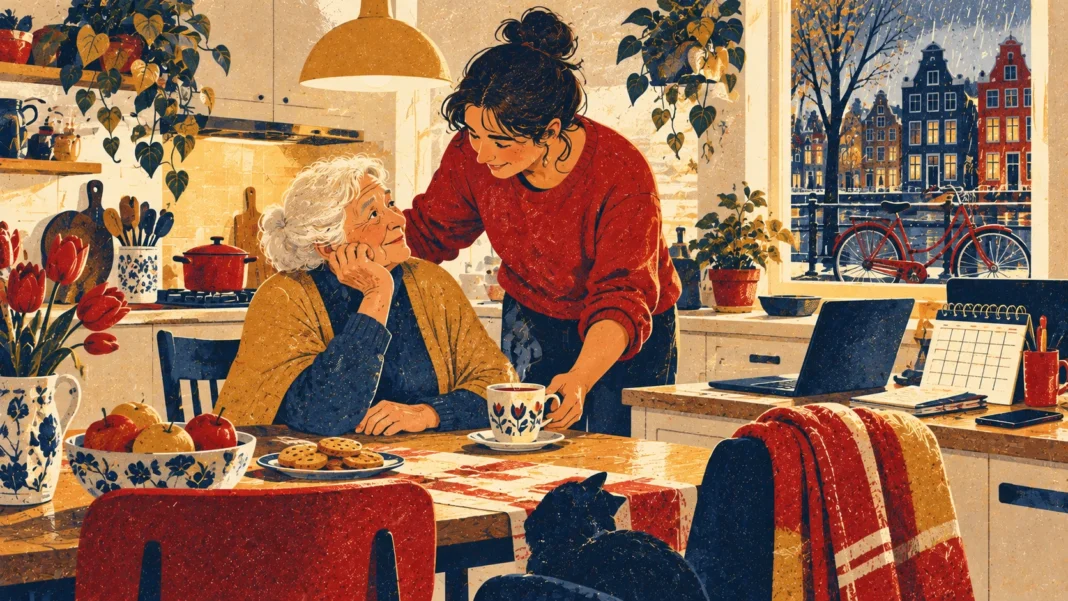
Mantelzorg in the Netherlands means unpaid care for someone close to you: a sick partner, child, parent, other relative or friend. According to the government, 5.5 million people in the Netherlands are informal carers (mantelzorgers), one in three people. On 9 October 2026 the cabinet sent parliament a broad plan to support them, including possible new carer’s leave and €25 million a year for municipalities from 2027. Here is what changes, what your rights are today, and where to get help.
Mantelzorg Netherlands: quick answer
- Who: 5.5 million informal carers; about 10% feel overburdened (around 600,000 people).
- New plan: Mantelzorgagenda 2027–2030; scenarios for a possible carer’s leave, with an update in the first half of 2027.
- Money: municipalities get €25 million a year from 2027 to improve carer support.
- Care leave today: short-term up to 2× your weekly hours per 12 months at at least 70% pay; long-term up to 6× your weekly hours, unpaid.
- Help: your municipality (or that of the person you care for) and the national Mantelzorglijn.
Contents
- 1. What is mantelzorg?
- 2. The new plan for mantelzorg in the Netherlands
- 3. Mantelzorg Netherlands: care leave (zorgverlof) rights today
- 4. Planned change: one care leave of 8 weeks
- 5. Mantelzorg Netherlands: support from your municipality
- 6. Mantelzorg Netherlands: where else to get help
- 7. FAQ
- 🇳🇱 Dutch Corner
- Sources
1. What is mantelzorg?
Mantelzorg is care you give to someone close to you, such as your child, parent or partner. “For many people mantelzorg is a completely normal thing. Something that simply belongs to life,” says Minister Mirjam Sterk (Long-term Care, Youth and Sport). “But mantelzorg can also be heavy.”
According to the government:
- There are 5.5 million informal carers in the Netherlands: 1 in 3 people.
- About 10% feel overburdened. That share has been roughly the same since 2014, but because there are more carers, the number of overburdened carers rose from 400,000 to 600,000.
- Carers who give intensive care for a long time run a higher risk of overburdening, partly because they combine it with paid work and a family. Some feel they are on their own.
- With an ageing population, more people are expected to become carers, and more will combine it with work or school.
2. The new plan for mantelzorg in the Netherlands
On 9 October 2026, Minister Sterk sent the House of Representatives a broad approach, also on behalf of the ministers of Social Affairs (Vijlbrief), Education (Letschert) and the state secretary for Education and Emancipation (Tielen). It is laid down in the Mantelzorgagenda 2027–2030, written with municipalities and care and welfare organisations.
Combining care with work or study
Carers often also have a paid job, study or go to school. To prevent overburdening, the cabinet is improving the options to combine the two:
- The cabinet is working out scenarios for a possible carer’s leave (mantelzorgverlof). The Minister of Social Affairs will inform parliament in the first half of 2027.
- It wants more awareness among employers and schools, so they offer tailored solutions such as more flexible working hours or longer deadlines.
Time to breathe
Carers must be able to catch their breath when care becomes too heavy, for example through respite care (respijtzorg) or short-stay care (logeerzorg). From 2027, municipalities receive €25 million a year structurally, from the Hoofdlijnenakkoord Ouderenzorg, to organise this. The cabinet is also setting up a team with the association of municipalities (VNG) to help municipalities strengthen their support.
Living together
The cabinet wants to make it easier to build a mantelzorgwoning (care dwelling), and will extend the scheme to family homes, so older people who don’t need care yet can already live with their children, or the other way round.
Parliament will be updated on the progress regularly.
3. Mantelzorg Netherlands: care leave (zorgverlof) rights today
If you need time off work to care for someone close to you, such as a sick child, partner, parent, other relative or friend, you can take care leave, according to the Dutch government. Your collective agreement (cao) or works council arrangements can contain different rules, and these then apply, even if they are less favourable to you.
| Short-term care leave | Long-term care leave | |
|---|---|---|
| When | Someone close to you is ill and needs care that only you can give, or you go with them to a medical appointment | Your partner, child or parent is life-threateningly ill |
| How much | Up to 2× your weekly contract hours per 12 months | Up to 6× your weekly contract hours per 12 months |
| Example (32 hours/week) | 64 hours | 192 hours |
| Pay | At least 70% of your salary, never less than the minimum wage | No right to salary |
Other points from the government:
- Your statutory holiday days keep building up during care leave, and your employer may not deduct them.
- Your employer may only refuse care leave if it would cause serious problems at work. If you disagree, contact HR or your union.
- If you become ill during care leave, you can stop the leave in consultation with your employer. If you become unemployed, the leave stops immediately.
4. Planned change: one care leave of 8 weeks
Separately from the carer plan, the cabinet published a new Leave Act (Verlofwet) for consultation in June 2026. Under that proposal, short-term and long-term care leave are merged into one scheme of 8 weeks: the first 2 weeks paid at 70% of your wage, the other 6 weeks unpaid. The leave could then also be used when someone close to you depends on help, such as mantelzorg, and for palliative care. The aim is for the Verlofwet to take effect in 2028. Until then, the current rules apply.
5. Mantelzorg Netherlands: support from your municipality
Carers can go to their own municipality, or to the municipality where the person they care for lives.
- Carer appreciation (mantelzorgwaardering). Also called mantelzorgcompliment or mantelzorgvergoeding. You apply to the municipality of the person you care for. Each municipality decides its own form, for example an amount of money, a discount pass or a free activity, and its own conditions. Municipalities must arrange this yearly appreciation in a regulation.
- Respite care (respijtzorg). For overburdened carers who need a break, for example day care or a volunteer who takes over for an afternoon.
- Short-stay care (logeerzorg). The person you care for stays for a short period in a care institution or short-stay facility, so you can rest.
6. Mantelzorg Netherlands: where else to get help
- Mantelzorglijn: the national line for advice, support and a listening ear. The MantelzorgNL website has information about mantelzorgwoningen and replacement care.
- Mantelzorg.nl: information on combining care with a paid job, and on taking over care tasks from a professional.
- Werk en Mantelzorg: a foundation that helps employers take carers into account.
- Young carers (up to 24): the Strategische Alliantie Jonge Mantelzorg is a national network for young carers.
Our tip (not from the sources): check your cao before you ask for leave, because it can contain different rules. If you are struggling, contact your municipality early rather than late.
More for families on The Dutch Daily: childcare allowance and healthcare allowance.
7. FAQ
What is mantelzorg in the Netherlands?
Unpaid care for someone close to you, such as a sick partner, child, parent, relative or friend. One in three people in the Netherlands is a mantelzorger.
Is there paid carer’s leave?
Short-term care leave is paid at at least 70% of your salary (never below minimum wage), up to twice your weekly hours per year. Long-term care leave is unpaid. A new carer’s leave is being studied; the government will report in the first half of 2027.
Can I get money as a carer?
Many municipalities give a yearly mantelzorgwaardering, which can be money, a discount pass or an activity. Apply at the municipality of the person you care for.
What changes in 2028?
If the proposed Verlofwet is adopted, short- and long-term care leave become one 8-week scheme, with the first 2 weeks paid at 70%.
🇳🇱 Dutch Corner
| Dutch | English |
|---|---|
| De mantelzorg | Informal (unpaid) care |
| De mantelzorger | Informal carer |
| De naaste | Someone close to you |
| Het zorgverlof | Care leave |
| De respijtzorg | Respite care |
| De logeerzorg | Short-stay care |
| Overbelast | Overburdened |
| De gemeente | Municipality |
| De mantelzorgwaardering | Carer appreciation (allowance) |
Sources
- Rijksoverheid, 9 October 2026: Kabinet presenteert brede aanpak voor ondersteuning mantelzorgers (5.5 million, plan, carer’s leave scenarios, €25 million, mantelzorgwoning)
- Rijksoverheid: Hulp en ondersteuning voor mantelzorgers (1 in 3, overburdening figures, respite and short-stay care, where to get help)
- Government.nl: Applying for care leave (types of leave, pay, holidays, refusal)
- Rijksoverheid: Hoe lang kan ik zorgverlof opnemen? (2× and 6× weekly hours, examples, illness and unemployment)
- Rijksoverheid, 29 June 2026: Kabinet komt met overzichtelijker regels in Verlofwet (8-week care leave, 2028)
- Rijksoverheid: Hoe kan ik een mantelzorgwaardering aanvragen? (carer appreciation)
Switching health insurance for 2027?
Deadline 31 December. Our free checklist has every date, the €400 deductible and what else changes on 1 January. Confirm your email and the PDF is yours; we will also email you when the 2027 figures are confirmed.
 Read nextBusiness & FinanceDutch Municipal Taxes: Waste Tax, Sewer Charges & Water Board Tax