Last updated: 16 October 2026 | Reading time: 8 minutes
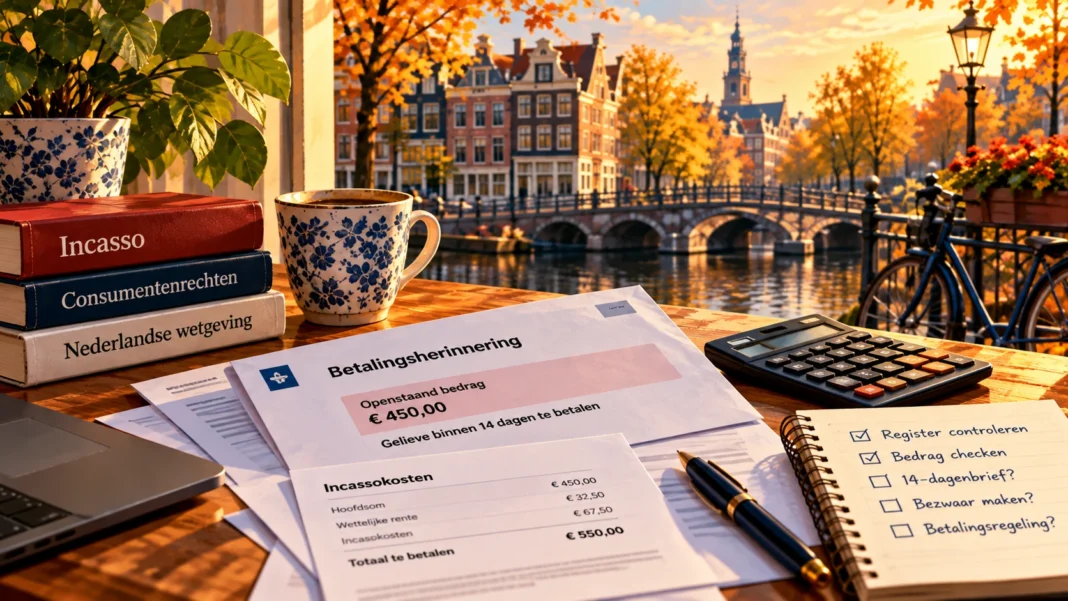
Received a debt collection letter in the Netherlands? Before you pay, check who is contacting you, whether the amount is correct and whether the collection provider is legally allowed to collect the debt. Since 1 October 2026, a new rule under the Wet kwaliteit incassodienstverlening (Wki) has introduced an important protection when a collection provider is required to register but is missing from the official register. However, this does not automatically erase the original debt.
This guide explains the 2026 rules in plain English, including the official register, collection fees, the 14-day payment notice, the difference between an incassobureau and a gerechtsdeurwaarder, and where to get help if you cannot afford to pay.
In This Guide
- Key takeaways
- The new debt collection rule from 1 October 2026
- Who must register under the Wki?
- How to check the official register
- How much can a collection agency charge?
- The 14-day payment notice explained
- Collection agency vs. bailiff
- What to do if you dispute a debt
- What if you cannot afford to pay?
- What expats and newcomers should know
- Frequently asked questions
- Dutch Learning Corner
- Official sources
1. Debt Collection in the Netherlands: Key Takeaways
- Check the collection provider first. Many companies that collect debts out of court for someone else must be listed in the official Justis register.
- A new rule took effect on 1 October 2026. If a collection provider is legally required to register under the Wki but is not registered, Article 18 means you do not have to pay that provider.
- The original debt does not disappear. You may still owe the original creditor and should clarify how to settle the principal amount.
- Consumer collection fees are regulated. A valid 14-day notice is generally required before collection fees can be charged to a consumer.
- A collection agency is not the same as a bailiff. An ordinary collection agency cannot independently seize your wages or bank account.
- Help is available. If you are struggling financially, contact your municipality or the Juridisch Loket for guidance.
2. The New Debt Collection Rule From 1 October 2026
The Wet kwaliteit incassodienstverlening (Wki), or Debt Collection Services Quality Act, sets quality and reliability requirements for covered out-of-court debt collection services. Article 18 of the Wki took effect on 1 October 2026.
Under this rule, when a collection provider is legally required to register but is not listed in the Register Incassodienstverlening, the debtor does not have to pay that provider. This includes the collection payment demanded by that provider and the collection costs and statutory interest covered by the rule.
Important: this does not cancel the original debt. For example, if you owe an unpaid invoice to an energy company and the company has hired an unregistered collection provider that was required to register, you may still owe the energy company. Contact the original creditor to clarify the outstanding principal and ask how to pay it directly.
Do not assume that every company missing from the register is breaking the law. Some providers are exempt from this particular registration requirement, and some creditors collect their own invoices without needing to register under the Wki. Check the type of organisation and its legal status before deciding what to do.
Official announcement: Government of the Netherlands — No collection costs for an unregistered collection provider.
3. Who Must Register Under the Wki?
The Wki generally covers businesses that carry out out-of-court debt collection for a third party, or after a debt claim has been transferred to them, when collecting debts from natural persons living in the Netherlands. Covered activities can include sending payment reminders, issuing formal demands, contacting debtors and arranging payment plans.
Organisations that generally need to register
- Debt collection agencies collecting unpaid invoices on behalf of another business.
- Companies that acquire debt claims and then collect those debts out of court, where the Wki applies.
- Other businesses carrying out covered collection activities, including certain debt management and buy-now-pay-later providers.
Important exceptions
- Businesses collecting their own invoices: A webshop or energy supplier does not automatically need Wki registration simply because it asks its own customer to pay an overdue invoice. If it outsources covered collection activities, the external provider may need to register.
- Bailiffs: A registered Dutch judicial bailiff, or gerechtsdeurwaarder, is exempt from the Wki registration requirement because bailiffs are subject to their own professional registration and supervision.
- Lawyers: Lawyers providing collection services are also exempt from the Wki registration requirement because they are registered in the lawyers’ professional system.
- Government authorities: Government bodies collecting their own debts, such as certain tax debts and fines, are outside the Wki registration system described in this guide.
The absence of a company from the Justis register is therefore a reason to check its status, not proof by itself that the company is acting illegally. Bailiffs and lawyers should be checked through their own professional registers where relevant.
4. How to Check the Official Debt Collection Register
Before paying a collection demand, verify the identity and registration status of the organisation contacting you. The Dutch government recommends checking the official register if you have doubts about a collection provider.
- Find the provider’s exact legal name. Check the letter or email for the company name, contact details and any registration information.
- Open the Justis register. Use the official Register Incassodienstverlening.
- Search for the organisation. Compare the name and available details carefully; a similar company name is not enough to establish that it is the same organisation.
- Check whether it is required to register. Remember that bailiffs and lawyers have separate professional registers, and businesses collecting their own debts are not automatically required to register.
- Keep a record. Save the letter, email, invoice, screenshots of your register search and any communication with the creditor.
If the provider should be registered but is not listed, do not simply ignore the matter or assume the underlying invoice has vanished. Contact the original creditor, ask for clarification and consider reporting the provider to the Inspectorate of Justice and Security.
The Inspectorate can use reports to inform its supervision, but it does not mediate individual disputes between a debtor and a collection provider.
5. How Much Can a Debt Collection Agency Charge?
For consumer claims covered by the Dutch statutory rules on out-of-court collection costs, the amount is calculated using a sliding scale. The percentage decreases as the claim becomes larger.
| Part of the claim | Maximum percentage | Accumulated fee at the bracket limit |
|---|---|---|
| First €2,500 | 15% | €375 |
| Next €2,500 | 10% | €625 |
| Next €5,000 | 5% | €875 |
| Next €190,000 | 1% | €2,775 at €200,000 |
| Amount above €200,000 | 0.5% | Overall statutory maximum: €6,775 |
The statutory minimum collection cost is generally €40. For a qualifying claim of €266.67 or less, this minimum can be higher than 15% of the invoice. The rules for instalment payments and recurring claims may also affect how costs are calculated, so the scale should not be applied mechanically to every situation.
The figures above concern the statutory scale for out-of-court collection costs. They do not mean that every demand for an additional fee is valid, and they do not include every possible court or enforcement cost that may arise later in legal proceedings.
Example: an unpaid consumer invoice of €1,000
If the statutory rules apply and all legal requirements for collection costs have been met, the calculation at 15% would be €150. This is not an automatic charge: the applicable notice procedure and other legal conditions must still be satisfied.
Ask the creditor or collection provider for an itemised breakdown if the total seems too high. Check the principal amount, any interest, the collection costs and the legal basis for other charges separately.
Official guidance: Rechtspraak — Statutory scale for out-of-court collection costs.
6. The 14-Day Payment Notice Explained
When a business wants to charge collection costs to a consumer for an unpaid invoice, a proper 14-day payment notice is generally required before those costs can be charged. This is often called a 14-dagenbrief in Dutch.
The notice must give the consumer the legally required opportunity to pay the outstanding invoice without collection costs. It should also state the collection costs that may be charged if the consumer does not pay within the permitted period.
What should you check?
- Does the letter identify the original creditor and the invoice?
- Is the outstanding amount correct?
- Was a valid payment notice sent, where required?
- Does the notice state the amount of collection costs that may become due?
- Have you already paid, disputed the invoice or agreed to a payment arrangement?
A collection letter does not automatically mean that every amount listed is legally payable. If you believe the notice is invalid or the amount is incorrect, raise the issue in writing and keep a copy of your response.
The 14-day procedure discussed here concerns consumer claims. The rules and contractual arrangements for business-to-business debts can differ.
7. Collection Agency vs. Bailiff: What Is the Difference?
The Dutch terms incassobureau and gerechtsdeurwaarder refer to different roles. Knowing the difference helps you understand what a letter means and what action may follow.
| Feature | Incassobureau | Gerechtsdeurwaarder |
|---|---|---|
| English term | Debt collection agency | Judicial bailiff |
| Main role | Contacting debtors and seeking out-of-court payment | Official service of legal documents and enforcement where legally authorised |
| Can independently seize wages or bank accounts? | No | May carry out enforcement when the legal requirements and an enforceable title are met |
| Register | Justis register when Wki registration is required | Professional bailiff register |
An ordinary collection agency cannot independently seize your wages, benefits or bank account simply because it has sent you a letter. Enforcement normally requires an enforceable title and must follow the applicable legal procedure. A bailiff can carry out enforcement measures when legally authorised.
Do not ignore formal court documents or a summons just because you dispute the collection agency’s registration. Legal proceedings have their own deadlines, and you may need to respond even while challenging the underlying demand.
8. What to Do If You Dispute a Debt
If you believe that you do not owe the money, that you have already paid, or that the amount is wrong, respond in writing as soon as possible. Do not assume that silence will resolve the matter.
- Request the details. Ask for the original invoice, the name of the creditor, the calculation of the total and evidence supporting the claim.
- Explain your objection. State clearly which amount or part of the demand you dispute and why.
- Provide evidence. Include payment confirmations, invoices, contracts or relevant correspondence, keeping copies for your records.
- Verify the collection provider. Check the Justis register if the provider may be subject to the Wki registration requirement.
- Keep all deadlines in view. A dispute letter does not necessarily stop court proceedings or remove the need to respond to formal legal documents.
If the dispute concerns the collection provider’s conduct, first use its complaints procedure where appropriate. Under the Wki framework, covered collection providers must have a complaints procedure and be connected to an independent dispute-resolution arrangement.
You can also submit information about a possible Wki violation to the Inspectorate of Justice and Security. It does not decide individual debt disputes or recover money for you.
9. What If You Cannot Afford to Pay?
If the debt is correct but you cannot pay the full amount at once, contact the original creditor as early as possible. You can ask whether it will accept a payment arrangement. A creditor is not automatically required to accept your proposed instalments, so obtain confirmation of any agreement in writing.
Practical steps
- Make a list of your debts, payment deadlines, income and essential living costs.
- Ask the creditor whether you can pay in instalments and how the arrangement affects any further collection action.
- Do not agree to an amount you cannot realistically afford.
- Keep copies of every payment and written agreement.
- Contact your municipality if you need help managing multiple debts or negotiating a broader debt solution.
Municipalities in the Netherlands offer debt assistance to eligible residents. Depending on your situation, support may include advice, debt mediation, budget guidance or a formal debt-settlement process.
Useful resources:
- Government of the Netherlands — Applying for debt assistance
- Juridisch Loket — Legal information and assistance
- Geldfit — Free information about money worries and debt
If you have received a court summons, a bailiff’s enforcement notice or a warning that your home or essential services are at risk, seek advice promptly. Do not wait until the deadline has passed.
10. What Expats and Newcomers Should Know
If you are new to the Netherlands, debt collection letters can be difficult to understand, especially when they use legal Dutch terms. The basic approach is the same: check the creditor, verify the amount, keep the documents and act before deadlines expire.
- Ask for an explanation. You can request a clear breakdown of the debt and collection costs if the letter is confusing.
- Check the original creditor. If a third party contacts you, confirm that it is connected to the company you originally owed money to.
- Check the correct register. Use the Justis register for providers subject to Wki registration, and the relevant professional register for a lawyer or bailiff.
- Keep your address updated. Missing letters can mean missing important deadlines.
- Seek advice early. Contact your municipality or a legal-advice service if you are not sure how to respond.
For more practical information about everyday costs and rights in the Netherlands, see these related guides from The Dutch Daily:
- Rent Increase Netherlands 2026–2027: Rules and Tenant Rights
- Dutch Benefits and Allowances: What Residents Should Know
- Netherlands Energy Guide 2026: Bills, Taxes and Tenant Rights
11. Frequently Asked Questions
Do I still have to pay my debt if the collection agency is not registered?
The original debt generally remains payable to the original creditor. Under Article 18 of the Wki, if the collection provider is required to register but is not registered, you do not have to pay that provider. Confirm the correct way to settle the original debt directly with the creditor.
Does the new rule apply to every company missing from the Justis register?
No. First establish whether the company is legally required to register. Businesses collecting their own invoices are not automatically required to register, while lawyers and judicial bailiffs have separate professional registration systems.
Can an incassobureau seize my bank account or salary?
An ordinary debt collection agency cannot independently seize your bank account or wages. Enforcement measures require the appropriate legal authority and procedure and are carried out by an authorised judicial bailiff when the relevant conditions are met.
Can a collection agency charge more than €40?
Yes, where the statutory rules allow it. Collection costs for qualifying consumer claims are generally calculated using the statutory scale, with a €40 minimum and a maximum of €6,775 under that scale. The amount that may actually be charged depends on the claim and whether the legal requirements have been satisfied.
Do I always have 14 days to pay?
A proper 14-day payment notice is generally required before collection costs can be charged to a consumer for an unpaid invoice. The exact legal position depends on the type of debt and circumstances. Do not assume that every letter from every type of creditor follows the same procedure.
What if I already paid an unregistered collection provider?
If the provider was legally required to register but was not registered, the Inspectorate’s guidance says you may request repayment of money paid to that provider. Contact the provider in writing and retain proof of payment. Remember that your debt to the original creditor may still need to be settled.
Where can I report a collection agency that may be breaking the rules?
You can report a possible violation to the Inspectorate of Justice and Security. The Inspectorate uses reports for its supervision but does not mediate individual disputes or recover payments for consumers.
Where can I get help if I have several debts?
Contact your municipality to ask about debt assistance. You can also consult the Juridisch Loket for information about your legal position and possible next steps.
12. Dutch Learning Corner
These are useful Dutch terms to recognise when reading a debt collection letter in the Netherlands.
| Dutch term | English meaning |
|---|---|
| Incassobureau | Debt collection agency |
| Gerechtsdeurwaarder | Judicial bailiff |
| Schuldeiser | Creditor |
| Schuldenaar | Debtor |
| Openstaande schuld | Outstanding debt |
| Betalingsherinnering | Payment reminder |
| Aanmaning | Formal payment demand |
| Incassokosten | Debt collection costs |
| Betalingsregeling | Payment arrangement |
| Schuldhulpverlening | Debt assistance |
| Hoofdsom | Principal amount |
| Wettelijke rente | Statutory interest |
Official Sources and Further Reading
This guide is for general information and is not a substitute for legal advice about your individual circumstances. Dutch debt collection rules can depend on the type of claim, the parties involved and the procedural stage of the case. Check the current official guidance before making a decision.
- Government of the Netherlands — New rule for unregistered collection providers, 21 September 2026
- Justis — Article 18 of the Wki in force since 1 October 2026
- Justis — Register Incassodienstverlening
- Inspectorate of Justice and Security — Debt collection FAQ
- Rechtspraak — Statutory scale for out-of-court collection costs
- Government of the Netherlands — Applying for debt assistance
- Juridisch Loket — Legal information and assistance
The Dutch Daily helps international residents understand Dutch rules, rights and everyday life in the Netherlands. Always check the official source for the most current requirements and seek individual advice when a debt dispute could lead to legal proceedings.
Free: Netherlands 2027 Money Checklist
Every deadline and number you need before and after 1 January 2027, on two printable pages. Confirm your email and the PDF is yours; we will also email you when the 2027 figures are confirmed.
 Read nextLiving in NLRent Increase Netherlands 2026 & Deposit Return: Huurcommissie, Legal Caps and How to Claim Your Borg