


Contents
- 1. Smoke alarm Netherlands rules at a glance
- 2. What the law actually says
- 3. Who has to install and pay
- 4. Renting: batteries, defects and rent reduction
- 5. Where to hang your smoke alarms
- 6. Buying the right smoke alarm
- 7. Testing and maintenance
- 8. Smoke alarms for deaf and hard-of-hearing residents
- 9. Why it matters: house fire figures
- 10. FAQ
- 🇳🇱 Dutch Corner
- Sources
Prices, fees and rules in this article were checked on 17 November 2026. They can change, so check the linked pages before you decide.
Smoke alarm Netherlands rules are simple at their core: since 1 July 2022, every Dutch home must have a smoke alarm on each floor that has a living room, bedroom or kitchen. According to the Dutch government (Rijksoverheid), the owner of the home must install them, and if you rent, your landlord must make sure they are there. This guide explains what the law requires, what the fire service advises on top of that, and what tenants can do when an alarm is missing or broken.
The obligation is not new, but many residents, including people who moved to the Netherlands after 2022, are unsure what exactly counts as “every floor”, who replaces the batteries and whether an old alarm still meets the rules. The answers below come from the legal text, the government’s own guidance, the fire service (Brandweer) and the Huurcommissie, the Dutch rent tribunal.
1. Smoke alarm Netherlands rules at a glance
The table below separates what is legally required from what the fire service recommends. Only the first column is an obligation; the second is advice.
| Topic | Legal minimum | Brandweer advice |
|---|---|---|
| Where | Every floor with a living room, bedroom or kitchen (escape route) | Hall and landing at least; better also near the kitchen and in bedrooms, interconnected |
| Since when | 1 July 2022 for existing homes | — |
| Standard | EN 14604 | Choose an EN 14604 alarm with a 10-year battery |
| Who installs | Owner; for a rented home the landlord | — |
| Mains connection | Not required for existing homes | Mains alarms should be fitted by an installer |
| Lifespan | — | Replace the whole alarm after 10 years |
Sources: Rijksoverheid, Besluit bouwwerken leefomgeving art. 3.117, IPLO and Brandweer, checked 17 November 2026.
2. What the law actually says
The rule sits in the building regulations, the Besluit bouwwerken leefomgeving (Bbl), article 3.117. In plain English, the first paragraph says that a home must have a smoke alarm meeting the European standard EN 14604 on every storey that has a habitable room (verblijfsruimte), or that has an enclosed space through which the escape route runs from a habitable room to the front door.
In practice, Rijksoverheid explains this as one smoke alarm on every floor with a living room, bedroom or kitchen. An attic or basement that you only use for storage or for drying laundry does not need one. If you have a bedroom or play room in the attic or basement, that floor does need an alarm, as the campaign site Rookmelders.nl points out, preferably in the escape route.
The government’s building-rules portal IPLO confirms in its information sheet on the Bbl and homes that smoke alarms have been required in existing homes since 1 July 2022, and that a new smoke alarm in an existing home does not have to be connected to the mains. A battery alarm stuck or screwed to the ceiling is enough, as long as it works.
Two situations have stricter rules. Newly built homes must have smoke alarms that meet the Dutch standard NEN 2555: connected to the 230-volt mains with a battery as backup, and sometimes interconnected. And for a home that is let room by room (kamergewijze verhuur), article 3.117 paragraph 2 requires smoke alarms in the escape-route spaces that meet NEN 2555 and are placed according to that standard. If you rent a room in a shared house, that is the landlord’s responsibility.
3. Who has to install and pay
Rijksoverheid is clear on who is responsible:
- Owner-occupier: you must install the smoke alarms yourself.
- Tenant: your landlord must make sure the smoke alarms are there.
- Apartment owner in a VvE (owners’ association): you install the smoke alarms in your own apartment. The obligation does not apply to shared areas such as the stairwell or the entrance hall.
Enforcement is a task for the municipality, not the fire service. The Brandweer notes that it is difficult for a municipality to check every home in practice, and that the real reason to hang alarms is your own safety, not an inspector. We found no fine amount for residents in the official sources, so this article does not state one.
4. Renting: batteries, defects and rent reduction
The Huurcommissie’s policy book on service costs (updated 29 June 2026) says the cost of smoke alarms is for the landlord, and the landlord may not charge a usage fee for them. The tenant, however, can be held responsible for replacing the batteries. Landlord and tenant may agree that the landlord replaces batteries as a small repair and charges this through the service costs. The Brandweer advises reading your tenancy agreement carefully, because arrangements about smoke alarms can be included in it.
What if there is no smoke alarm, or it does not work? In the Huurcommissie’s defects policy book (version July 2026), a missing required smoke alarm under Bbl article 3.117, or one that does not work properly, is listed as a category C defect (code CU1). The alarm must carry a CE mark based on NEN-EN 14604; mains-powered alarms must meet NEN 2555.
Two qualifications matter for tenants:
- If the alarm fails because of empty batteries, this is not counted as the landlord’s defect, because the tenant is responsible for the batteries.
- If you say the alarm itself is broken, you must show this with an expert report when the Huurcommissie investigator cannot establish it.
For a category C defect, the Huurcommissie can temporarily lower the rent, at most down to 40% of the current rent. Not every tenancy falls under the Huurcommissie’s defects procedure, so check on its website whether yours does. Start by telling your landlord that the alarm is missing or broken. For other rental issues, see our guide to rent increases and getting your deposit back.
5. Where to hang your smoke alarms
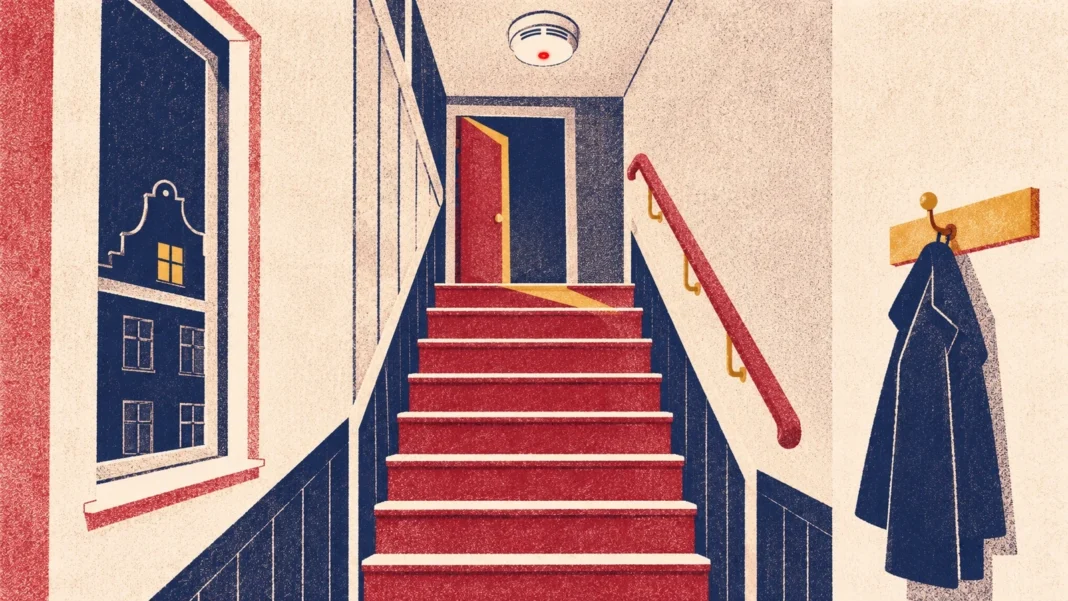
Rijksoverheid advises hanging a smoke alarm on the ceiling, preferably in the hall, at least 30 centimetres from a lamp, and not near ventilation openings or a heater. Read the instructions before you fit it.
The Brandweer goes further than the legal minimum. Its advice:
- At least in the hall and on the landing, the usual escape route.
- Better: interconnected alarms that also hang near the kitchen and in the bedrooms, so that all alarms sound when one detects smoke.
- In the living room if you have an open fire or a stove.
- In a garage attached to the house where you charge an e-bike or other battery.
- At least 50 centimetres from a wall or corner, and not in a draught or near mechanical ventilation.
Families with young children may want more. According to Rookmelders.nl, almost half of children up to 15 do not wake up from the usual volume of a smoke alarm. It therefore advises interconnected alarms, at least in the escape route on every floor and in the bedrooms.
6. Buying the right smoke alarm
Whatever type you choose, the Brandweer says it should carry the European mark EN 14604 (sometimes written NEN-EN 14604) on the packaging. Rijksoverheid recommends an alarm that lasts at least 10 years and puts the price at about €16 at a DIY store or online (checked 17 November 2026). The Brandweer has no preference for a brand or type beyond EN 14604.
The fire service recommends a model with a 10-year battery and a 10-year lifespan, so you do not need to change batteries in between. Some alarms connect to the mains; if you choose those, ask an installer to fit them. After 10 years every alarm, including mains models, should be replaced completely, because the sensor wears out and the alarm becomes prone to false alarms.
7. Testing and maintenance
A smoke alarm only helps if it works. The Brandweer’s routine is short:
- Monthly: remove dust with a cloth or vacuum cleaner, and press the test button. A loud beep means the alarm works. A handy reminder is the first Monday of the month, when the public warning sirens are tested.
- A short beep every minute: usually the battery needs replacing.
- Write the purchase date on the alarm with a permanent marker, so you know when to replace the battery or the whole unit.
- Check the expiry date on the bottom or side of the alarm.
- Take empty batteries to a battery collection point.
IPLO adds that the alarm must be undamaged and clean, and that the battery must not be empty. If you have a high ceiling, Rookmelders.nl suggests a vacuum cleaner hose for cleaning and a broomstick to press the test button.
8. Smoke alarms for deaf and hard-of-hearing residents
Special interconnectable smoke alarms exist that link to a wake-up and warning system, using flashing lights or a vibrating pad. The Brandweer says these systems are often fully reimbursed through cooperation between audiologists (audiciens) and health insurers, but conditions apply, including the degree of hearing loss. Ask your audiologist or health insurer.
9. Why it matters: house fire figures
The Brandweer reported on 8 April 2026 that 26 people died in 25 house fires in the Netherlands in 2025, based on final figures from the NIPV dashboards. Firefighters also rescued 268 people at 128 house fires. The fire service says toxic smoke is the biggest threat in a fire, and advises closing interior doors, especially at night, and placing alarms not only in the hall but also in rooms where a fire can start, such as bedrooms. According to the Brandweer, you have three minutes to escape once the alarm goes off.
If you have a gas boiler, stove or open fire, a carbon monoxide alarm is a separate device; see our guide to carbon monoxide detectors in the Netherlands.
10. FAQ
Is a smoke alarm mandatory in a rented apartment?
Yes. Every home needs a smoke alarm on each floor with a living room, bedroom or kitchen, and the landlord must make sure it is there. The landlord pays for the alarms; you can be asked to replace the batteries.
Do I need a smoke alarm in every room?
No. The legal minimum is one per floor with a habitable room, in the escape route. The Brandweer advises extra, interconnected alarms in bedrooms and near the kitchen.
Does my smoke alarm have to be connected to the mains?
Not in an existing home. A battery alarm meeting EN 14604 is enough. Newly built homes must have mains-connected alarms meeting NEN 2555.
Who installs smoke alarms in an apartment building with a VvE?
Each owner installs them in their own apartment. The obligation does not apply to the shared stairwell or entrance.
My landlord refuses to fit a smoke alarm. What can I do?
Tell your landlord first. A missing required smoke alarm is a category C defect in the Huurcommissie’s defects policy book; if your tenancy falls under its procedure, the tribunal can temporarily lower the rent, at most down to 40% of the current rent.
How often should I replace a smoke alarm?
The Brandweer advises replacing the whole alarm after 10 years.
🇳🇱 Dutch Corner
| Dutch | English |
|---|---|
| de rookmelder | smoke alarm |
| de verdieping | floor, storey |
| de vluchtroute | escape route |
| de verblijfsruimte | habitable room |
| de verhuurder | landlord |
| het gebrek | defect |
| de servicekosten | service charges |
| koppelbaar | interconnectable |
Sources
- Rijksoverheid — Hoeveel rookmelders moet ik in mijn huis hebben? (every floor, owner/landlord/VvE, placement, price indication)
- Besluit bouwwerken leefomgeving, article 3.117 (legal text, EN 14604, room-by-room letting)
- IPLO — Infoblad Besluit bouwwerken leefomgeving en woning (February 2026) (existing homes since 1 July 2022, no mains needed, new-build NEN 2555)
- Brandweer — Rookmelders: check, koop, plak (placement advice, buying, maintenance, enforcement, tenants, hearing loss)
- Brandweer — Woningbranden in 2025: 26 dodelijke slachtoffers (2025 figures, close doors)
- Rookmelders.nl — FAQ (attic and basement, children, high ceilings)
- Huurcommissie — Beleidsboek servicekosten, chapter 4 (landlord pays, batteries)
- Huurcommissie — Beleidsboek Gebreken, July 2026 (defect CU1, category C rent reduction, expert report)
Free: Netherlands 2027 Money Checklist
Every deadline and number you need before and after 1 January 2027, on two printable pages. Confirm your email and the PDF is yours; we will also email you when the 2027 figures are confirmed.
 Read nextHousingMould in a Rented Home in the Netherlands: Who Must Fix It and When Rent Can Be Cut