


Last updated:
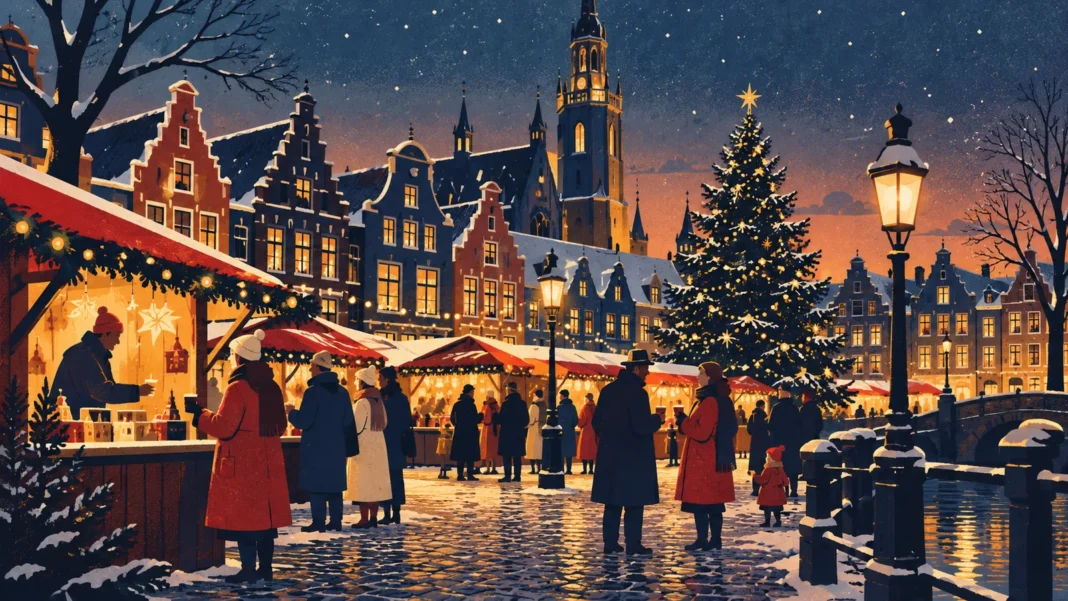
Sinterklaas Netherlands 2026 begins with the national arrival in Grave on Saturday 14 November. The historic town in North Brabant will welcome Sinterklaas and his helpers during a televised celebration, while cities including Amsterdam organise their own arrival parades.
But who is Sinterklaas? Why does he arrive from Spain? Why do Dutch children leave shoes beside fireplaces? And what happens on 5 December?
Whether you have recently moved to the Netherlands, are raising children here or simply want to understand Dutch culture, this guide explains the tradition, its history and the confirmed 2026 celebrations.
Contents
- Sinterklaas Netherlands 2026: Key dates
- 1. Sinterklaas arrives in Grave on 14 November
- 2. Visiting Grave: Route, transport and practical tips
- 3. Sinterklaas arrives in Amsterdam on 15 November
- 4. Who is Sinterklaas and why does he come from Spain?
- 5. Sinterklaasjournaal: When and where to watch
- 6. Why Dutch children put out their shoes
- 7. Traditional Sinterklaas sweets and treats
- 8. What happens on 5 December?
- 9. Understanding the tradition of Piet
- 10. How newcomers can join the celebrations
- 11. Frequently asked questions
- 🇳🇱 Dutch Corner
- Official sources
Sinterklaas Netherlands 2026: Key dates
| Date | Event |
|---|---|
| Monday 9 November | Het Sinterklaasjournaal begins at 18:00 on NPO Zapp. |
| Wednesday 11 November | Sint Maarten celebrations take place in parts of the Netherlands. |
| Saturday 14 November | National Sinterklaas arrival in Grave, beginning around 12:00. |
| Sunday 15 November | Amsterdam welcomes Sinterklaas with a boat procession and city parade. |
| Saturday 5 December | Pakjesavond, the traditional evening for presents and celebrations. |
| Sunday 6 December | Saint Nicholas’s feast day. |
Sources: NTR, Municipality of Land van Cuijk and Municipality of Amsterdam.
1. Sinterklaas arrives in Grave on 14 November 2026
This year, the national Sinterklaas arrival takes place in Grave, a historic fortified town on the River Maas in the municipality of Land van Cuijk, North Brabant.
The municipality has confirmed that the steamboat is expected to arrive at the Maaskade at approximately 12:00 on Saturday 14 November 2026.
The celebration continues through the historic town centre, with an official programme scheduled until 16:00.
Mayor Marieke Moorman will welcome Sinterklaas, while thousands of families are expected to gather for the festivities.
Why is Grave special in 2026?
According to broadcaster NTR, this is the first time in 26 years that the national arrival has been hosted in a municipality in North Brabant.
The previous Brabant location was Woudrichem in 2000. In 2025, Sinterklaas arrived on the island of Texel.
Grave’s selection was revealed through a playful story involving a message in a bottle. In the NTR storyline, Sinterklaas had thrown a bottle into the water during the previous year’s journey.
Mayor Moorman later discovered the bottle in the River Maas, revealing that Grave would be the next host town.
The story reflects the festive imagination surrounding Sinterklaas: while the arrival is a real public event, the fictional journey and its surprises are an important part of the experience for children.
Source: NTR’s official 2026 arrival announcement.
2. Visiting Grave: Route, transport and practical tips
Planning to experience the national arrival in person? The municipality has published the route and initial transport arrangements.
Where will Sinterklaas arrive?
The steamboat is expected at the Maaskade along the River Maas at approximately noon.
After disembarking, Sinterklaas and the procession will travel through the historical centre towards the Markt, the main square.
The published route includes the Maaskade, Maasstraat, Korte Rogstraat, Oliestraat, Gasthuisstraat, Hamstraat, Sint Jorisstraat, Het Kasteeltje, Klinkerstraat and Rogstraat, before reaching the Markt.
Viewing screens are also planned at several points along the route, according to regional tourism information.
Getting to Grave
The Municipality of Land van Cuijk expects substantial visitor numbers and additional traffic around Grave on 14 November.
It recommends travelling by public transport or bicycle where possible.
Additional parking areas outside the centre are being organised, with shuttle buses planned from more distant parking areas.
The municipality has also announced that Sint Elisabethstraat (N321), between Estersveldlaan and the N324, will be closed to through traffic on the event day.
If travelling by train or bus, check your complete journey on NS or 9292 before departure.
Do not assume that parking or bus arrangements will remain unchanged. Official visitor information may be updated as the event approaches.
Practical advice: Arrive early, dress for November weather and allow extra travel time. Families with young children may find it useful to agree on a meeting point in advance.
For the latest route, parking, accessibility and visitor details, see the municipality’s official Sinterklaas event page.
3. Sinterklaas arrives in Amsterdam on 15 November 2026
Amsterdam celebrates its own Sinterklaas arrival on Sunday 15 November 2026, one day after the national event in Grave.
The capital’s celebration includes a boat procession along the Amstel followed by a parade through the city centre.
Amsterdam Sinterklaas arrival schedule
| Time | Location or activity |
|---|---|
| 10:15 | Steamboat arrives at De Omval. |
| 11:30 | Arrival at Het Scheepvaartmuseum. |
| 13:00 | Street procession begins near Stopera/Waterlooplein. |
| 13:45 | Programme begins at Leidseplein. |
| 14:15 | Procession expected to reach Leidseplein. |
| 15:30 | Leidseplein programme ends. |
The city warns that these times are guidelines rather than guarantees. The actual arrival may vary slightly.
The event is free to attend, according to Amsterdam’s official visitor information.
For families who prefer to avoid the busiest central streets, choosing a viewing location along the published water or land route may be more practical than waiting at the final destination.
Check the Amsterdam municipality’s official arrival guide and Sint in Amsterdam for route updates and safety information.
4. Who is Sinterklaas and why does he come from Spain?
For someone experiencing Dutch culture for the first time, Sinterklaas might resemble Santa Claus. Both are associated with gifts, children and winter celebrations.
However, Sinterklaas has his own history and traditions.
The character is associated with Saint Nicholas, a bishop believed to have lived in the fourth century in Myra, in what is now southern Türkiye.
Stories of his generosity developed over centuries, and he became associated with giving gifts and helping those in need.
In the Dutch tradition, Sinterklaas wears a red bishop’s robe and mitre, carries a ceremonial staff and travels with helpers known as Pieten.
Why does he travel from Spain?
According to the familiar Dutch story, Sinterklaas lives in Spain and travels to the Netherlands by steamboat every November.
This is part of the festive narrative rather than a literal historical account of Saint Nicholas’s life.
The image of Sinterklaas travelling by steamboat from Spain was popularised in nineteenth-century Dutch children’s literature, particularly through the work of Jan Schenkman.
Today, the arrival by boat remains one of the most recognisable elements of the celebration.
Is Sinterklaas the same as Santa Claus?
Not exactly. Their traditions share historical roots, but their modern celebrations are different.
Sinterklaas is celebrated in the Netherlands primarily in November and early December, with the main gift-giving evening on 5 December.
Santa Claus is associated with Christmas, particularly the night of 24 December and Christmas Day on 25 December.
Many Dutch families celebrate both occasions, although the customs and importance of each event vary from household to household.
Source: NPO Kennis — Why the Netherlands celebrates Sinterklaas.
5. Sinterklaasjournaal 2026: When and where to watch
For many Dutch families, the excitement begins before the arrival itself.
Het Sinterklaasjournaal is a daily television programme that presents the fictional adventures of Sinterklaas and his helpers as if they were regular news reports.
Children follow the preparations, unexpected problems and surprises leading up to the arrival and the December celebrations.
In 2026, Het Sinterklaasjournaal starts on Monday 9 November at 18:00 on NPO Zapp (NPO 3).
Broadcaster NTR confirms that it will air daily until 5 December.
Merel Westrik presents both the programme and the national arrival, with reporters Stephanie van Eer and Jeroen Kramer.
Can you watch it online?
The programme is available through official NPO and NTR services, including the Sinterklaasjournaal website.
NTR also provides accessibility options, including audio description for episodes. Its information page explains how audio description is available during live broadcasting through the Earcatch application.
For families learning Dutch, the programme offers an opportunity to encounter everyday vocabulary, familiar phrases and cultural references, although it is not designed as a language course.
Source: NTR’s official Sinterklaasjournaal FAQ.
6. Why Dutch children put out their shoes
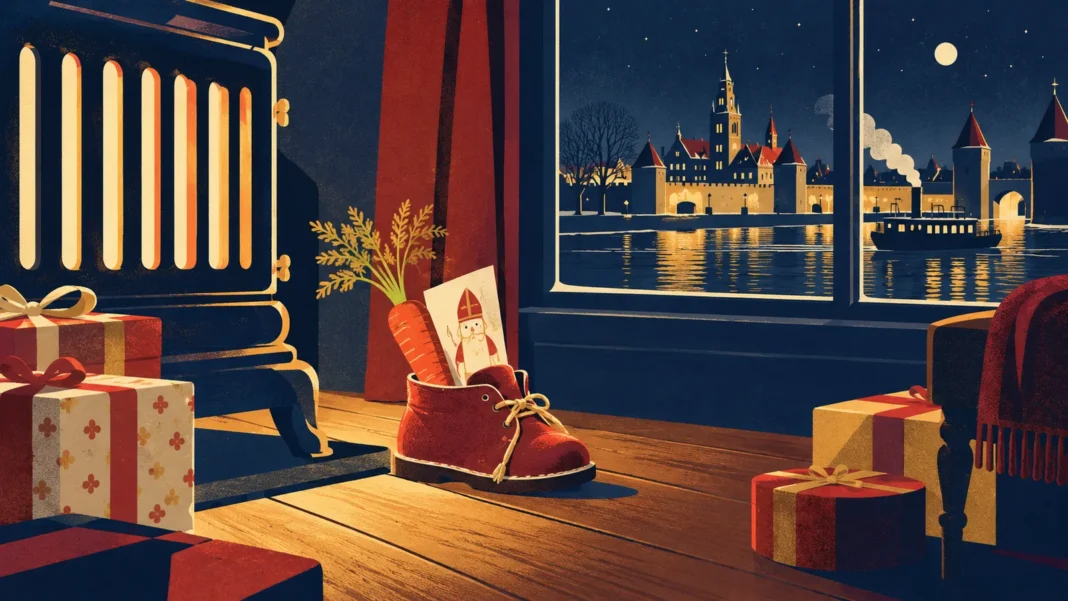
Imagine walking into a Dutch home in November and seeing a small shoe beside the fireplace, with a carrot tucked inside.
For newcomers, it might seem unusual. For many Dutch children, it is one of the most exciting parts of the Sinterklaas season.
The custom is called je schoen zetten, meaning to put out your shoe.
Children place a shoe near a fireplace, heater or another chosen spot in the home. They may leave a drawing, a wish list or a carrot for Sinterklaas’s horse.
According to the traditional story, Sinterklaas and his helpers visit during the night and leave a small surprise.
In the morning, the child might discover sweets, chocolate coins or a little present.
How old is the tradition?
Research from the Meertens Institute shows that shoe-setting has roots going back to at least the fifteenth century.
In an early version of the custom, children from poor families could leave their shoes in church, where wealthier citizens placed gifts or contributions.
The tradition gradually developed into the family custom recognised today.
Modern households celebrate it differently. Some children put out their shoes several times during the Sinterklaas season, while others do so only occasionally.
There is no universal requirement about how often families should participate.
Source: Meertens Institute — The history of putting out shoes.
7. Traditional Sinterklaas sweets and treats
Sinterklaas is also a season of familiar aromas and special treats.
Dutch supermarkets and bakeries fill their shelves with seasonal products, including small spiced biscuits, chocolate letters and marzipan sweets.
Popular Sinterklaas treats
- Kruidnoten: Small, crunchy biscuits flavoured with spices such as cinnamon and cloves.
- Pepernoten: Traditionally softer, irregularly shaped spiced treats, although the name is often used informally for kruidnoten.
- Chocoladeletters: Large chocolate letters, often given in the recipient’s initial.
- Speculaas: Spiced biscuits associated with Dutch autumn and winter traditions.
- Marsepein: Sweet almond-based confectionery, sometimes shaped into fruits or other playful figures.
- Chocolademunten: Chocolate coins wrapped in gold-coloured foil.
These treats are part of the festive atmosphere, but families can decide how they want to celebrate and how much they wish to spend.
8. What happens on 5 December?
The Sinterklaas season builds towards Pakjesavond on Saturday 5 December 2026.
Literally translated as “presents evening”, Pakjesavond is the traditional night when many Dutch families exchange gifts.
Some families celebrate with young children, while others organise gift exchanges among adults, friends or colleagues.
What is a Sinterklaas surprise?
A surprise is a creatively wrapped or handmade package designed around the recipient’s interests, habits or personality.
Instead of simply wrapping a gift, someone might hide it inside a cardboard sculpture, a playful object or another imaginative construction.
The gift can also be accompanied by a Sinterklaasgedicht, a poem that humorously describes the recipient.
These customs are particularly common in families, schools and some workplaces.
Is 5 December a public holiday?
Sinterklaas is an important cultural celebration, but 5 December is not a statutory public holiday in the Netherlands.
Normal opening hours, school schedules and work arrangements generally apply unless an organisation makes its own arrangements.
Because 5 December falls on a Saturday in 2026, many families may have more flexibility to celebrate together.
9. Understanding the tradition of Piet
Sinterklaas is traditionally accompanied by helpers called Pieten.
The representation of these characters has changed over time and remains a subject of public discussion in the Netherlands.
The traditional portrayal known as Zwarte Piet has been criticised for its use of blackface imagery and racial stereotypes.
Other people have regarded the character as part of a longstanding childhood tradition.
Broadcaster NTR states that it gradually changed the portrayal in its Sinterklaas programmes between 2014 and 2019.
Its national broadcasts now feature roetveegpieten, or soot-smudged Pieten, whose appearance is explained within the story as soot from travelling through chimneys.
Local celebrations and communities may approach the tradition differently.
The Kenniscentrum Immaterieel Erfgoed Nederland has also explained that various individual elements of Sinterklaas celebrations, including poems, gifts, songs and arrival parades, can be recognised as cultural practices independently of any one portrayal of Piet.
Source: NTR and Kenniscentrum Immaterieel Erfgoed Nederland.
10. How newcomers can join the Sinterklaas celebrations
You do not need to have grown up in the Netherlands to enjoy learning about Sinterklaas.
The celebrations can offer an introduction to local customs, community activities and everyday Dutch language.
If you have children
- Check whether your child’s school has planned a Sinterklaas event.
- Ask whether families are expected to provide a small gift or help with a surprise.
- Look up the local arrival celebration in your municipality.
- Watch a Sinterklaasjournaal episode together if it suits your family.
- Explain the traditions in a way that matches your child’s age and interests.
If you do not have children
You can still experience the atmosphere by watching an arrival parade, exploring local seasonal markets or learning about the history of Dutch festive customs.
Some workplaces also organise a gift exchange or a surprise activity around early December.
Not every Dutch household celebrates in the same way, and taking part is a personal choice.
What about Sint Maarten?
Just three days before the national Sinterklaas arrival, parts of the Netherlands celebrate Sint Maarten on 11 November.
During this separate tradition, children carry lanterns, sing at neighbours’ doors and receive sweets.
If you are curious about this colourful custom, read our Sint Maarten Netherlands 2026 guide, including the meaning of the lanterns and what residents can expect.
Buying Sinterklaas gifts during November sales?
Many people shop for December gifts during late-November promotions.
If you buy presents online, knowing your consumer rights can help you avoid unnecessary problems with returns and misleading discounts.
Our Black Friday Netherlands 2026 guide explains the cooling-off period for qualifying online purchases and how Dutch rules address misleading discounts.
For more seasonal events, explore our Christmas Markets in the Netherlands 2026 guide.
11. Frequently asked questions
When is Sinterklaas coming to the Netherlands in 2026?
The national arrival takes place on Saturday 14 November 2026 in Grave, North Brabant. The boat is expected at the Maaskade around 12:00, with the programme continuing until 16:00.
Where is the national Sinterklaas arrival in 2026?
In Grave, part of the municipality of Land van Cuijk. The procession begins near the River Maas and travels through the historic centre.
When is Sinterklaas arriving in Amsterdam?
Sunday 15 November 2026. The boat is scheduled to arrive at De Omval at approximately 10:15, followed by a procession through the city to Leidseplein.
What time does the Sinterklaasjournaal start in 2026?
18:00 on Monday 9 November 2026. NTR confirms daily broadcasts on NPO Zapp (NPO 3) through 5 December.
Why does Sinterklaas arrive on a boat?
In Dutch folklore, Sinterklaas travels from Spain by steamboat. The image became popular through nineteenth-century Dutch children’s stories and remains an important part of the annual celebrations.
When do Dutch children put out their shoes?
Many families begin after the national arrival in November. The timing and frequency depend on family customs.
Is Sinterklaas the same as Christmas?
No. Sinterklaas is a separate Dutch celebration, with the main gift-giving evening on 5 December. Christmas is celebrated later in December.
Is the Sinterklaas arrival free to attend?
The public Amsterdam arrival is listed as free to attend. For Grave, consult the municipality’s official event information for the latest visitor arrangements.
When is Pakjesavond in 2026?
Saturday 5 December 2026. Many Dutch families exchange gifts, share seasonal treats and sometimes read humorous poems.
Do all Dutch people celebrate Sinterklaas?
No. Sinterklaas is widely recognised, but celebrations vary by family, culture and personal preference. Some households celebrate extensively, while others choose not to participate.
🇳🇱 Dutch Corner
These Dutch words will help you understand signs, invitations and conversations during the Sinterklaas season.
| Dutch | English |
|---|---|
| De intocht | Arrival parade |
| De landelijke intocht | National arrival celebration |
| De stoomboot | Steamboat |
| Sinterklaas | Saint Nicholas / Dutch gift-giving figure |
| De goedheiligman | Traditional nickname for Sinterklaas |
| Je schoen zetten | To put out your shoe |
| Het verlanglijstje | Wish list |
| Het cadeau | Gift |
| De pepernoten | Traditional spiced treats |
| De kruidnoten | Small crunchy spiced biscuits |
| De chocoladeletter | Chocolate letter |
| Pakjesavond | Sinterklaas gift-giving evening |
| Het gedicht | Poem |
| De surprise | Creative gift package |
| De gezelligheid | Warm, sociable atmosphere |
Official sources
Information reviewed on 2 November 2026 using official broadcaster, municipal, cultural and heritage sources.
- Municipality of Land van Cuijk — National Sinterklaas arrival 2026
- Municipality of Land van Cuijk — Traffic and transport arrangements, 23 October 2026
- NTR — National arrival in Grave, 24 February 2026
- NTR — Sinterklaasjournaal dates, broadcast schedule and traditions
- NTR — Sinterklaasjournaal programme and accessibility information
- Municipality of Amsterdam — Sinterklaas arrival 2026
- Sint in Amsterdam — Official arrival routes and times
- NPO Kennis — The history and meaning of Sinterklaas
- Meertens Institute — The history of the shoe-setting tradition
- Kenniscentrum Immaterieel Erfgoed Nederland — Sinterklaas cultural heritage explanation
Editorial note: The Dutch Daily updated this guide on 2 November 2026 using official information from NTR, the municipalities of Land van Cuijk and Amsterdam, and Dutch cultural institutions. Confirmed event details are distinguished from historical traditions and fictional elements of the Sinterklaas story. Times and routes may change, and readers should consult the relevant organisers before travelling.
Free: Netherlands 2027 Money Checklist
Every deadline and number you need before and after 1 January 2027, on two printable pages. Confirm your email and the PDF is yours; we will also email you when the 2027 figures are confirmed.
 Read nextHousingWood Burning in the Netherlands: Stookwijzer Codes, Local Bans and Chimney Safety
 Living in NLAre Winter Tyres Mandatory in the Netherlands? Rules at Home and When Driving to Germany, Austria or France
 Living in NLKNMI Weather Warnings Explained: Code Yellow, Orange and Red, and the New Area Maps
 Living in NLDivorce in the Netherlands: Lawyer, €341 Court Fee, Parenting Plan and the 6-Month Rule